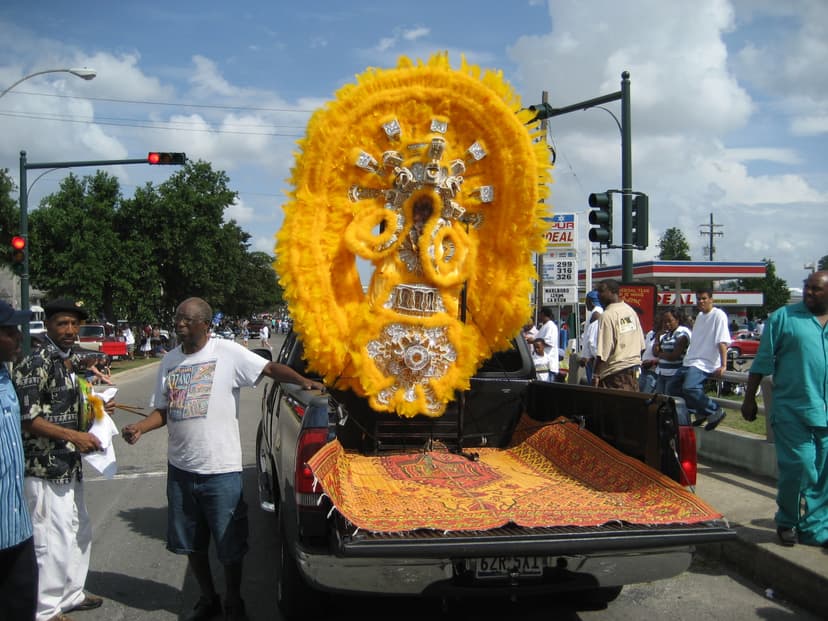
Allison Tootie Montana
Legend of Dance
Why They Matter
Montana's dance legacy cannot be separated from suit making, singing, street geography, and leadership. His central achievement was to make aesthetic excellence—how a group looked, sounded, moved, and met another group—a form of conflict transformation. In doing so, he helped preserve a Black New…
Known For
Watch
Remembering Big Chief Tootie Montana
WDSU News
Local-news remembrance that can orient viewers to Montana's influence and surviving community memory
Biography
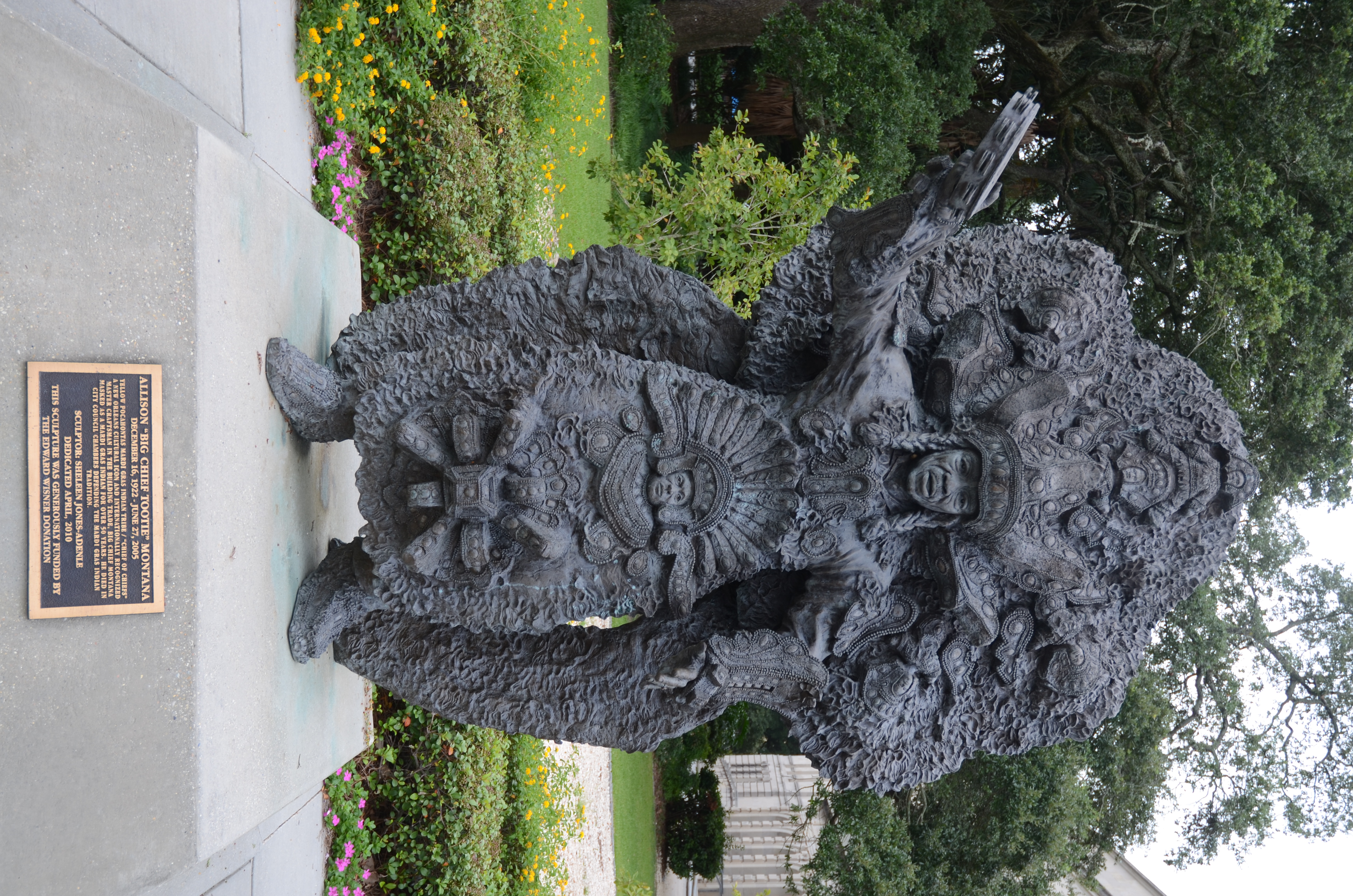
Allison "Tootie" Montana (1922–2005) was a Big Chief of the Yellow Pocahontas, one of New Orleans's most storied Black Masking organizations, and a transformative leader in a tradition that has defined the city's Carnival landscape for generations. Born in New Orleans on December 16, 1922, Montana inherited a family relationship to masking: his father, Alfred Montana, was a Big Chief of the Yellow Pocahontas, and the tradition traced back through an earlier relative, Chief Becate. Montana's adult life balanced the trade of lathery—building wood and metal frames for plaster construction—with decades of meticulous suit construction and cultural leadership.
After World War II, Montana masked with the Eighth Ward Hunters. In 1947, he co-founded the Monogram Hunters and became their Big Chief. By the late 1950s, he had assumed the leadership of the Yellow Pocahontas, a position he held until 1998, when his son Darryl Montana succeeded him. During his tenure, Montana's influence extended far beyond the role itself. He urged a reorientation of the tradition away from physical confrontation between groups and toward contests conducted through suit design, procession, music, and dance. The encounter between masking groups still carried ritual challenge, neighborhood identity, strategy, and mock confrontation, but beauty and performance became the preferred measures of distinction.
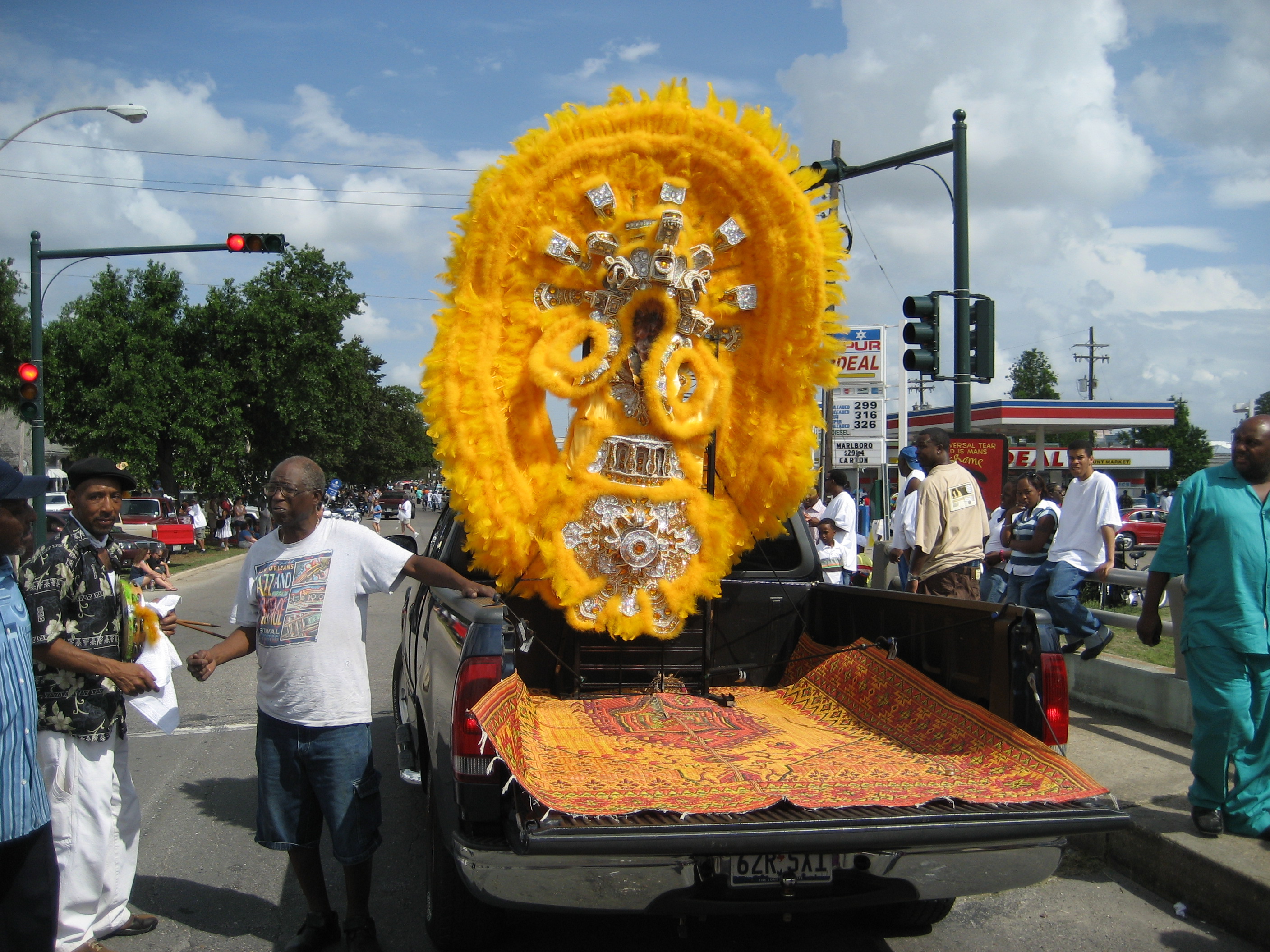
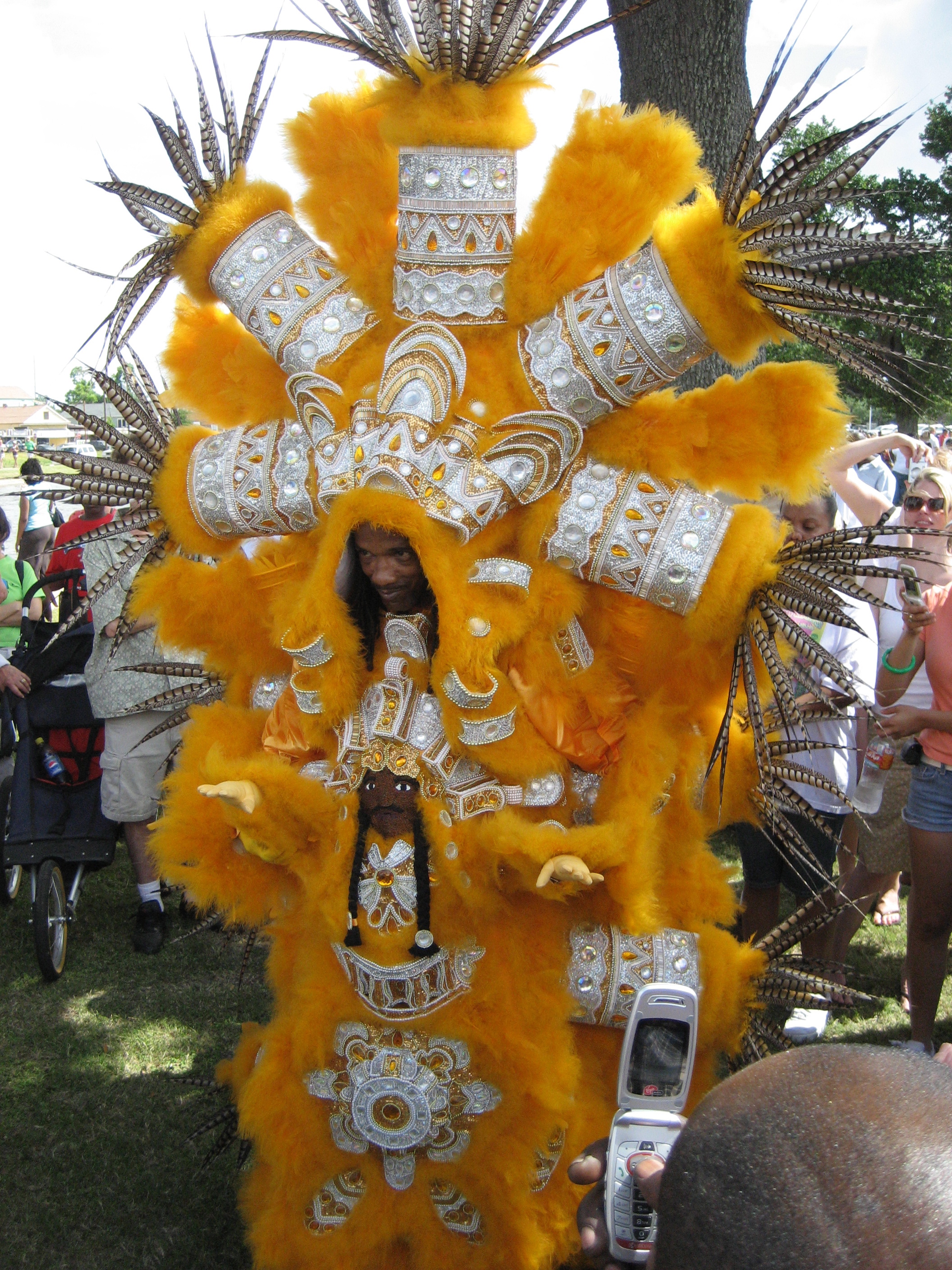
Montana's leadership integrated multiple arts. The National Endowment for the Arts recognized him as a gifted costume designer, dancer, song leader, and artistic director. The months preceding Mardi Gras involved intensive sewing and rehearsal, preparing a moving environment in which chiefs, Spyboys, Flagboys, supporters, drummers, tambourine players, singers, and second-line followers navigated city streets and responded to encounters with other groups. His command of timing, presence, and the visual language of an intricately hand-sewn suit made the chief's movement through public space a form of civic assertion.
In 1987, the National Endowment for the Arts named Montana a National Heritage Fellow, the federal government's highest honor in folk and traditional arts. A decade later, the New Orleans Museum of Art exhibition and catalog *He's the Prettiest* marked fifty years of his masking artistry. Even after relinquishing the Yellow Pocahontas Big Chief role in 1998, Montana continued to make suits and mask, serving as Executive Counsel of the Yellow Pocahontas in 1999 and beyond.
On June 27, 2005, Montana attended a New Orleans City Council meeting to protest police treatment of masking groups following that year's St. Joseph's Night. He collapsed during his address and died at eighty-two. His death in the act of public advocacy underscored how inseparable his artistry was from the struggle for the tradition's right to occupy and move through public space.
Career Highlights
Co-founded the Monogram Hunters and became their Big Chief. National Endowment for the Arts
Became Big Chief of the Yellow Pocahontas, beginning a roughly forty-year tenure. National Endowment for the Arts
Received the National Endowment for the Arts National Heritage Fellowship. NEA
Celebrated in He's the Prettiest, an exhibition/catalog marking fifty years of Mardi Gras Indian suiting. Louisiana Folklife Center
Passed the Yellow Pocahontas Big Chief role to his son Darryl Montana. NEA
Made a new suit and masked as Executive Counsel of the Yellow Pocahontas. NEA
Continued public advocacy for masking groups and died while addressing the New Orleans City Council on June 27. Tulane Music Rising
New Orleans established January 6 as Big Chief Tootie Montana Day, a posthumous civic commemoration. Black Catholic Messenger
Gallery
Legacy & Impact
Montana's contribution to Black masking in New Orleans lay in demonstrating that aesthetic excellence—how a group looked, sounded, moved, and met another group—could transform conflict into competition rooted in beauty, craft, and performance. His decades of leadership helped preserve an essential New Orleans tradition while expanding its possibilities for public recognition, intergenerational transmission, and embodied civic presence. For dancers and practitioners today, Montana's example shows how a single artist-leader can reshape a tradition's values without erasing its power to contest, challenge, and claim space.
Explore More Legends
Discover the dancers, teachers, choreographers, and cultural icons who shaped how the world moves.
Keep the thread going
Dance history, technique, and the occasional rabbit hole — in your inbox. Thoughtful, infrequent, unsubscribe anytime.
Free. No spam. One click to leave.