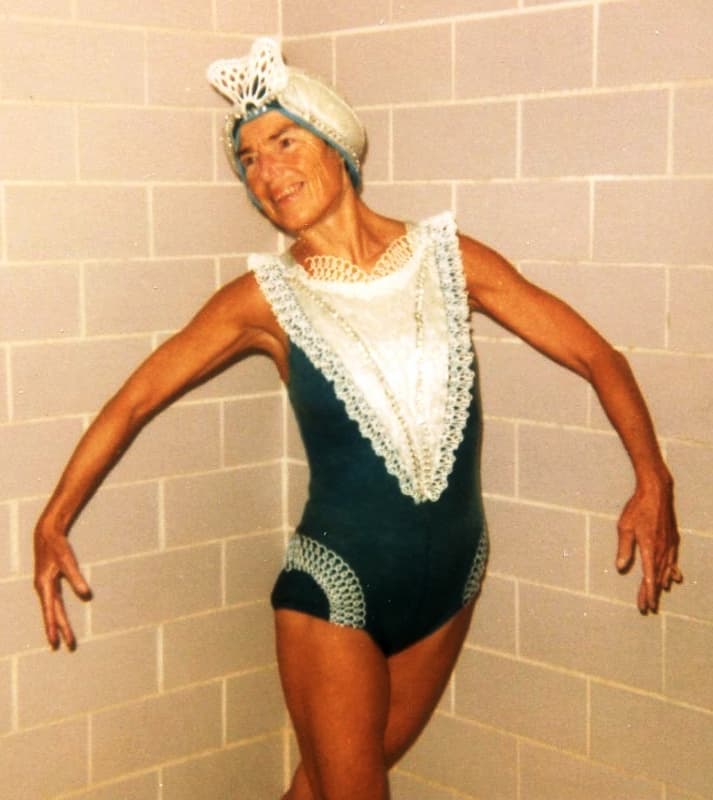
Beulah Detwiler Gundling
Legend of Dance
Why They Matter
Gundling matters because she articulated a choreographic standard for movement in water at a formative moment in synchronized swimming. She proved that technical control, musical structure and expressive design could coexist, then built institutions and teaching practices that let aquatic art…
Known For
Biography
Beulah Detwiler Gundling was an American synchronized swimmer, aquatic artist, choreographer, author and lecturer who shaped the artistic identity of competitive swimming in water. Growing up in Cedar Rapids, Iowa, and educated at Coe College, Gundling pursued national and international titles while treating synchronized swimming as composed aquatic dance—a practice that placed musical arrangement, costume design and choreographic structure at the center of her competitive work.
In 1949, Gundling won Canada's solo synchronized-swimming championship before the United States had established an outdoor national solo title. The following year she became the first U.S. outdoor synchronized solo champion. According to the International Swimming Hall of Fame, she remained undefeated in national and international competition until retiring from AAU competition in 1955, accumulating four outdoor U.S. titles and an indoor tie.
Gundling also carried synchronized swimming into major multisport settings before it became an Olympic medal sport. She presented solo synchronized swimming as an exhibition at the 1951 Pan American Games and at the 1952 Helsinki Olympic Games. In 1953, she and Canadian swimmer Peg Seller toured Britain, giving demonstrations and clinics credited with introducing synchronized swimming there. Her competitive career reached its height with the solo gold medal at the 1955 Pan American Games in Mexico City.
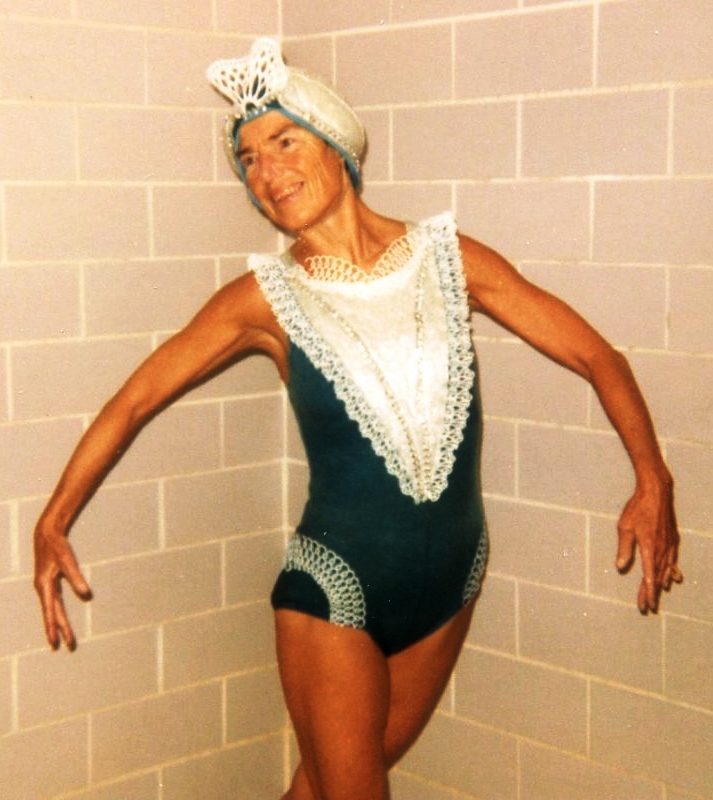
After 1955, Gundling redirected her work toward aquatic art with her husband, Henry Gundling, and other collaborators. The International Academy of Aquatic Art emphasized swimming as expressive composition rather than scored sport alone. Gundling performed, wrote, lectured and helped transmit that approach internationally, documenting demonstrations and lectures across Europe, the Middle East, Australia and the Americas. A 1981 photograph shows her performing *Clair de Lune*, evidence that her aquatic-art practice continued decades after competition. She was inducted into the International Swimming Hall of Fame in 1965 as its first honoree recognized specifically for aquatic art.
Career Highlights
Won the Canadian synchronized-swimming solo championship. ISHOF
Became the first U.S. outdoor synchronized solo champion.
Presented solo synchronized swimming on an exhibition basis at the Pan American Games.
Demonstrated solo synchronized swimming at the Helsinki Olympic Games.
Toured Britain with Peg Seller for clinics and demonstrations. ISHOF Bert Cummins profile
Won Pan American Games solo gold in Mexico City and retired from AAU competition undefeated.
Helped organize the International Academy of Aquatic Art and earned Class I honors at its annual festivals.
Entered the International Swimming Hall of Fame as an aquatic-art honoree.
Entered the Coe College Athletic Hall of Fame. Coe College
Performed Clair de Lune at the Midwest Aquatic Art Symposium, documented in a rights-cleared photograph.
Gallery
Legacy & Impact
Gundling matters because she articulated a choreographic standard for movement in water at a formative moment in synchronized swimming. She proved that technical control, musical structure and expressive design could coexist, then built institutions and teaching practices that let aquatic art develop alongside competition. Her tours also helped circulate North American synchronized-swimming methods internationally before the sport achieved Olympic recognition.
Explore More Legends
Discover the dancers, teachers, choreographers, and cultural icons who shaped how the world moves.
Keep the thread going
Dance history, technique, and the occasional rabbit hole — in your inbox. Thoughtful, infrequent, unsubscribe anytime.
Free. No spam. One click to leave.