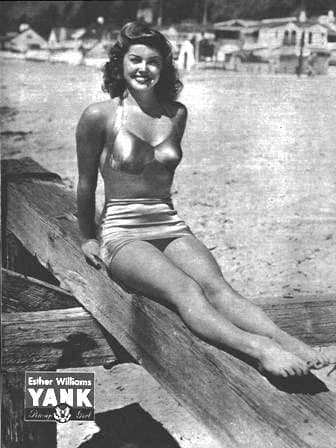
Esther Jane Williams
Legend of Dance
Why They Matter
Williams made the swimming body legible as choreography to a mass audience. Her films translated racing technique, diving, sculling, breath control, synchronized spacing and underwater camera work into an extravagant cinematic grammar. That achievement belongs to Williams and to the uncredited or…
Known For
Biography
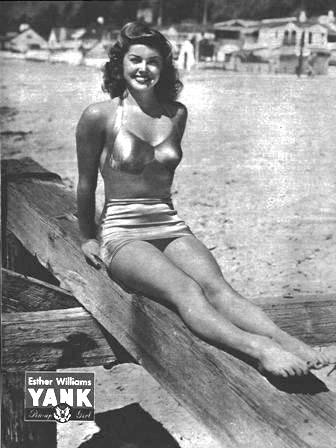
Esther Jane Williams was an American competitive swimmer and motion-picture performer who made choreographed swimming a central spectacle of mid-century Hollywood. Born on 8 August 1921 in the Los Angeles area, California, Williams became an elite freestyle swimmer as a teenager. The International Swimming Hall of Fame records her as the 1939 United States champion in the 100-meter freestyle and a member of three Los Angeles Athletic Club national-championship relay teams. Her path toward the 1940 Olympic Games was interrupted when the Second World War caused the Games' cancellation.
Instead, Williams entered professional aquatic entertainment, joining Billy Rose's San Francisco Aquacade in 1940, where she performed alongside Olympic swimming star Johnny Weissmuller. The Aquacade demonstrated how swimming could be converted into theatrical scale and photographed as performance—a lesson that caught the attention of Hollywood talent scouts.
Metro-Goldwyn-Mayer developed Williams as the center of a new kind of musical spectacle. *Bathing Beauty* (1944) established the formula: narrative comedy and romance framing elaborate pool sequences designed for overhead patterns, underwater views, synchronized ensembles, and a star capable of executing demanding aquatic action herself. Films including *Neptune's Daughter* (1949), *Million Dollar Mermaid* (1952), *Easy to Love* (1953), and *Jupiter's Darling* (1955) expanded these sequences toward ever larger dimensions.
In *Million Dollar Mermaid*, Williams portrayed Australian swimming and vaudeville pioneer Annette Kellerman. The film's spectacular sequences carried real physical risk; Williams later described serious injuries from high diving and underwater staging, a reminder that the apparent ease of these images depended on athletic labor and hazardous production methods.
Williams' screen popularity helped make aquatic performance recognizable to audiences far beyond competitive swimming circles. She was inducted into the International Swimming Hall of Fame in 1966. Her legacy includes awards named for her and continuing engagement with how her films relate to the development and public visibility of artistic swimming.
Career Highlights
Won the United States 100-meter freestyle championship and competed on national-championship relay teams for the Los Angeles Athletic Club. International Swimming Hall of Fame
Lost the expected Olympic opportunity when the Games were canceled during the Second World War. Turner Classic Movies
Joined Billy Rose’s San Francisco Aquacade, performing in an aquatic revue with Johnny Weissmuller. International Swimming Hall of Fame
Starred in Bathing Beauty, the MGM hit that established swimming spectacle as the organizing feature of her screen persona. International Swimming Hall of Fame
Starred in Neptune’s Daughter, one of the films that sustained MGM’s aquatic-musical cycle. Turner Classic Movies
Portrayed Annette Kellerman in Million Dollar Mermaid, featuring some of her most ambitious aquatic staging. Turner Classic Movies
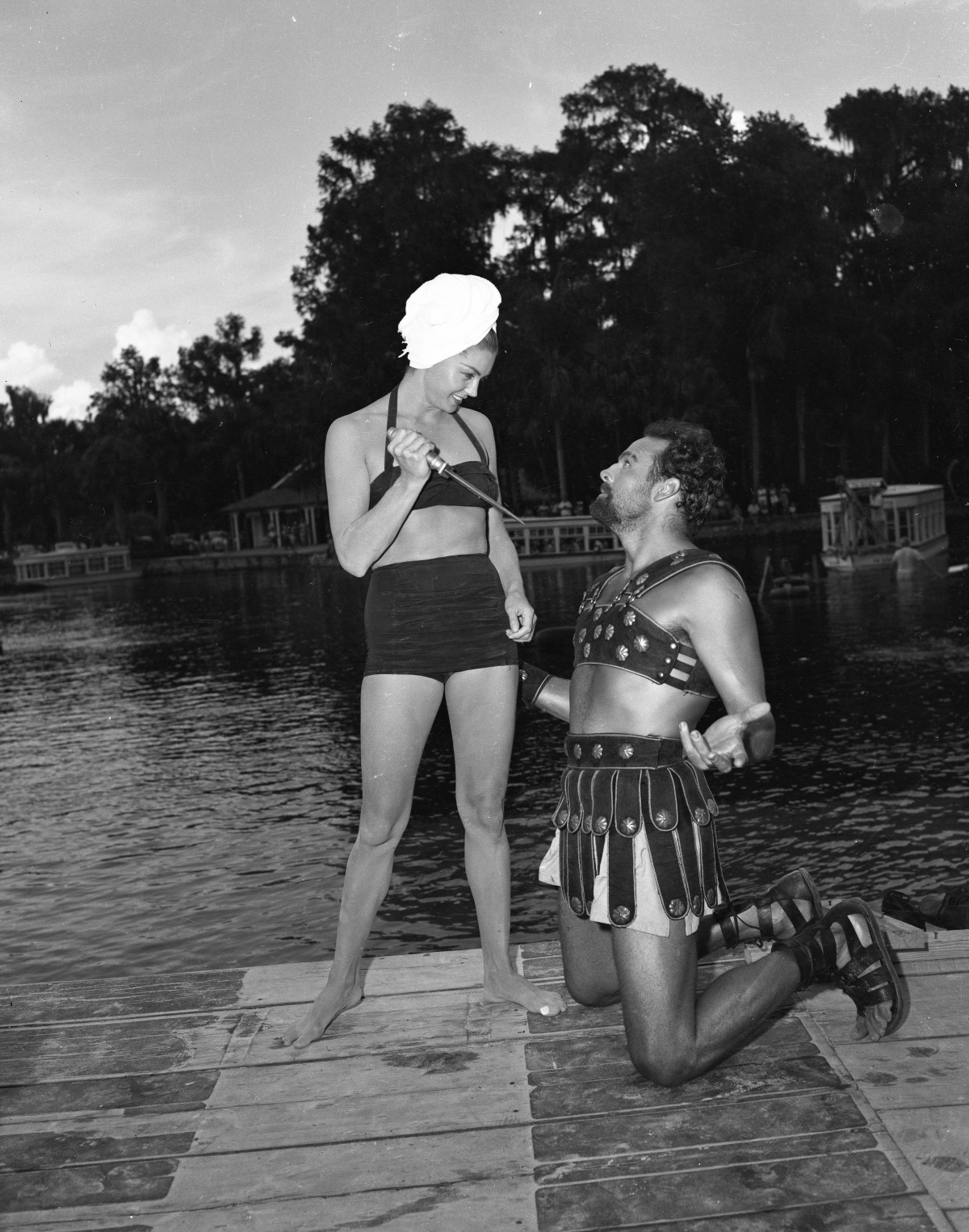
Appeared in Easy to Love, including large-scale Florida-set water choreography. Turner Classic Movies
Starred in Jupiter’s Darling, among the last major MGM vehicles built around her swimming. Turner Classic Movies
Inducted into the International Swimming Hall of Fame. International Swimming Hall of Fame
Died at age ninety-one, leaving a filmography that remains a primary visual archive of Hollywood aquatic spectacle. International Swimming Hall of Fame
Gallery
Legacy & Impact
Williams expanded the public vocabulary of aquatic movement by making the swimming body legible as choreography to mass audiences. Her films translated racing technique, diving, sculling, breath control, synchronized spacing and underwater cinematography into an extravagant cinematic language. That achievement belongs to Williams and to the ensemble swimmers, choreographers, divers, riggers, camera crews and designers—often uncredited—whose work built the sequences around her.
Explore More Legends
Discover the dancers, teachers, choreographers, and cultural icons who shaped how the world moves.
Keep the thread going
Dance history, technique, and the occasional rabbit hole — in your inbox. Thoughtful, infrequent, unsubscribe anytime.
Free. No spam. One click to leave.