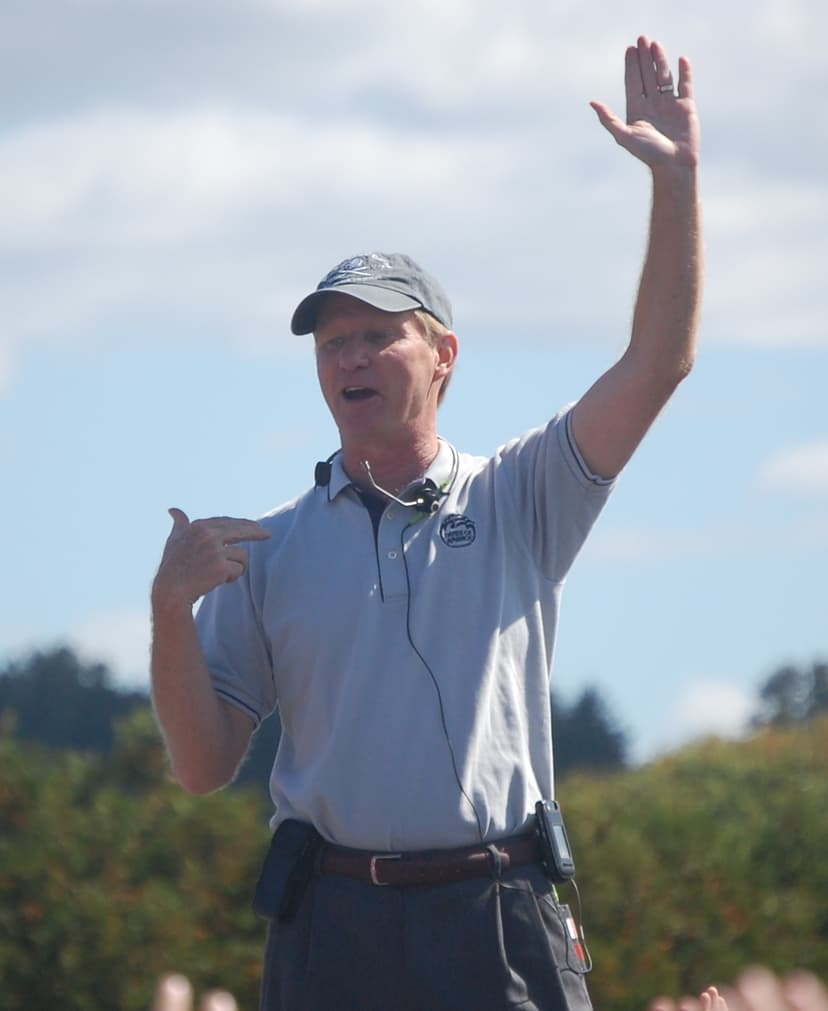
George N Parks
Legend of Dance
Why They Matter
Parks matters to movement history because the drum major stands where conducting, marching, spectacle and leadership converge. He made that role teachable as an integrated physical practice: gestures had to communicate musically, read at stadium scale, motivate an ensemble and project confidence to…
Known For
Watch
George N. Parks — 2006 Hall of Fame
Music for All
The inducting organization's video documents Parks's national recognition and performance practice.
With Pride GNP
UMass Minuteman Marching Band
UMass links this video directly from its official Parks memorial page.
George Parks Drum Major Academy Celebrates Late Band Director
UMass Amherst
The feature connects Parks's teaching method to the academy's continuation.
Biography
George Nathan Parks was born in Buffalo, New York, on 23 May 1953 and grew up in Newark, Delaware. He became a drum major in high school, then led the Golden Rams Marching Band at West Chester University before earning a master's degree in tuba performance at Northwestern University. These musical foundations supplied the conducting discipline that he would bring into outdoor movement and visual performance.
As drum major for West Chester and the Reading Buccaneers Drum and Bugle Corps, Parks developed a performance style that combined concert-conducting clarity with large, visible gestures, marching precision, mace work and theatrical command of the field. By the 1970s and 1980s, he was recognized as a pioneer of modern drum majoring, a practice that joined conducting, precise marching, mace technique, showmanship and peer leadership into a unified performance vocabulary.
In 1977, at age twenty-four, Parks became director of the University of Massachusetts Minuteman Marching Band. Across thirty-three years he expanded the ensemble from roughly 180 students to nearly 400, reshaping its sound, field movement and public identity. The band received the Sudler Trophy in 1998, an institutional honor for collegiate marching bands. In 1989 he received the University of Massachusetts Distinguished Teacher Award, and in 1997 the Chancellor's Medal for Distinguished Service.
Parks founded the Drum Major Academy in the late 1970s. Its curriculum treated the drum major not only as a conductor but as a peer leader responsible for teaching, communication and performance. By the end of his life, the organization was teaching approximately 3,000 students annually; the academy continues his four-part curriculum of leadership, conducting, teaching and performing. He was inducted into the World Drum Corps Hall of Fame in 1993 for contributions including drum-major and mace technique, and into the Bands of America Hall of Fame in 2006.
On 16 September 2010, while the Minuteman Band was traveling through Ohio, Parks conducted a final post-game performance at Cuyahoga Falls High School and died later that night. His institutional legacy includes the continuing Drum Major Academy and the George N. Parks Minuteman Marching Band Building at UMass Amherst. More broadly, his students carried a model of embodied leadership into school and collegiate band programs across the United States.
Career Highlights
Began teaching drum majors at West Chester University summer marching-band workshops. Music for All Music for All
Became director of the UMass Minuteman Marching Band at age twenty-four. UMass Amherst UMass Amherst
Established the Drum Major Academy; some institutional summaries give 1977, so the founding year should be attributed carefully. Drum Major Academy, Music for All Drum Major Academy
Received the University of Massachusetts Distinguished Teacher Award. Music for All Music for All
Entered the World Drum Corps Hall of Fame for contributions including drum-major and mace technique. World Drum Corps Hall of Fame World Drum Corps Hall of Fame
Received the UMass Chancellor's Medal for Distinguished Service. Music for All Music for All
Led the Minuteman Marching Band when it received the Sudler Trophy. Music for All Music for All
Inducted into the Bands of America Hall of Fame. Music for All Music for All
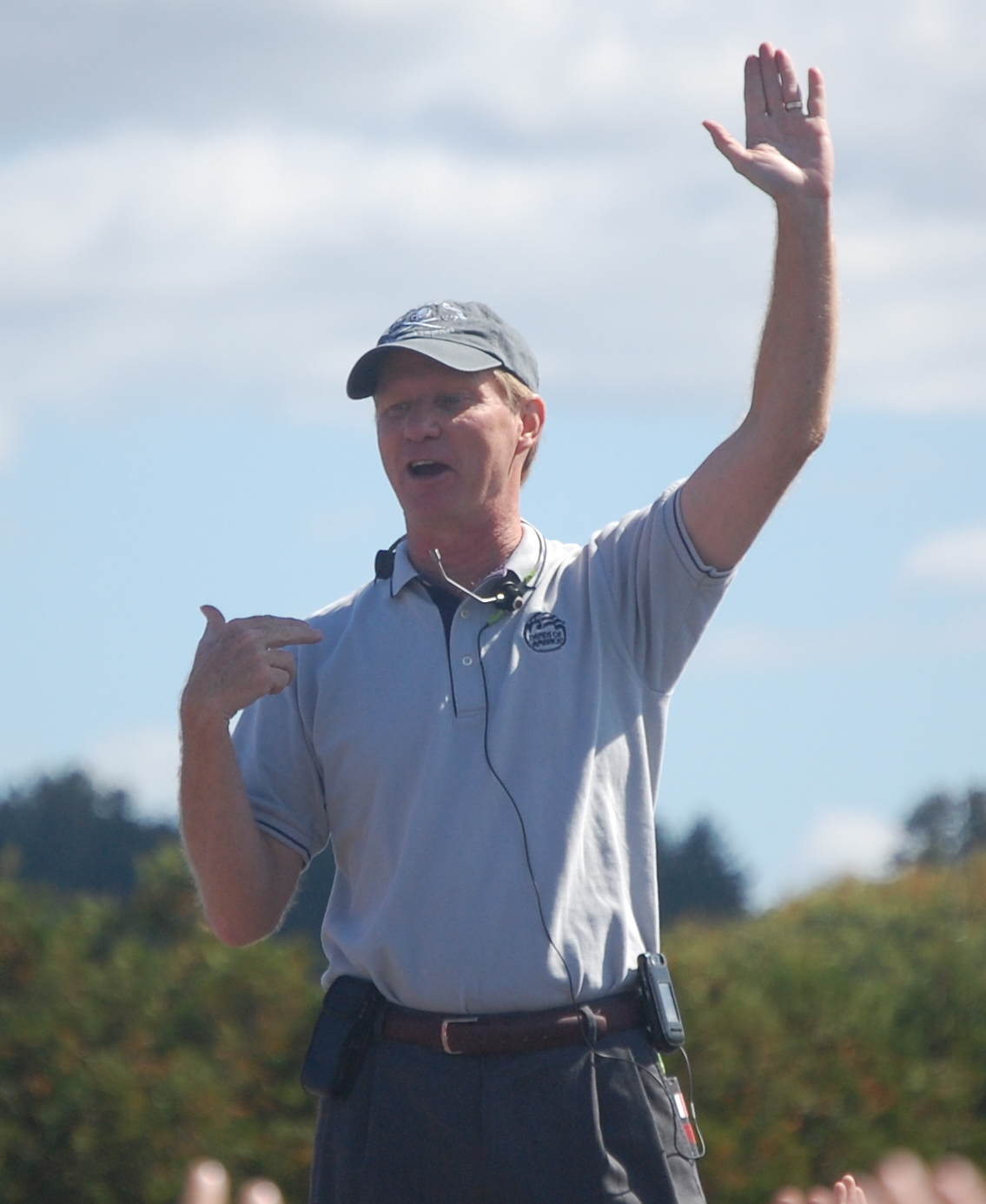
Directed the Bands of America Honor Band in the Tournament of Roses Parade and led UMass Band Day. UMass Amherst, Wikimedia Commons UMass Amherst
Conducted his final UMass performance in Cuyahoga Falls, Ohio, on 16 September and died later that night. UMass Amherst UMass Amherst
Legacy & Impact
Parks matters to movement culture because the drum major stands where conducting, marching, spectacle and leadership converge. He made that role teachable as an integrated physical practice: gestures had to communicate musically, read at stadium scale, motivate an ensemble and project confidence to an audience. The thousands of students who passed through his academy distributed this embodied vocabulary across American marching culture, while his UMass program demonstrated its impact at institutional scale.
Explore More Legends
Discover the dancers, teachers, choreographers, and cultural icons who shaped how the world moves.
Keep the thread going
Dance history, technique, and the occasional rabbit hole — in your inbox. Thoughtful, infrequent, unsubscribe anytime.
Free. No spam. One click to leave.