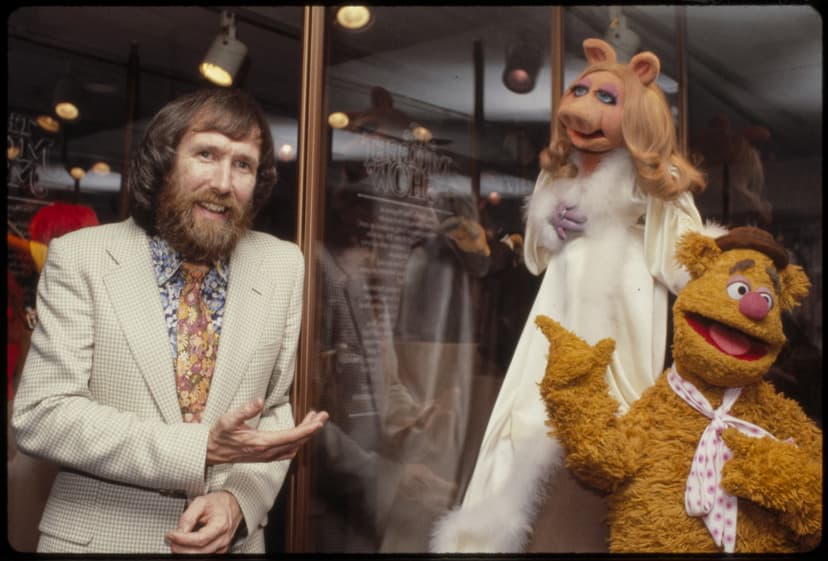
Jim Henson
Legend of Dance
Why They Matter
Jim Henson changed the scale and intimacy at which puppet movement could be understood. His teams treated a hand-and-rod figure as a screen actor capable of listening, hesitating, singing and reacting, then extended those principles to ensembles and full creature worlds. For dance history, the key…
Known For
Watch
Jim Henson Family donation to the National Museum of American History
Smithsonian's National Museum of American History
An authoritative museum video connecting Henson's family and original puppets to the Smithsonian collection.
Jim Henson — The Man Behind The Muppets
Biography
A concise visual overview useful for orientation before close movement analysis.
Biography
James Maury Henson was born in Greenville, Mississippi, in 1936 and spent part of his childhood in Leland before his family moved to Maryland. At the University of Maryland, where he entered in 1954, he studied art and encountered a puppetry course that would shape his creative direction. Television attracted him not as a delivery system for older stage forms, but as a new creative medium in itself.
Working with Jane Nebel, later Jane Henson, he created the short local television series *Sam and Friends* for WRC-TV in Washington beginning in 1955. The program became a laboratory for close-up puppet performance. Henson used the camera's selected frame in place of a visible puppet-stage proscenium, and his flexible foam-and-fabric characters could register small changes of angle, posture and mouth rhythm. Kermit began in this experimental period, years before the character's familiar frog identity was fully established. In 1958, Jim and Jane Henson established Muppets, Inc., the company lineage that would become The Jim Henson Company.
Henson's team became central to *Sesame Street* from its 1969 debut. Characters including Kermit and Ernie turned educational segments into brief dramatic encounters, while Henson, Frank Oz and collaborators refined a performance grammar built around eye focus, lip synchronization, reaction timing and tightly coordinated partners. The success brought puppet performance to an enormous audience, though the work was fundamentally collaborative; writers, builders, producers and fellow performers must be credited rather than subsumed into a single-author narrative.
After U.S. networks resisted his proposal for a broadly appealing variety series, British producer Lew Grade backed *The Muppet Show*, made from 1976 to 1981. Its backstage-show format supported musical numbers, comedy sketches and recurring character relationships. Henson performed Kermit and other roles while leading an ensemble whose physical comedy depended on precise cueing between puppet operators, human guests, cameras and music. The Peabody Board honored Henson and the Muppets in 1978 for satire, character invention, humor and family-viewing standards.
Henson expanded into features and increasingly ambitious creature worlds. *The Muppet Movie* brought the ensemble to cinema in 1979; *The Dark Crystal* (1982), co-directed with Frank Oz, pursued an environment populated entirely by constructed beings; and *Labyrinth* (1986) integrated human performance, puppetry and complex creature effects. These projects helped establish the work later associated with Jim Henson's Creature Shop, while *Fraggle Rock* and *The Storyteller* explored other scales, audiences and movement vocabularies.
Henson died suddenly in New York in May 1990, aged 53. His companies, characters, archives and training lineages continued through family members and collaborators, but the legacy is broader than a franchise. He demonstrated that puppets could sustain intimate screen acting, full-body spectacle, satire, educational exchange and mythic cinema. The Television Academy inducted him into its Hall of Fame in 1987, and museums including the Smithsonian now preserve his creations as part of American cultural history.
Career Highlights
Henson and Jane Nebel began Sam and Friends on Washington television, developing the early Muppet performance language and a prototype Kermit. Smithsonian
Jim and Jane Henson established Muppets, Inc., the company lineage that became The Jim Henson Company. The Jim Henson Company
Served as president of Puppeteers of America, reflecting early leadership within the field as well as television success. UNIMA
Henson's characters and performers became foundational contributors to Sesame Street. Smithsonian
The Muppet Show began production, placing ensemble puppetry inside a variety-show structure for international audiences. Television Academy
Jim Henson and the Muppets received a Peabody personal award. Peabody Awards
The Muppet Movie extended the characters' screen movement and comic timing to a feature-film scale. Smithsonian
Henson and Frank Oz co-directed The Dark Crystal, built around an extensive world of puppet and creature performance. The Jim Henson Company
Labyrinth combined live actors, puppetry, choreography, music and creature effects in a fantasy feature. The Jim Henson Company
Inducted into the Television Academy Hall of Fame. Television Academy
Gallery
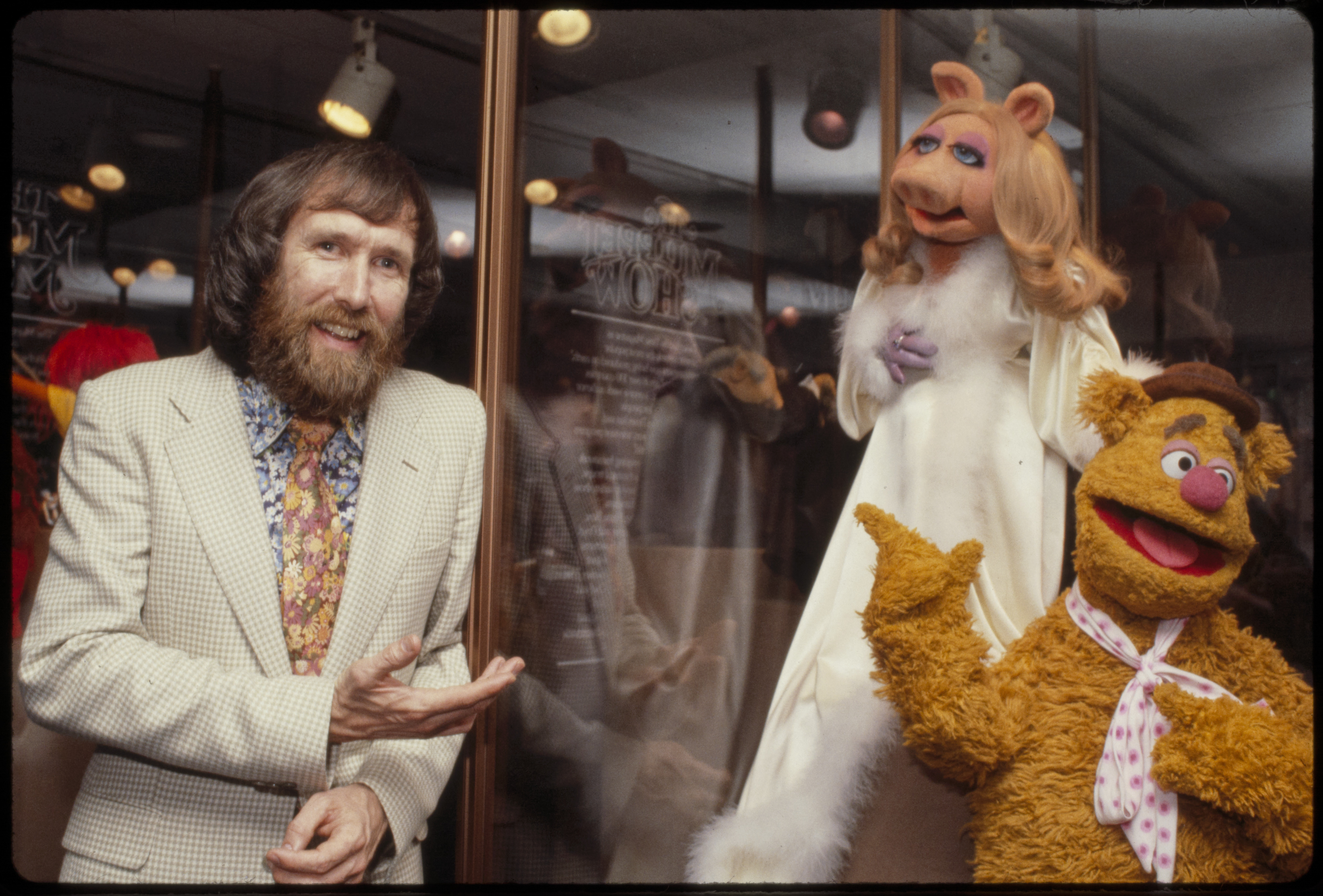
Legacy & Impact
Jim Henson changed the scale and intimacy at which puppet movement could be understood on screen. His teams treated hand-and-rod figures as actors capable of listening, hesitating, singing and reacting, then extended those principles to ensembles and full creature worlds. For performance history, the key contribution is an influential system of mediated embodiment: a visible character emerges from hidden human coordination, camera composition, musical timing and material design. His institutions also created employment, training and technical infrastructure for generations of puppet performers and builders.
Explore More Legends
Discover the dancers, teachers, choreographers, and cultural icons who shaped how the world moves.
Keep the thread going
Dance history, technique, and the occasional rabbit hole — in your inbox. Thoughtful, infrequent, unsubscribe anytime.
Free. No spam. One click to leave.