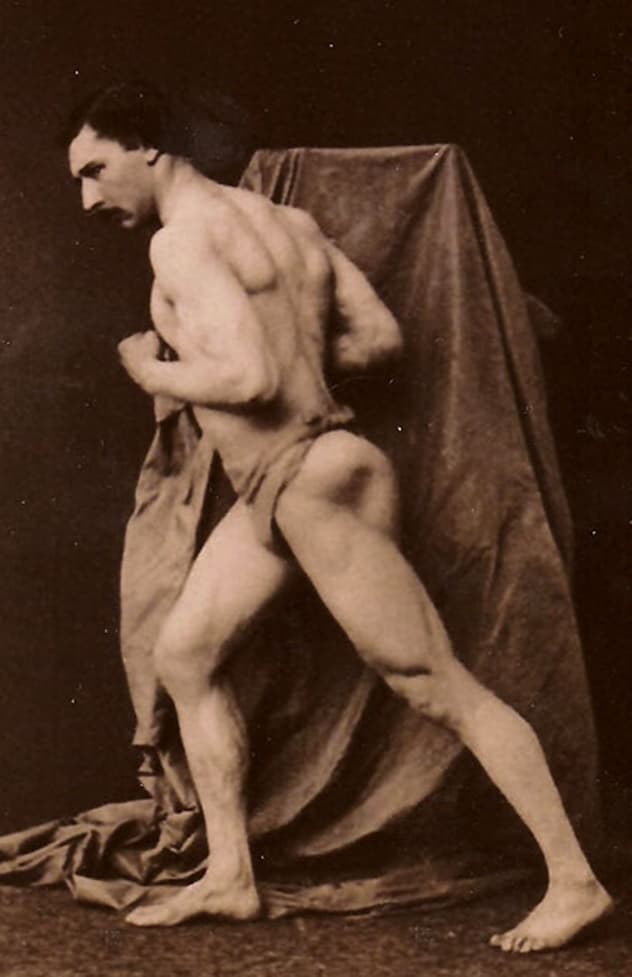
Jules Leotard
Legend of Dance
Why They Matter
Jules Léotard matters because he made airborne transition the central subject of an act. His choreography organized preparation, release, flight, rotation, catch and landing into a repeatable performance structure whose descendants remain fundamental to aerial circus. The garment named after him is
Biography
Jean Marie Jules Léotard was born in Toulouse in 1838 into a family shaped by physical training. His father Jean taught gymnastics and operated a gymnasium, and together they refined the apparatus that would become Léotard's signature innovation. Their collaboration was essential: Jean remained involved in developing the platform height, spacing and timing needed to execute the act safely.
Léotard's breakthrough was transforming static trapeze work into choreographed flight. He developed a sequence in which the performer released one moving apparatus, passed through unsupported space—sometimes executing a somersault—and caught another. His original act, called the "Course aux trapèzes," combined rings and bars and concluded with a backward somersault onto a padded elevated landing platform. The act created what audiences could perceive as a clearly structured dramatic phrase: the visible gap, the released grip, and the moment of recapture.
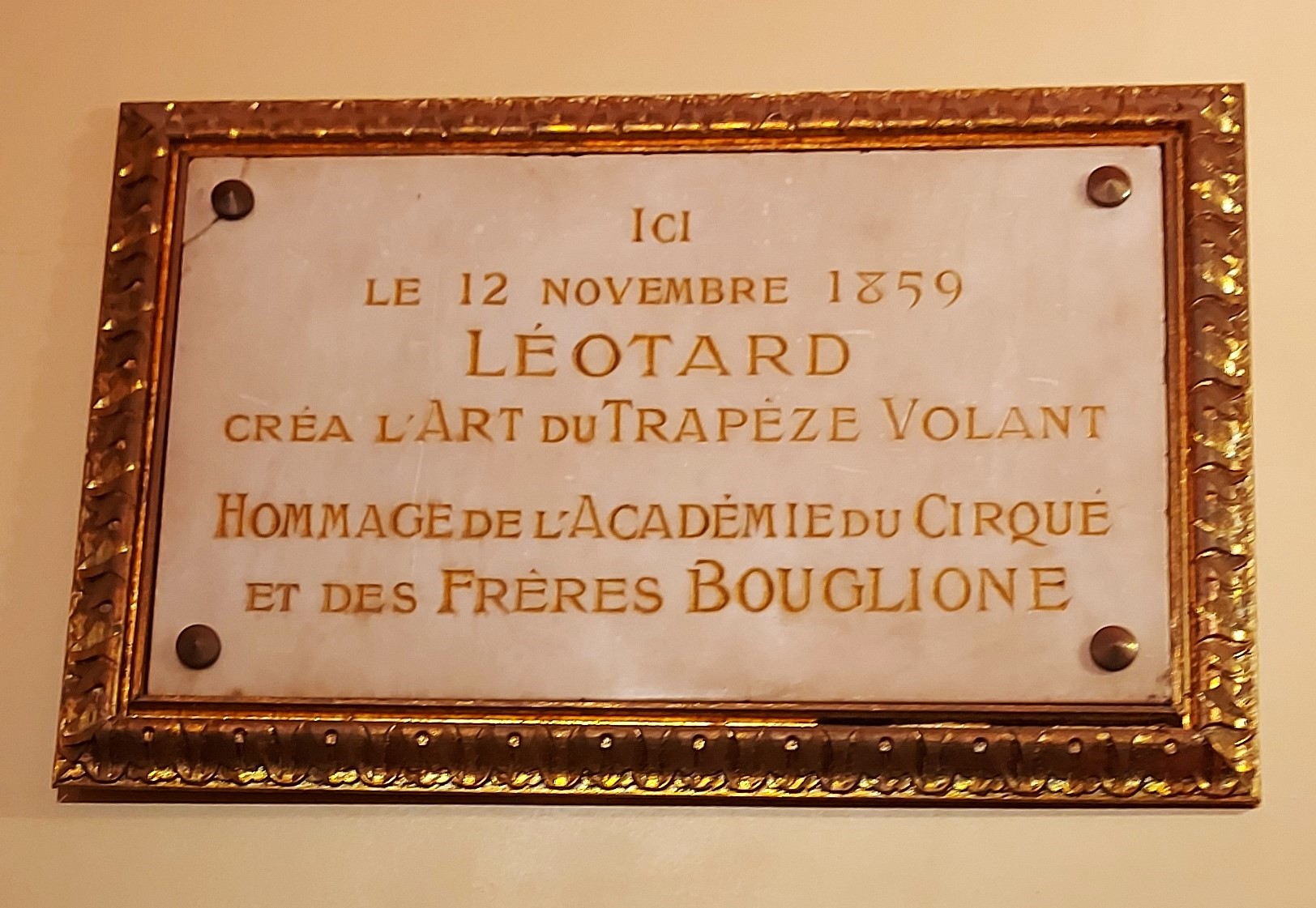
On 12 November 1859, the 21-year-old Léotard presented this act publicly at Paris's Cirque Napoléon, now the Cirque d'Hiver. This performance marked the first documented public flying bar-to-bar trapeze act. The combination of athletic difficulty and theatrical suspense made it an immediate sensation.
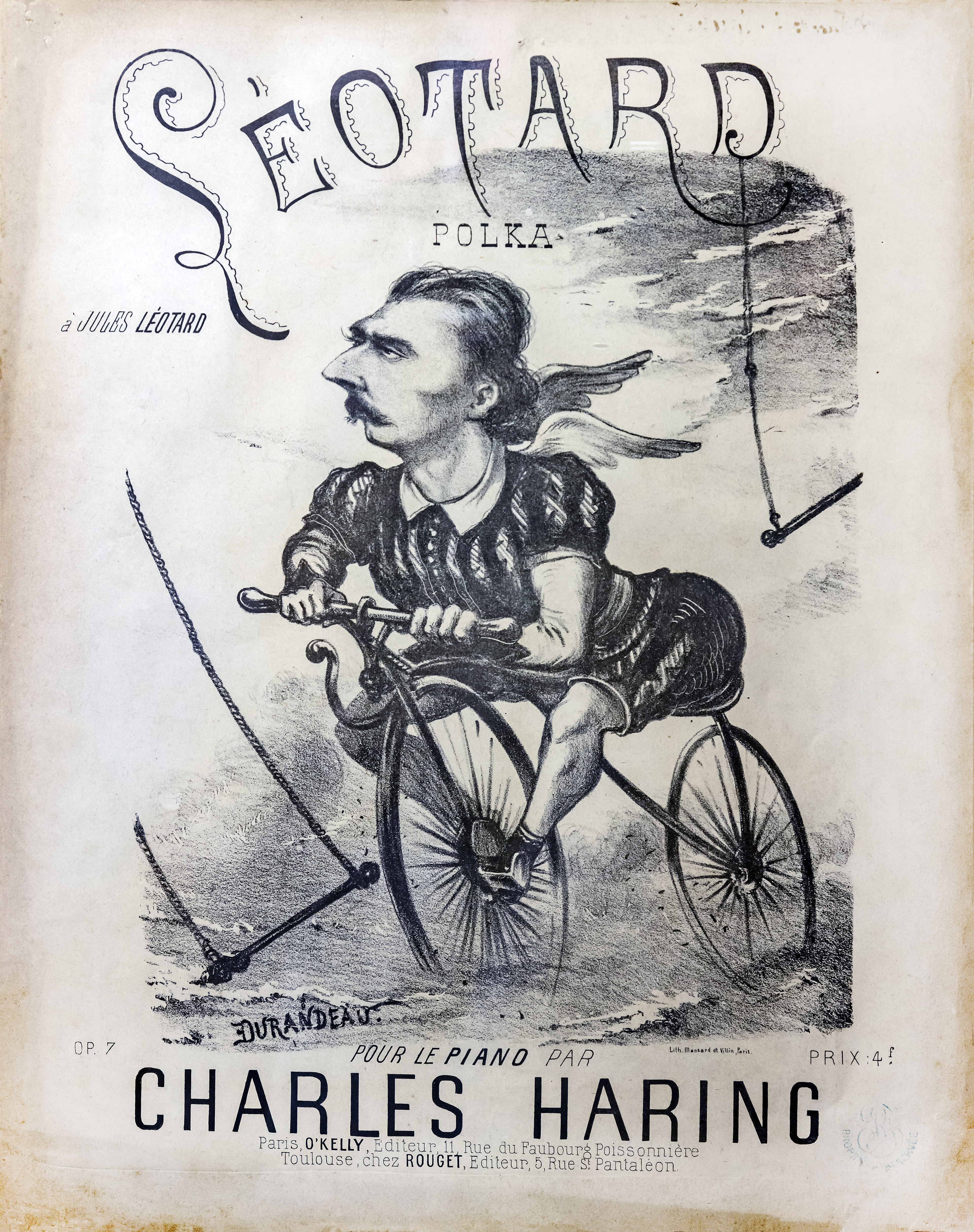
Léotard performed in a close-fitting one-piece knitted costume that revealed his line while reducing loose fabric around the apparatus. The outfit drew both admiration and moral criticism, and during the 1860s, versions of the garment became known as "a Léotard." That eponym survives in the modern generic term. He published *Mémoires de Léotard* in 1860 and became an international touring celebrity, with documented performances across Europe including Berlin, London and Rome. His image was amplified through journalism, theatre and music—most memorably in George Leybourne's 1867 music-hall song, which fixed the "flying trapeze" persona in popular culture.
Léotard's career ended abruptly in August 1870, shortly after his 32nd birthday. Later accounts vary on the exact circumstances. His essential legacy remains secure: subsequent aerialists developed catchers, nets, longer flights and more complex formations, but they built upon the decisive shift Léotard made—treating release, flight and recapture as the act itself.
Career Highlights
Jean Marie Jules Léotard was born in Toulouse into the household of gymnastics teacher Jean Léotard. BnF
On 12 November, Léotard publicly performed his flying “bar-to-bar” trapeze act at the Cirque Napoléon in Paris (Cirque d’Hiver, BnF and Guinness). Cirque d’Hiver
The original act used rings and multiple trapezes, aerial rotations and a padded flying platform rather than the later catcher-and-net system. BnF
Léotard published Mémoires de Léotard, documenting his celebrity persona even though the book says comparatively little about developing the apparatus. BnF
Henry Boizot published the piano galop La Course aux trapèzes, dedicated to Léotard and named for the act. BnF
Léotard toured internationally, with documented historical summaries naming Berlin, London and Rome among his European destinations. Europeana
George Leybourne's song about the daring young flying-trapeze performer fixed Léotard's image in international popular culture. History Today
Léotard died soon after turning 32, ending a brief career that had already established a new circus discipline. BnF
Gallery
Legacy & Impact
Jules Léotard matters because he made airborne transition the central subject of performance. His choreography organized preparation, release, flight, rotation, catch and landing into a repeatable structure whose descendants remain fundamental to aerial circus today. The garment named after him connects functional performance design and bodily line to nineteenth-century aerialist innovation, making his influence visible in dancewear vocabulary across generations.
Related Legends
Explore More Legends
Discover the dancers, teachers, choreographers, and cultural icons who shaped how the world moves.
Keep the thread going
Dance history, technique, and the occasional rabbit hole — in your inbox. Thoughtful, infrequent, unsubscribe anytime.
Free. No spam. One click to leave.