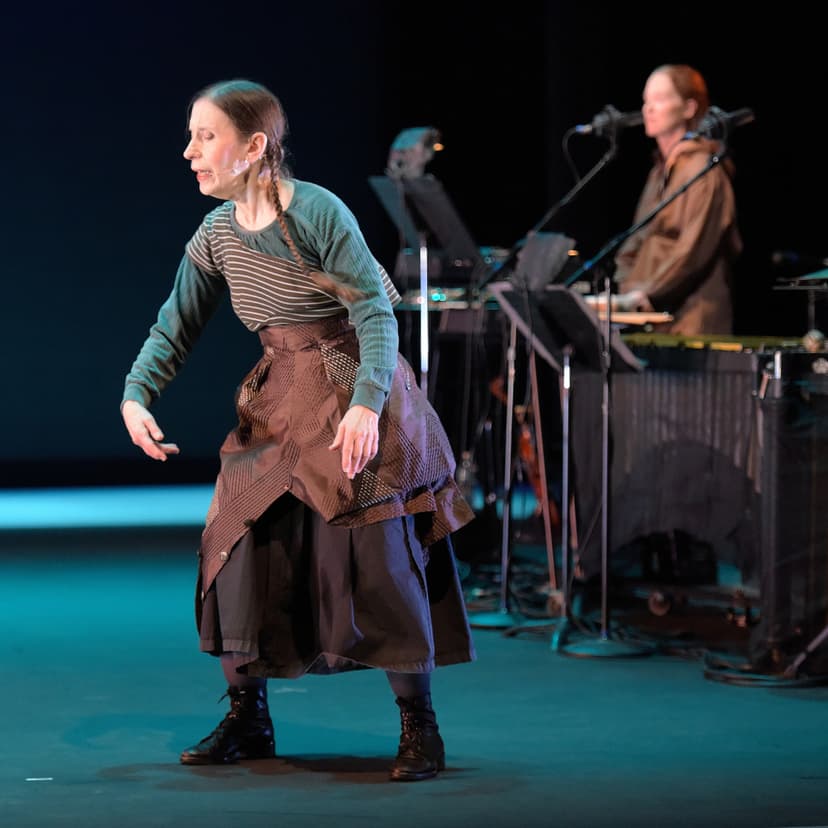
Meredith Monk
Legend of Dance
Why They Matter
Monk matters to dance because she refuses the boundary that treats choreography as movement set to a separately composed score. Her works demonstrate that breath, timbre, posture, gait, gaze, spatial pattern, film, and architecture can all function as compositional materials. That approach helped en
Known For
Watch
Meredith Monk on early developments towards her art
ECM Records
First-person account released by her record label clarifies how her practice developed.
ECM50 | 1981 Meredith Monk, Dolmen Music
ECM Records
Connects the landmark recording to Monk's embodied performance method.
Biennale Musica 2025 - Golden Lion for Lifetime Achievement
La Biennale di Venezia
Documents the institution's 2025 lifetime-achievement recognition.
Dolmen Music: Overture And Men's Conclave / Wa-Ohs / Rain / Pine Tree Lullaby / Calls / Conclusion — Meredith Monk
The strongest catalog choice for studying how breath, resonance, spatial grouping, and ensemble entrances generate choreographic form.
Biography
Meredith Monk was born in New York City in 1942 and graduated from Sarah Lawrence College in 1964. Her early training joined musical and bodily perception—a foundation for the interdisciplinary practice she began developing professionally in the mid-1960s. From 1965 onward, she undertook an intensive exploration of the unaccompanied voice and voice with keyboard, treating vocal sound as physical action rather than merely a vehicle for text.
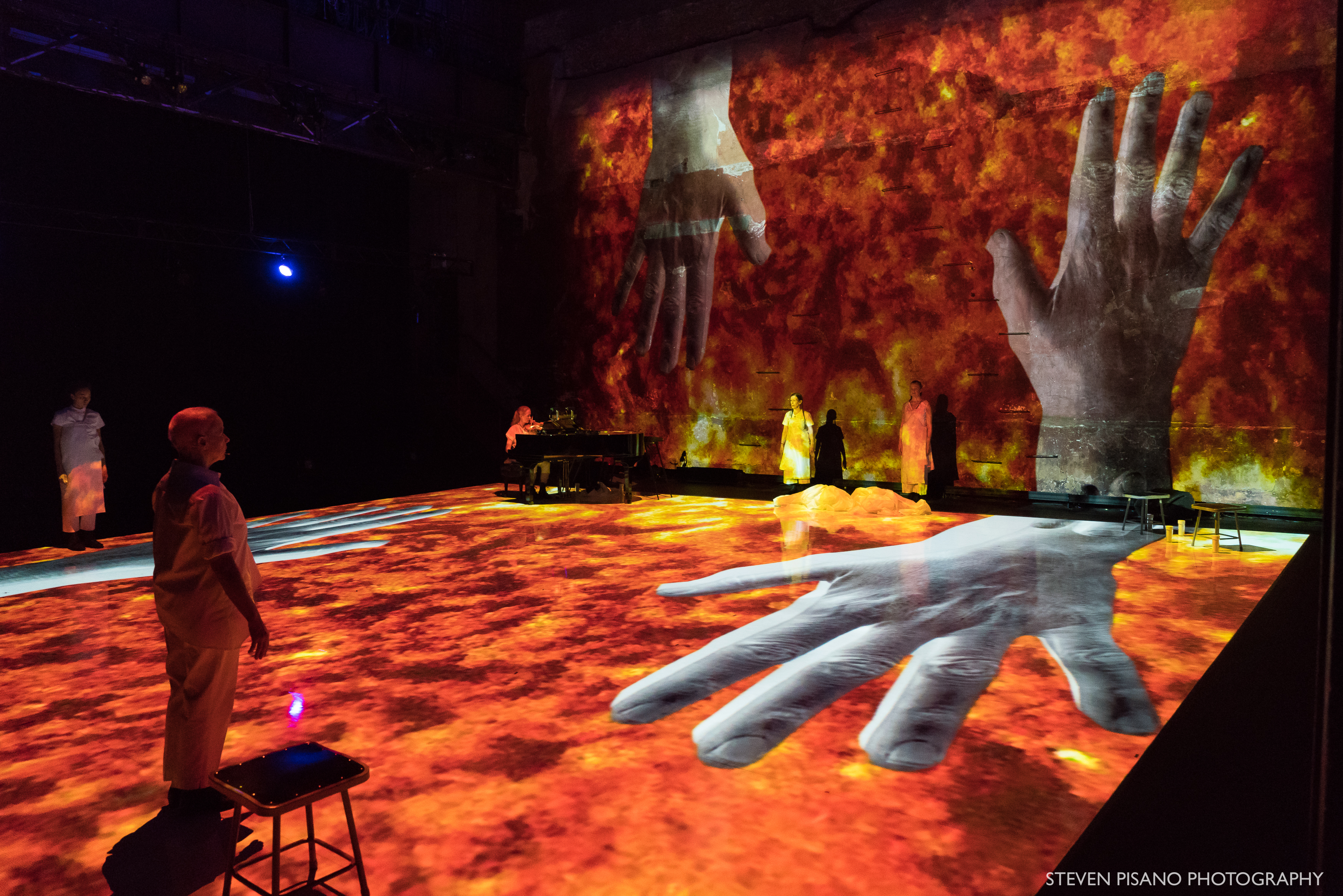
In works such as *16 Millimeter Earrings* (1966), Monk brought sound, movement, objects, film, and spatial design into the same performance grammar. She founded The House in 1968 as a vehicle for an interdisciplinary approach to performance. The company structure allowed her to create events in which choreography was not an illustration of music: gesture, walking, stillness, vocal articulation, costume, light, and architecture could all organize time.
During the 1970s Monk developed large-scale music-theater works including *Education of the Girlchild* (1972) and *Quarry* (1976). These works established a recurring method: nonlinear images and archetypal figures unfold through precise vocal and movement scores rather than conventional plot. In 1978 she founded Meredith Monk & Vocal Ensemble to extend her investigations into layered ensemble textures and collective performance.
Her recording relationship with ECM began with *Dolmen Music* in 1981, which translated a practice developed for live bodies and resonant spaces into recorded form. Her films *Ellis Island* and *Book of Days* carried the same temporal and visual concerns into cinema. In 1991 Houston Grand Opera premiered *ATLAS*, an opera in three parts that broadened the scale of her vocal and theatrical composition.
Monk received a MacArthur Fellowship in 1995 and the 2014 National Medal of Arts, presented in 2015. Later projects continued to bind ecological thought to performance: *On Behalf of Nature* (2013), *Cellular Songs* (2018), and *Indra's Net* (premiered in 2023) form a trilogy about human relationship to the natural world. She remains artistic director of the House Foundation for the Arts. In 2025 the Venice Biennale awarded her its Golden Lion for Lifetime Achievement in Music, citing the reach of her interdisciplinary work across experimental and contemporary music.
Career Highlights
Graduated from Sarah Lawrence College. Official biography Official biography
Began her sustained exploration of voice as a multifaceted instrument. Official biography Official biography
Created 16 Millimeter Earrings, an early landmark in her integration of live performance, voice, objects, and projected media. Official chronology Official chronology
Founded The House as an interdisciplinary performance company. Official biography Official biography
Created Education of the Girlchild, later maintained in her repertory in multiple forms. Official chronology Official chronology
Premiered Quarry, a large-scale music-theater work. Official chronology Official chronology
Founded Meredith Monk & Vocal Ensemble. Vocal Ensemble history Vocal Ensemble history
Released Dolmen Music on ECM New Series, beginning a long recording relationship with the label. ECM Records ECM Records
ATLAS: an opera in three parts premiered through Houston Grand Opera. Official chronology Official chronology
Received a MacArthur Fellowship. MacArthur Foundation MacArthur Foundation
Received the 2014 National Medal of Arts from President Barack Obama. National Endowment for the Arts National Endowment for the Arts
Received the Venice Biennale's Golden Lion for Lifetime Achievement in Music. La Biennale di Venezia La Biennale di Venezia
Legacy & Impact
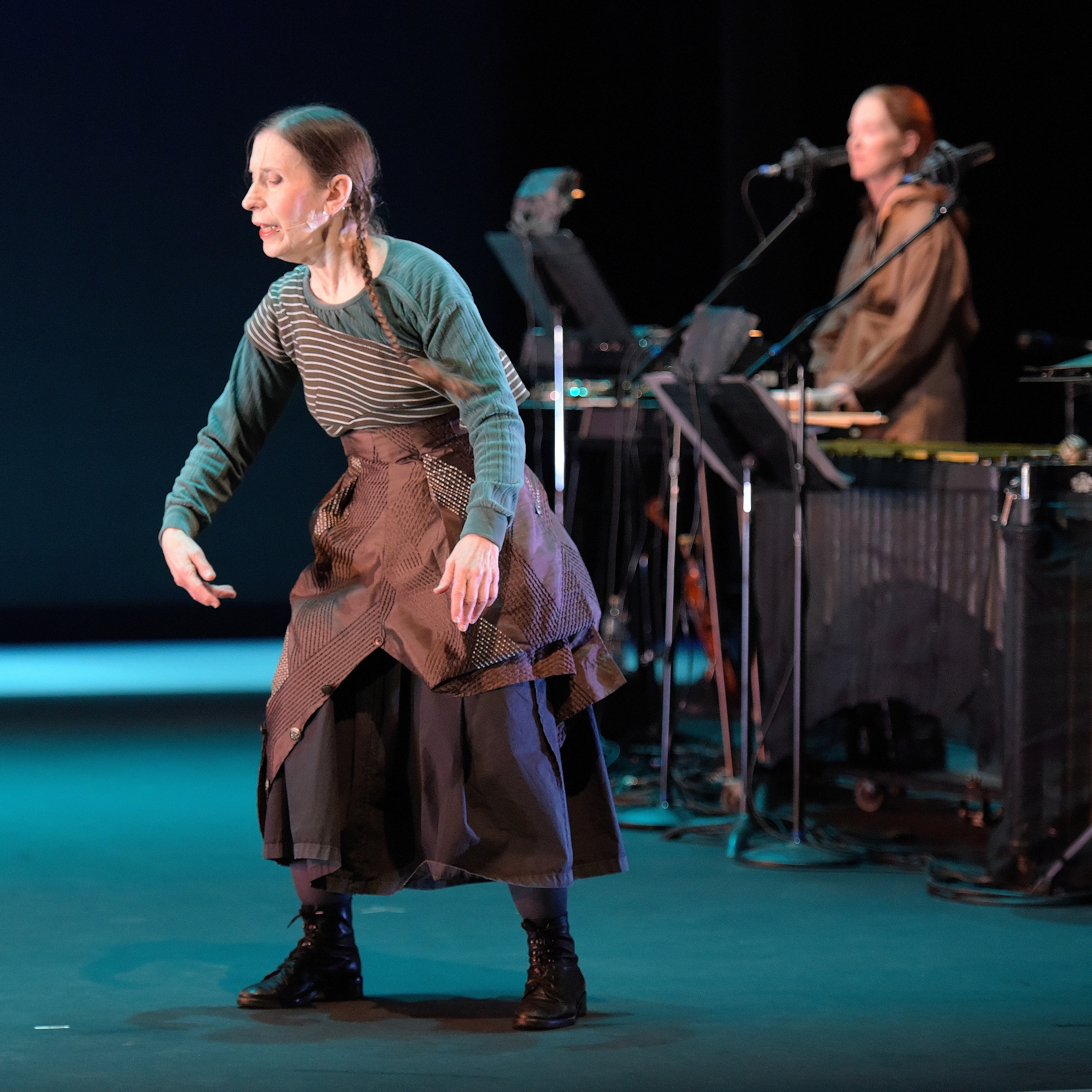
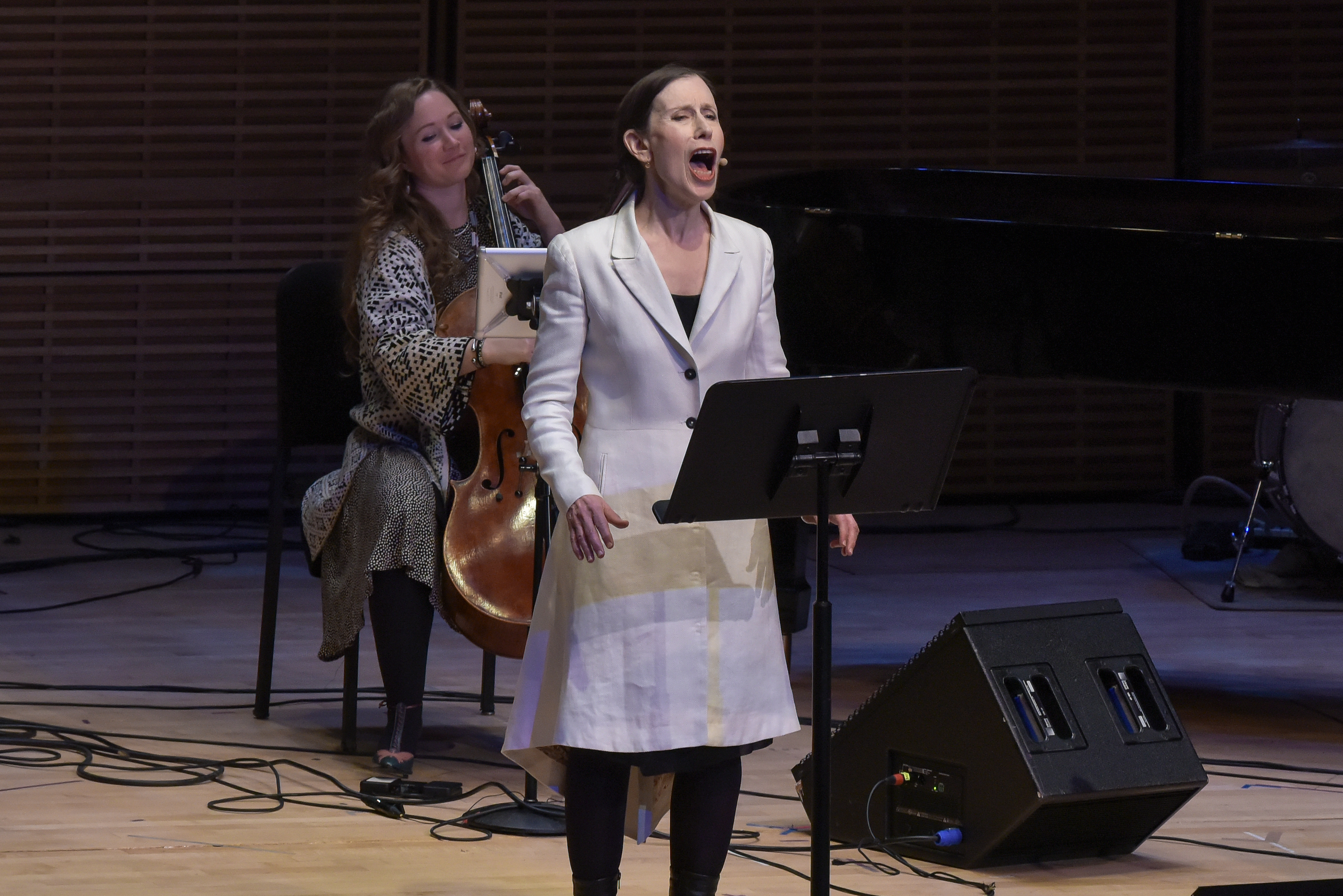
Monk matters to dance because she refuses the boundary that treats choreography as movement set to a separately composed score. Her works demonstrate that breath, timbre, posture, gait, gaze, spatial pattern, film, and architecture can all function as compositional materials. That approach helped enlarge the field of postmodern and interdisciplinary performance while establishing an influential body of extended-vocal music. The institutions she founded preserve not just finished works but a durable ensemble practice linking embodied attention to collective sound.
Explore More Legends
Discover the dancers, teachers, choreographers, and cultural icons who shaped how the world moves.
Keep the thread going
Dance history, technique, and the occasional rabbit hole — in your inbox. Thoughtful, infrequent, unsubscribe anytime.
Free. No spam. One click to leave.