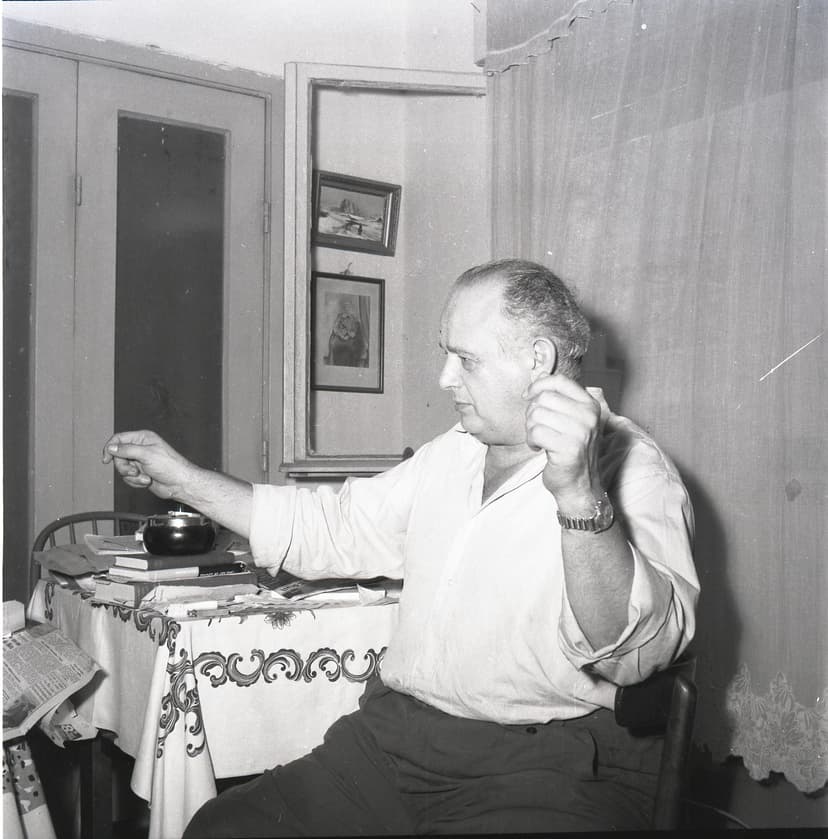
Moshe Feldenkrais
Legend of Dance
Why They Matter
Feldenkrais matters to dance because he offered a structured way to investigate coordination without treating an inherited aesthetic shape as the only answer. Dancers, actors, musicians, and teachers could use small variations, sensory attention, and changing constraints to examine effort, balance…
Known For
Biography
Moshé Pinchas Feldenkrais was born on 6 May 1904 in Slavuta, in what is now Ukraine. In 1918, as a teenager amid war and political upheaval, he left for Palestine. The journey took roughly six months and involved companions and sea travel, not a solitary walk across the continent. In Palestine he worked, completed secondary education, and developed an early interest in how bodies learn under pressure.
In the 1930s, Feldenkrais moved to Paris to study engineering and physics, working in the research environment associated with Frédéric Joliot-Curie. In 1933 he met Jigoro Kano, the founder of judo, and subsequently trained under Mikinosuke Kawaishi. He earned a black belt and helped establish the Jiu-Jitsu Club de France, becoming an important early European judo practitioner and teacher.
When Germany invaded France in 1940, Feldenkrais escaped to Britain, where he worked on anti-submarine research for the Admiralty and continued teaching self-defense. A damaged knee became a practical laboratory for observing balance, habitual effort, sensation, and learning—a long process of experimentation informed by his scientific training and martial-arts experience.
In 1949, Feldenkrais published *Body and Mature Behavior: A Study of Anxiety, Sex, Gravitation and Learning*, which framed posture and action as learned, whole-person organization rather than fixed muscular positions. After returning to Israel in the early 1950s, he taught his method full time in Tel Aviv, developing two related formats: verbally guided group lessons later known as Awareness Through Movement and hands-on individual lessons called Functional Integration.
Feldenkrais trained practitioners in Tel Aviv from 1969 to 1971 and in San Francisco from 1975 to 1978. A larger training began at Hampshire College in Amherst in 1980 with 235 students; illness prevented him from teaching its full planned span, and senior students continued the program. Mia Segal's long service as his assistant, practitioner, and teacher was essential to this transmission. Feldenkrais died in Tel Aviv on 1 July 1984. His surviving lessons and writings support a worldwide field, though contemporary practice contains many pedagogical interpretations. The most durable contribution of his work is an educational proposition: vary action, attend to sensation, and let a learner discover more workable organization rather than imposing a single ideal form.
Career Highlights
Moshé Pinchas Feldenkrais was born in Slavuta on 6 May. Feldenkrais Guild of North America
He left Eastern Europe for Palestine as a teenager, beginning a journey the Guild chronology places over roughly six months. Feldenkrais Guild of North America
Feldenkrais met Jigoro Kano in Paris, a decisive connection in his judo education. International Feldenkrais Federation biography
He earned a judo black belt and helped establish the Jiu-Jitsu Club de France; avoid the disputed “first European” superlative. CNRS Éditions
Fleeing occupied France, he reached Britain and entered wartime Admiralty research while continuing self-defense teaching. Feldenkrais Guild concise biography
Routledge & Kegan Paul published Body and Mature Behavior. Feldenkrais bibliography
A Tel Aviv practitioner training began, continuing through 1971. Feldenkrais Educational Foundation of North America
The San Francisco training began; it ran over four summers through 1978. Feldenkrais Educational Foundation of North America
A 235-student training began at Hampshire College in Amherst, Massachusetts; Feldenkrais taught its first two summers before illness ended his public teaching. Feldenkrais Educational Foundation of North America
Feldenkrais died in Tel Aviv on 1 July. Wikidata Q716293
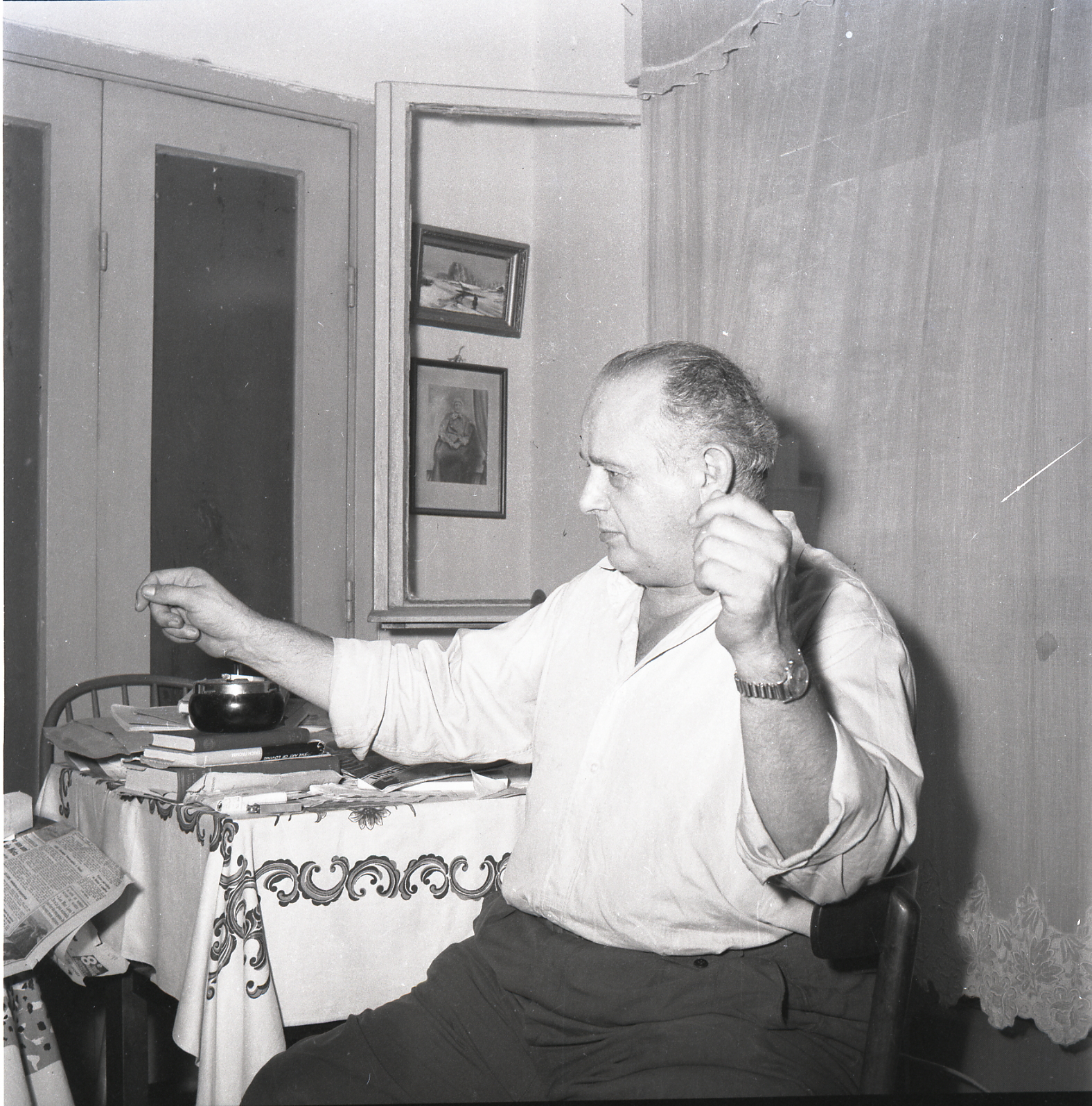
Legacy & Impact
Feldenkrais matters to dance because he offered a structured way to investigate coordination without treating an inherited aesthetic shape as the only answer. Dancers, actors, musicians, and teachers could use small variations, sensory attention, and changing constraints to examine effort, balance, timing, and choice. His legacy helped establish somatic education as a recognizable field alongside—but distinct from—dance technique, conditioning, rehabilitation, or therapy. The people who carried the work forward, including Mia Segal and participants in the Tel Aviv, San Francisco, and Amherst trainings, remain part of that legacy.
Explore More Legends
Discover the dancers, teachers, choreographers, and cultural icons who shaped how the world moves.
Keep the thread going
Dance history, technique, and the occasional rabbit hole — in your inbox. Thoughtful, infrequent, unsubscribe anytime.
Free. No spam. One click to leave.