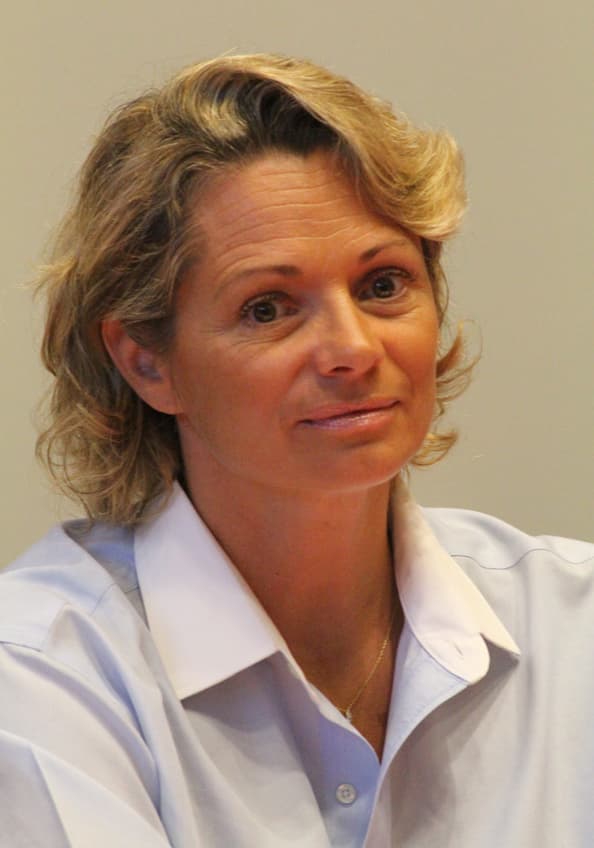
Muriel Hermine
Legend of Dance
Why They Matter
Hermine’s importance lies in the bridge she built between regulated aquatic sport and theatrical movement. Her 1980s record documents French success at the moment synchronized swimming entered the Olympic program, while Sirella and later productions treated the pool as one choreographic zone within…
Known For
Watch
Sirella
Muriel Hermine
Hermine’s own presentation of the signature spectacle that followed her competition career
Ma Carrière de spectacles
Muriel Hermine
Creator-authorized survey connects Sirella with Crescend’O and Freedom
Mondiaux de natation : le retour gagnant de Muriel Hermine
France 3
Documents the 2015 competitive return and separates Masters achievement from the 1980s senior record
Biography
Muriel Hermine was born in Le Mans on 3 September 1963 and trained in the French synchronized-swimming system, representing Racing Club de France and the French national team. The discipline—now officially called artistic swimming—requires athletes to coordinate breath control, propulsion, flexibility, musical timing, and presentational choreography alongside the physical demands of water-based competition.
Hermine's international results accelerated in the early 1980s. She earned European silver in solo in 1983, then placed seventh in both solo and duet at the 1984 Los Angeles Olympics, where artistic swimming made its Olympic debut. At the 1985 European Championships in Sofia she won team gold and took silver in solo and duet. She won solo bronze at the 1986 World Championships in Madrid, and in 1987 achieved the high point of her European campaign in Strasbourg with gold medals in solo, duet, and team. At the 1988 Seoul Olympics she finished fourth in the solo event with 190.100 points, then ended her elite competitive career.
After competition, Hermine applied aquatic choreography to theatrical production. *Sirella*, first presented in Paris in 1991, combined performance in water, on land, and in the air. The production subsequently toured France and Japan, extending synchronized-swimming technique into commercial stage entertainment. She later created additional aquatic spectacles including *Crescend'O* and *Freedom*.
After a long period away from chlorinated pools, Hermine returned to serious training in her early fifties, working again with former coach Françoise Noyer. At the 2015 World Masters Championships in Kazan, she won the 50–59 solo technical and solo free routines for Levallois Sporting Club. This return was framed as both an athletic challenge and a public demonstration that high-level performance can continue in midlife.
Hermine's career spans two related but distinct kinds of authorship: the athlete-interpreter executing scored routines under competition rules, and the producer-director organizing aquatic movement as narrative spectacle. Both roles deserve separate credit, alongside the coaches, duet partners, choreographers, composers, designers, and ensemble performers who contributed to her theatrical work.
Career Highlights
Won European Championship silver in the women’s solo event in Rome. Olympedia Olympedia
Placed seventh in both solo and duet at the Los Angeles Olympics; her duet partner was Pascale Besson. Olympedia Olympedia
Won European team gold and silver medals in solo and duet in Sofia. Olympedia Olympedia
Earned the World Championships bronze medal in solo in Madrid. Olympedia Olympedia
Won European gold in solo, duet, and team in Strasbourg. Olympedia Olympedia
Finished fourth in the Olympic solo event in Seoul with 190.100 points. World Aquatics World Aquatics
Ended her elite competitive career following the Seoul Games. HuffPost/AFP HuffPost/AFP
Premiered the aquatic spectacle Sirella in Paris. Sirella overview Sirella overview
Took Sirella to six major Japanese cities in a Kansaï TV production. Sirella overview Sirella overview
Won the World Masters 50–59 solo technical and solo free events in Kazan. World Aquatics official results World Aquatics official results
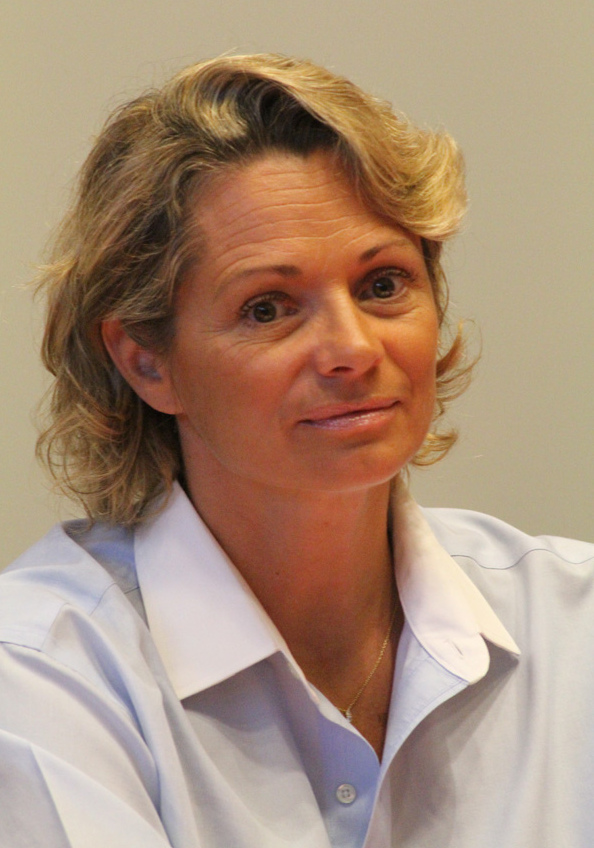
Gallery
Legacy & Impact
Hermine's importance lies in the bridge she built between regulated aquatic sport and theatrical movement. Her 1980s record documents French success at the moment artistic swimming entered the Olympic program, while *Sirella* and later productions treated the pool as one choreographic zone within a larger stage architecture. Her Masters return also widened the public narrative of the discipline by demonstrating that technical performance, musical interpretation, and competitive ambition can extend well beyond elite youth athletics.
Explore More Legends
Discover the dancers, teachers, choreographers, and cultural icons who shaped how the world moves.
Keep the thread going
Dance history, technique, and the occasional rabbit hole — in your inbox. Thoughtful, infrequent, unsubscribe anytime.
Free. No spam. One click to leave.