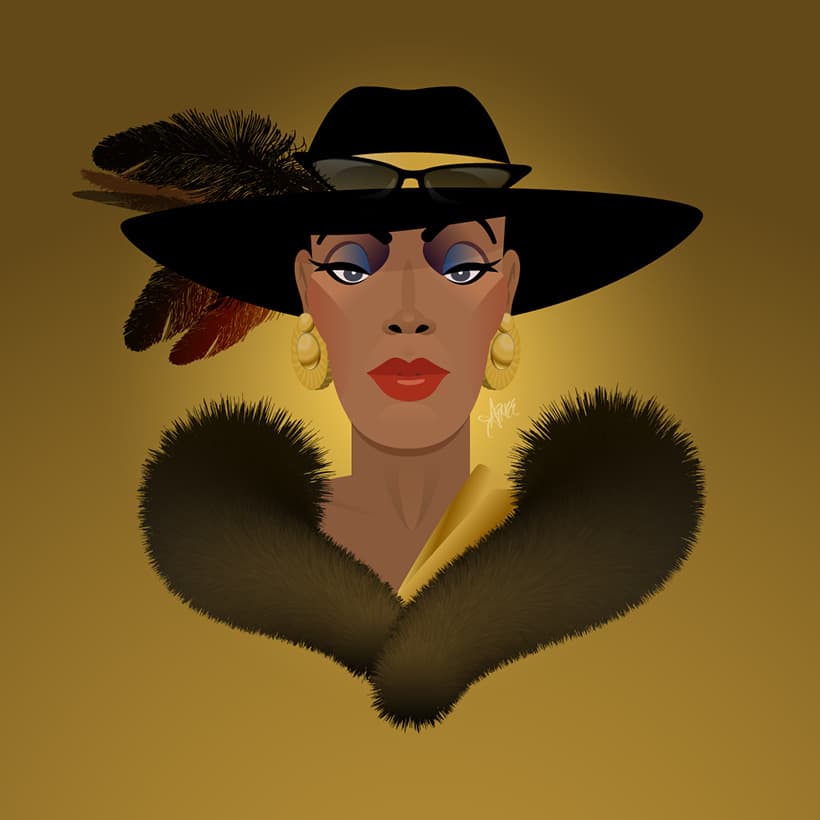
Pepper Labeija
Legend of Dance
Why They Matter
Pepper LaBeija matters as both an artist and an institution-builder. Her competitive image—gowns, headdresses, controlled entrances, and runway command—was inseparable from her role as mother, producer, and teacher. She helped sustain a house that offered affiliation and mentorship while representin
Known For
Watch
Crystal LaBeija: The Queen Who Reinvented Ball Culture
PBS American Masters
The official PBS history explicitly places Pepper in the House of LaBeija succession and helps distinguish founder Crystal from later mother Pepper
Biography
Pepper LaBeija was a ballroom performer, house mother, ball producer, and teacher who became one of the most visible figures in New York's Black and Latinx queer ballroom culture. Born in the Bronx, she entered the gay drag-ball scene in the late 1960s and by the early 1980s had become mother and leader of the House of LaBeija, the foundational ballroom house associated with Crystal and Lottie LaBeija. Her tenure lasted roughly three decades, offering affiliation and mentorship to House members in a competitive culture that often excluded them elsewhere.
As a competitor, LaBeija became known for extravagant, high-fashion presentations and Egyptian-inspired styling. Her livelihood joined performance to infrastructure: she produced balls, taught modeling, and led competitors and younger members through the House. Accounts credit her with about 250 trophies across her career. These roles were not separate occupations but parts of one ballroom practice—costuming, runway education, event production, adjudicated competition, and house mentorship bound together.
Jennie Livingston filmed LaBeija during the multi-year production of *Paris Is Burning*, released in 1990. The documentary introduces her in a grand entrance and gives her extended space to explain houses, categories, aspiration, and survival within her community. LaBeija's filmed presence made her one of the scene's best-known narrators to audiences beyond New York. She appeared in a 1991 episode of *The Joan Rivers Show* alongside ballroom community members, further extending her public visibility.
LaBeija's later life was affected by diabetes, which resulted in the amputation of both feet. She remained associated with the House of LaBeija until her death on May 14, 2003, at a New York City hospital. Her influence endures through House of LaBeija chapters, ballroom artists who inherited its structures, the sustained circulation of *Paris Is Burning*, and scholarship that treats houses as artistic institutions and systems of care.
Career Highlights
Entered New York’s gay ballroom scene and began building a reputation as a pageant and runway performer. Los Angeles Times
Became mother and leader of the House of LaBeija; sources disagree on the exact succession year, but contemporary reporting describes a tenure of roughly 30 years. Los Angeles Times
Built a record of high-fashion and Egyptian-inspired runway presentations; House and obituary sources credit about 250 trophies across her career. Royal House of LaBeija
Was filmed by Jennie Livingston during the production of Paris Is Burning, explaining house leadership and ballroom life in interviews and competition footage. Criterion Collection
Paris Is Burning was released, bringing LaBeija’s performance and testimony to international film audiences. Criterion Collection
Appeared with ballroom community members in a Joan Rivers Show episode later preserved among Criterion’s release supplements. Criterion Collection
Died on May 14 after decades as a performer, producer, teacher, and House mother. Los Angeles Times
Paris Is Burning was selected for the U.S. National Film Registry, reinforcing the archival importance of LaBeija’s recorded testimony and performance. Library of Congress National Film Registry
Gallery

Legacy & Impact
Pepper LaBeija matters as both an artist and an institution-builder whose work cannot be separated from her role as a mother and teacher. Her runway style—controlled pacing, expanded silhouettes through large garments and headdresses, sustained command of the audience's attention—was inseparable from decades of mentorship, event production, and House leadership. *Paris Is Burning* made her voice famous, but the deeper legacy lies in the practical work of care, training, and community-building she sustained through the House of LaBeija.
Explore More Legends
Discover the dancers, teachers, choreographers, and cultural icons who shaped how the world moves.
Keep the thread going
Dance history, technique, and the occasional rabbit hole — in your inbox. Thoughtful, infrequent, unsubscribe anytime.
Free. No spam. One click to leave.