Tight Eyez
Legend of Dance
Why They Matter
Tight Eyez matters not only for originating vocabulary but for helping define krump as a repeatable cultural practice: sessions, battles, foundational movements, mentorship families, filmed exchanges, and music made for dancers. His career shows how a local improvisational form can travel worldwide…
Known For
Styles Tight Eyez shaped
Each one links to the style’s own page — its origins, music, tempo and video.
Biography
Ceasare LaRon Willis, known professionally as Tight Eyez, grew up in South Central Los Angeles amid severe economic and neighborhood pressures. Dance and Christian faith served as intertwined sources of purpose from childhood. He encountered Tommy the Clown's performance culture as a young dancer, entering an ecosystem in which clowning offered entertainment, competition, and an alternative community structure for local youth.
Around the turn of the 2000s, Willis and fellow dancers moved beyond clowning's conventions toward a rougher, more internally driven vocabulary. PBS's 2024 history names Willis alongside Marquisa "Miss Prissy" Gardner, Christopher "Lil' C" Toler, Jason "Dragon" Green, and Jo'Artis "Big Mijo" Ratti in the group that established krump. Krump developed through parking-lot sessions, battles, crews, and family-like mentorship structures before it reached commercial stages. Willis became known as Tight Eyez and organized his own lineage of dancers through named "Eyez" relationships and later Street Kingdom.
David LaChapelle's 2005 documentary *Rize* brought the South Los Angeles clowning and krump scenes to a broad audience, while contemporaneous interviews allowed Willis, Lil' C, Dragon, Miss Prissy, and Tommy the Clown to explain the culture in their own terms. After *Rize*, Willis continued to develop foundations, circulate battle footage, teach, and lead crews. His screen credits include *Stomp the Yard* (2007), *Be Cool* (2005), and *Step Up Revolution* (2012). In 2011 Street Kingdom appeared on season six of *America's Best Dance Crew*, placing ensemble krump before a television audience and testing how an improvisation-centered form could be organized for choreographic unison.
Beyond dance, Willis has released music designed for krump practice and performance, including *The Othxrz* (2019), *BVCKSTR 4* (2021), and *K.R.U.M.P* (2023). The McKnight Dance Fellowships commissioned Willis as a 2018 SOLO choreographer for performer Herb Johnson III. His continuing work presents krump as a culture of emotional expression, faith, mentorship, battle, and self-authored identity rather than merely a visual vocabulary.
Career Highlights
Participated in the South Los Angeles transition from clowning into the emerging krump culture with Miss Prissy, Lil’ C, Dragon, Big Mijo, and other community innovators. PBS
Appeared in David LaChapelle’s documentary Rize, which introduced krump and clowning to international film audiences. Blackfilm interview
Appeared in the dance film Stomp the Yard. McKnight Dance Fellowships
Led Street Kingdom on season six of America’s Best Dance Crew. McKnight Dance Fellowships
Appeared in Step Up Revolution, extending krump’s presence in commercial dance cinema. McKnight Dance Fellowships
Served as a McKnight SOLO commissioned choreographer for Herb Johnson III. McKnight Dance Fellowships
Released the krump-oriented album The Othxrz through his official Bandcamp. Bandcamp
Released the five-track BVCKSTR 4. Bandcamp
Released K.R.U.M.P, a ten-track album explicitly tagged as krump music. Bandcamp
PBS’s Outside the Lyrics documented krump’s creators and named Willis within the founding group. PBS
Tight Eyez on screen
Films and television featuring Tight Eyez, with the sequences we have indexed.
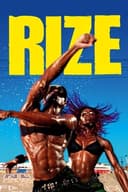
Poster artwork from TMDB.
 This site uses TMDB and the TMDB APIs but is not endorsed, certified, or otherwise approved by TMDB.
Legacy & Impact
Tight Eyez matters not only for originating vocabulary but for helping define krump as a repeatable cultural practice: sessions, battles, foundational movements, mentorship families, filmed exchanges, and music made for dancers. His career shows how a local improvisational form can travel worldwide while retaining a South Los Angeles history and an ethical claim that intense movement can redirect trauma, aggression, and spiritual struggle into expressive community action.
Explore More Legends
Discover the dancers, teachers, choreographers, and cultural icons who shaped how the world moves.
Keep the thread going
Dance history, technique, and the occasional rabbit hole — in your inbox. Thoughtful, infrequent, unsubscribe anytime.
Free. No spam. One click to leave.