Titica
Legend of Dance
Why They Matter
Titica matters because she embodies kuduro as a joined music-and-dance culture while widening who could occupy its most visible stages. Her success challenged exclusion without making advocacy separable from artistry: rhythmic movement, vocal command, visual self-presentation and public service…
Known For
Watch
Titica on Kuduro and Raising Awareness With Her Music
Red Bull Music Academy
Long-form first-person account linking dance background, music and advocacy
CHÃO CHÃO — Titica
Titica official artist channel
Primary visual record of her breakthrough repertoire
Olha o Boneco — Titica
Documented early repertoire; do not infer BPM or meter from genre alone
Mãe — Titica
Collaboration and date are confirmed, but a dance recommendation requires listening
Reza Madame — Titica
Useful for the later-career catalog after manual musical analysis
Biography
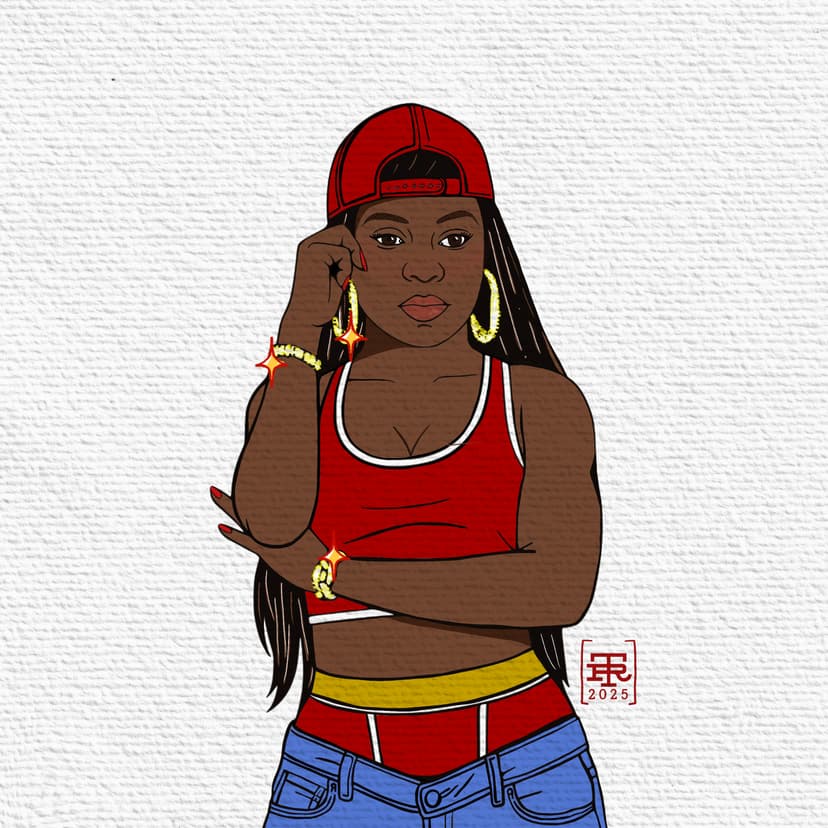
Titica is an Angolan dancer, singer, recording artist and HIV-awareness advocate who brought a dancer's understanding of kuduro to international stages while becoming one of Angola's most visible transgender performers. Born in Luanda, she developed first as a dancer, training in ballet and working as a backing dancer before an unplanned studio contribution opened a path into MCing and recording. Her musical practice therefore grew from embodied movement rather than replacing it.
Kuduro is both music and dance, shaped in Angola and its diaspora through electronic production, club culture and street dance. Titica's 2018 Red Bull Music Academy lecture connects her practice to Congolese music and dance influences as well as Angolan predecessors, explicitly treating dance as inseparable from kuduro's identity. Her breakthrough came with the album *Chão* and the single "Chão" in 2011, followed by "Olha o Boneco," which became part of her early signature repertoire.
Public visibility placed Titica in an advocacy role beyond performance. On 7 October 2013, UNAIDS appointed her and C4 Pedro as National Goodwill Ambassadors for Angola, with a remit focused on HIV prevention and treatment awareness among young people. That December she performed at the opening of the International Conference on AIDS and STIs in Africa in Cape Town, integrating her artistry with public-health work.
She continued recording across *De Última à Primeira* (2014) and *Pra Quê Julgar?* (2018), expanding beyond a single early hit. Her 2017 Rock in Rio appearance with BaianaSystem and her 2018 Red Bull lecture situated her in international conversations about African dance music and artistic exchange. Titica's career joins movement, voice and public advocacy: she is a dancer-formed musician whose command of kuduro performance made club and street dance culture legible on large stages.
Career Highlights
Released “Chão” and the breakthrough album Chão, establishing her recording career. Red Bull Music Academy
Released “Olha o Boneco,” documented in official YouTube audio metadata as an Altafonte release with Ary and Teca Garcia credits. official audio
Was appointed UNAIDS National Goodwill Ambassador for Angola with C4 Pedro on 7 October. UNAIDS
Performed at the opening of the International Conference on AIDS and STIs in Africa in Cape Town. UNAIDS
Released the album De Última à Primeira; official YouTube metadata dates “Mãe,” with Edmazia, to 22 March. official audio
Performed at Rock in Rio with BaianaSystem, a collaboration discussed in her Red Bull Music Academy lecture. RBMA transcript
Released Pra Quê Julgar?, including “Reza Madame,” whose official audio metadata gives 13 April 2018. official audio
Gave an in-depth Red Bull Music Academy lecture in Berlin on kuduro, dance, influence and advocacy. Red Bull Music Academy
Gallery
Legacy & Impact
Titica matters because she embodies kuduro as a joined music-and-dance culture while widening who could occupy its most visible stages. Her success challenged exclusion without making advocacy separable from artistry: rhythmic movement, vocal command, visual self-presentation and public service function together. She remains a model for dancers and musicians who understand performance and social responsibility as one practice.
Explore More Legends
Discover the dancers, teachers, choreographers, and cultural icons who shaped how the world moves.
Keep the thread going
Dance history, technique, and the occasional rabbit hole — in your inbox. Thoughtful, infrequent, unsubscribe anytime.
Free. No spam. One click to leave.