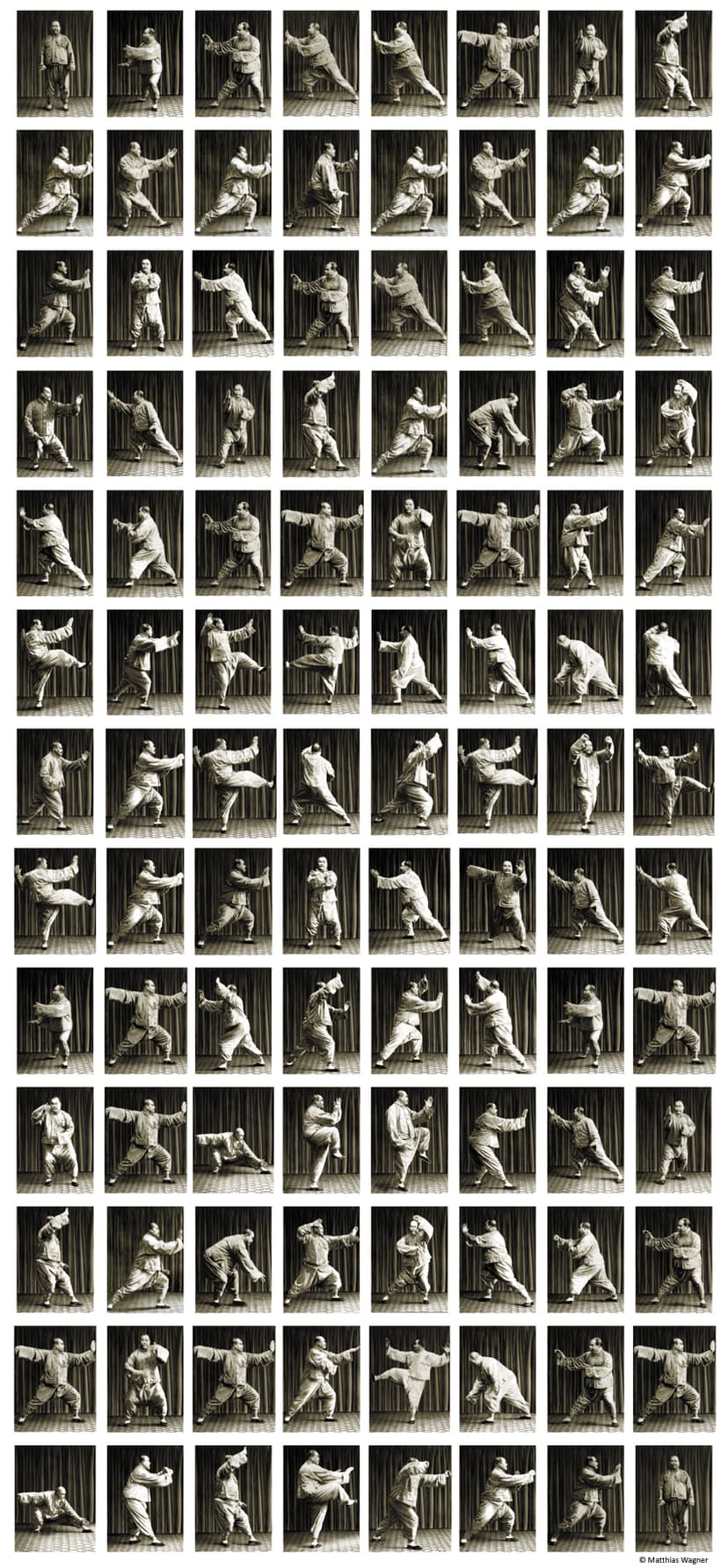
Yang Chengfu
Legend of Dance
Why They Matter
Yang Chengfu matters because he supplied modern Yang-style taijiquan with a teachable public shape: spacious enough to reveal alignment, paced slowly enough to study continuity, and documented well enough to travel through books, photographs, students and descendants. His legacy lives not in a…
Known For
Biography
Yang Chengfu, born Yang Zhaoqing in 1883, was a third-generation practitioner and teacher of Yang-family taijiquan. He descended from Yang Luchan and was the son of Yang Jianhou, learning the art within the family lineage and drawing on instruction from his father and the influence of his elder brother Yang Shaohou. As Chinese martial arts transitioned from private household training into public institutions in the early twentieth century, Yang Chengfu became part of this movement, teaching alongside figures such as Wu Jianquan and Sun Lutang in Beijing's emerging physical-culture institutions.
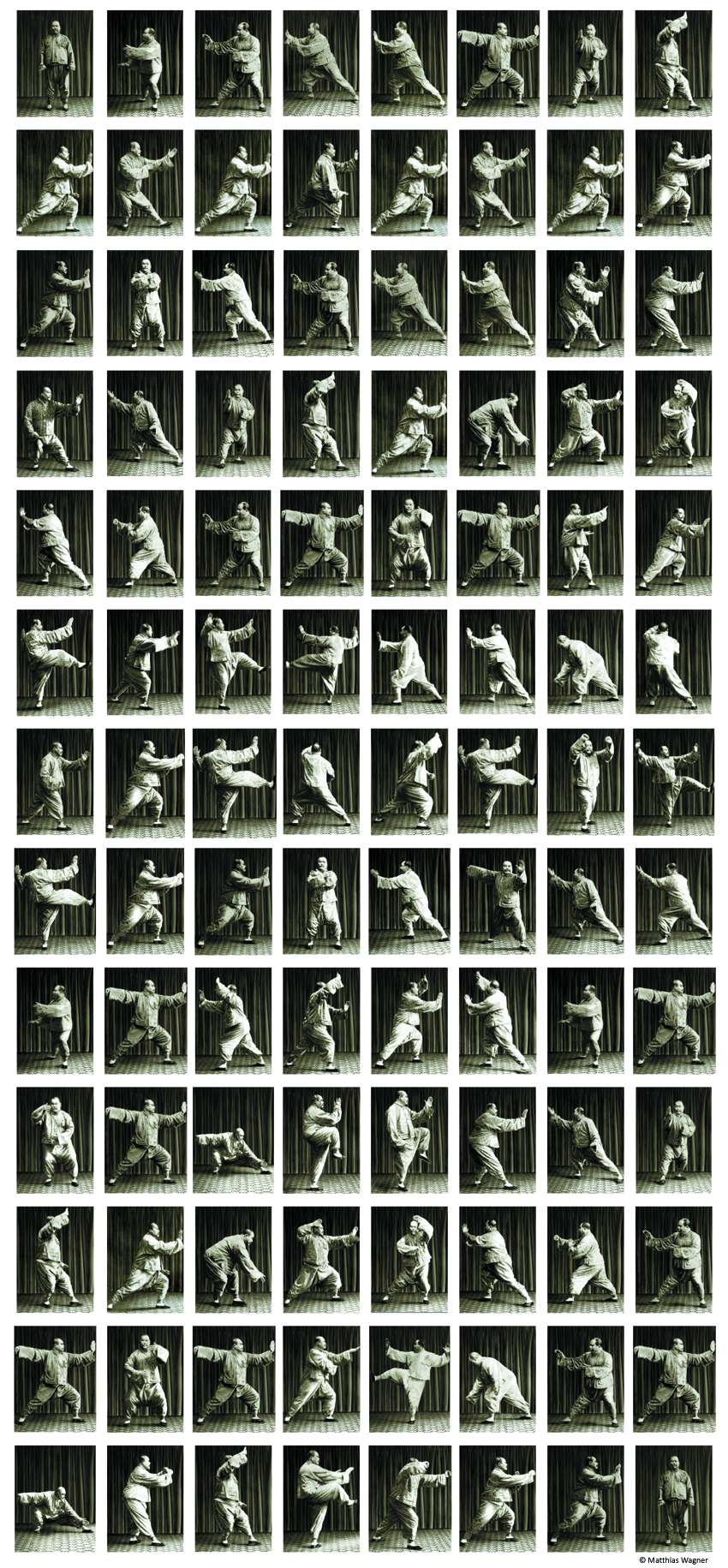
Yang Chengfu's lasting contribution was the standardization of a large-frame sequence defined by open postures, clear alignment, smooth transitions and even pacing. The Yang family describes these movements as extended, relaxed, gentle and flowing while retaining martial application and partner work. This accessible yet substantive approach made the form suitable for large-group instruction and written or photographic documentation, allowing it to reach far beyond the family's original closed-disciple setting.
In 1928, Yang moved to Shanghai, where he continued teaching and benefited from southern publishing networks. He authored *Taijiquan Shiyongfa* (1931) and *Taijiquan Tiyong Quanshu* (1934), works that connected form principles to practical application. The latter was later translated into English by Louis Swaim as *The Essence and Applications of Taijiquan*, making his pedagogical vocabulary available to English-language readers decades after his death.
Yang Chengfu died in 1936. His sons—including Yang Shouzhong, Yang Zhenji and Yang Zhenduo—and students such as Fu Zhongwen, Dong Yingjie, Chen Weiming and Cheng Man-ch'ing each transmitted related but distinct interpretations of his teaching to new regions and generations. The diversity of these branches stands as evidence of his influence and the living character of the lineage he helped shape.
Career Highlights
Born as Yang Zhaoqing, later known as Yang Chengfu. International Yang Family Tai Chi Chuan Association
Studied the Yang-family art within the household lineage led by his father Yang Jianhou. Short history of Yang-family taijiquan
Became part of the movement toward public taijiquan instruction in Beijing. Yang Chengfu overview
Consolidated and taught the open, extended large-frame method identified with his mature practice. Yang Cheng Fu biography
Moved to Shanghai and continued teaching in southern China. Yang Chengfu overview
Published Taijiquan Shiyongfa, a photographed presentation of methods and applications. Yang Chengfu overview
Published Taijiquan Tiyong Quanshu, later translated into English as The Essence and Applications of Taijiquan. Penguin Random House
Died after a teaching career that had expanded Yang-family taijiquan’s public reach. International Yang Family Tai Chi Chuan Association
Yang-family centers were named in his honor before becoming part of the international association founded by Yang Zhenduo and Yang Jun. Center and School Criteria
Louis Swaim’s English translation of The Essence and Applications of Taijiquan made the 1934 text more accessible to English-language readers. Penguin Random House
Legacy & Impact
Yang Chengfu matters because he made Yang-style taijiquan teachable at scale: spacious enough to reveal alignment, paced slowly enough to study continuity, documented well enough to survive in books, photographs and living transmission. His "Ten Essentials" and large-frame method remain reference points nearly a century later, particularly through the International Yang Family Tai Chi Chuan Association and the ongoing practice of his descendants. Crediting his role does not erase his teachers, collaborators or other taijiquan lineages, but rather locates him as a key figure in adapting a martial tradition to modern public and institutional contexts.
Explore More Legends
Discover the dancers, teachers, choreographers, and cultural icons who shaped how the world moves.
Keep the thread going
Dance history, technique, and the occasional rabbit hole — in your inbox. Thoughtful, infrequent, unsubscribe anytime.
Free. No spam. One click to leave.