Dance in Film · 2006
Aurore (2006)
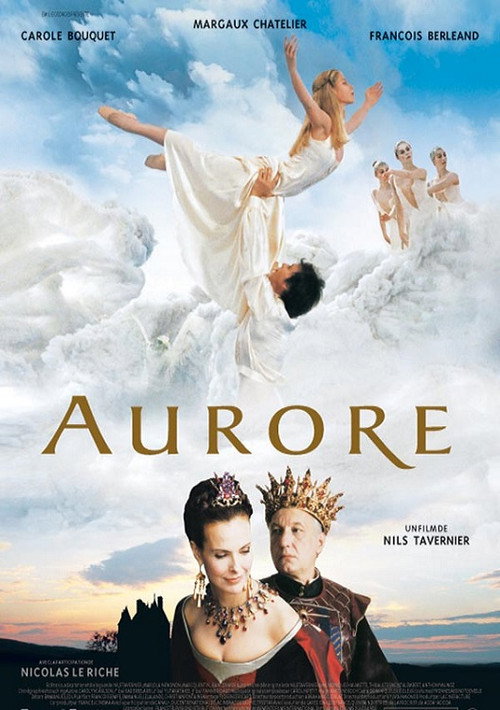
Nils Tavernier builds the fairy-tale plot around a ban on dancing and three world-themed balls, casting Princess Aurore opposite Paris Opera étoile Nicolas Le Riche and commissioning choreographer-performers including Kader Belarbi, so dance becomes both her private resistance and the court's political currency.
Aurore is a 2006 dance feature film centred on ballroom and social dance. For dancers, it's a chance to see the style performed on screen — the phrasing, partnering, and musicality that the same dances carry onto a real floor.
Jump to the 2 dance sequences ↓
Where to watch: No current U.S. full-film stream or rental was verified on 2026-08-09. Paradise City Sales retains the official international catalog and sales contact, while AlloCiné links to a French trailer and current DVD offers; import-disc availability and stock may change.
The dance sequences in Aurore
2 sequences — what is danced, by whom, and where to find it.
Aurore’s forbidden dance for Solal
Expressive fantasy dance (unspecified)Danced by Margaux Chatelier · Choreography Carolyn Carlson
The princess continuing to dance in secret despite her father’s prohibition.
Aurore’s private dancing turns the kingdom’s ban into embodied resistance while Solal’s delighted complicity makes the movement central to their sibling bond.
Not currently available to stream; timestamp is for reference. AlloCiné assigns Carolyn Carlson to the cloud world and Aurore’s dances; TV5MONDE currently lists no upcoming broadcast. No codified form or edition-specific timestamp was inferred.
Oriental marriage-ball ballet
Oriental dance (film’s label)Danced by Marie-Agnès Gillot; nine ensemble dancers (unnamed) · Choreography Kader Belarbi
Nine dancers whirling before Aurore and a wealthy suitor as Marie-Agnès Gillot leads the filmed ballet.
The marriage spectacle uses a large whirling ensemble and a principal dancer to make the king’s political matchmaking legible through movement.
Not currently available to stream; timestamp is for reference. Le Parisien’s set report identifies Gillot and nine dancers; Belarbi’s official biography confirms his choreography. The source’s period label “oriental” is preserved as a taxonomy gap rather than mapped to a specific regional form.
Poster artwork from TMDB.
 This site uses TMDB and the TMDB APIs but is not endorsed, certified, or otherwise approved by TMDB.