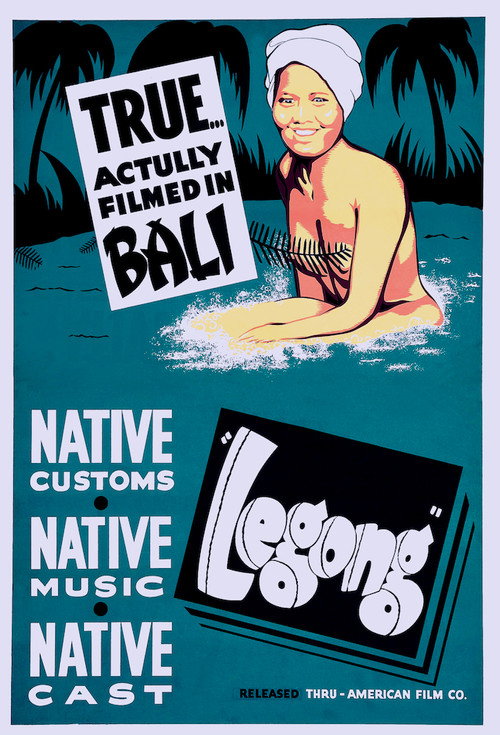
Dance in Film · 1935
Legong: Dance of the Virgins (1935)
Extended Legong, Djanger, and Barong-Rangda performances carry this Balinese-set silent drama, placing sacred temple dancing, trance ritual, ensemble tradition, and a final duet inside rare two-color Technicolor imagery.
Legong: Dance of the Virgins is a 1935 dance feature film centred on Global Southeast Asian Court & Folk. For dancers, it's a chance to see the style performed on screen — the phrasing, partnering, and musicality that the same dances carry onto a real floor.
Jump to the 3 indexed dance sequences ↓
Dance styles featured
Where to watch: Unknown
The dance sequences in Legong: Dance of the Virgins
3 sequences — what is danced, by whom, and where to find it.
Barong and Rangda temple dance
Barong confronting the towering masked Rangda as followers turn ritual swords upon themselves.
Two dancers animate the protective Barong while a masked performer embodies Rangda, turning costume, creature movement, and mock combat into a struggle between balancing forces. The followers’ trance and sword actions make ritual belief physically visible.
Extended Djanger dance sequence
The narrative opening out into an extended village dance performance.
The extended sequence suspends the fiction so communal performance becomes the film’s subject rather than a passing embellishment. Its duration preserves a substantial early screen record of a Balinese form absent from the current taxonomy.
Poutou and Saplak’s final temple Legong
LegongDanced by Goesti Poetoe Aloes; Njoman Saplak
The two sisters dancing together while Poutou’s composure gives way on the temple floor.
The duet binds precise ceremonial performance to Poutou’s private shock as Njong watches Saplak. Dancing through betrayal until Poutou collapses lets controlled form and breaking emotion occupy the same image.
More dance films
Poster artwork from TMDB.
 This site uses TMDB and the TMDB APIs but is not endorsed, certified, or otherwise approved by TMDB.