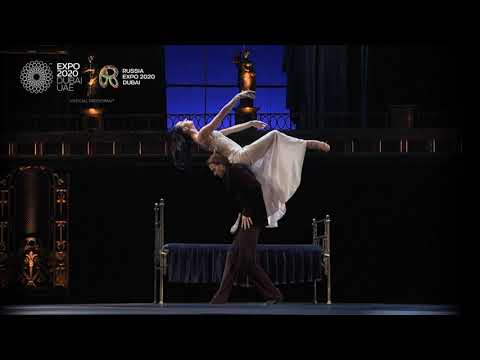
This is Boris Eifman's full-evening ballet on Tolstoy's Anna Karenina, which premiered in Saint Petersburg on 2 April 2005. It belongs to Eifman's line of narrative, psychologically driven ballets built on literary sources, and it uses a compiled Tchaikovsky score rather than a purpose-written commission or the novel's own period music.
What is danced
The source article gives no synopsis, cast list, act structure, or description of steps, so nothing about the actual vocabulary danced can be verified from it. It documents only the music: a compiled score drawn from Tchaikovsky's Symphony No. 2, The Tempest, Francesca da Rimini, Souvenir d'un lieu cher, the First and Third orchestral suites, the Serenade for Strings, the Manfred Symphony, the Hamlet overture-fantasy, Souvenir de Florence, the Pathetique Symphony, The Voyevoda, and the Romeo and Juliet fantasy-overture. That range - two fantasy-overtures built on tragic love plots, the brooding Manfred and Pathetique symphonies, and a string sextet - suggests a score assembled to track Anna's arc from ballroom romance to isolation and destruction, but the article does not describe how any of it was staged or danced.
I cannot responsibly assign movement-vocabulary codes (classical, neoclassical, contemporary-ballet, etc.) from this text alone, since doing so would mean inferring steps from a composer credit rather than reading them off the page, which the source material does not support.
Context
The article situates the work only by date and place (Saint Petersburg, 2005) and by its literary source; it does not describe the surrounding dance landscape, Eifman's company, or how this piece related to other narrative ballets of the period. No historical framing beyond premiere facts can be drawn from it.
How to watch it
Listen for how the compiled score is used dramatically: fantasy-overtures associated with doomed love (Romeo and Juliet, Francesca da Rimini, Hamlet) alongside the darker Manfred and Pathetique symphonies suggest the music itself is doing narrative work, shifting tone as Anna's situation darkens. Because the article gives no scene breakdown, a first-time viewer should track the story through musical mood shifts rather than expecting confirmed act divisions.
Credits
- composer: Pyotr Ilyich Tchaikovsky