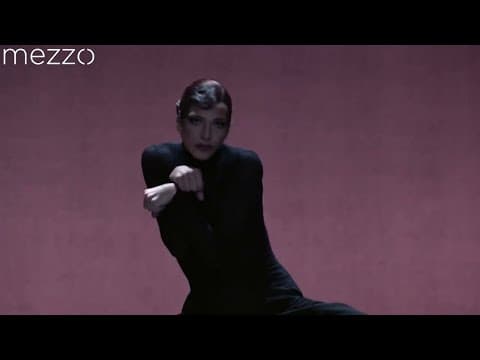
Don Juan ou Le Festin de Pierre is an eighteenth-century narrative ballet made in Vienna in 1761, with a libretto by Ranieri de' Calzabigi, music by Christoph Willibald von Gluck, and choreography by Gasparo Angiolini. It dramatises the Don Juan legend as told in Molière's Dom Juan ou le Festin de pierre (1665): the hero's killing of his lover's father in a duel and his eventual descent into Hell.
It sits in the catalogue as a hinge work between the older divertissement-based ballet and the narrative reform associated with Gluck and Noverre. The article frames it explicitly as a step toward Gluck's more famous operatic reform the following year, Orfeo ed Euridice (1762), while still retaining, in its second act, the conventional run of entr'acte divertissement dances typical of earlier ballet.
What is danced
The article does not describe specific steps, holds or technical vocabulary — it speaks about the work's dramaturgy rather than its choreographic execution. Its stated innovation is structural rather than technical: 'its coherent narrative element', meaning the dancing across the ballet is organised to carry a continuous story (Don Juan's crime and damnation) rather than functioning as a string of unrelated display numbers. This is the hallmark of what dance history calls the ballet d'action, or reform pantomime ballet, pioneered by Angiolini and Jean-Georges Noverre in this period.
Against that narrative spine, the article notes that the second act nonetheless contains 'the series of conventional divertissement dances... within the well-established ballet tradition of an entr'acte effecting a pause in the story-telling' — meaning the piece still pauses its plot for a block of decorative dancing in the older manner, even as the surrounding acts push toward continuous dramatic pantomime. No cast breakdown, named solos, or step-by-step synopsis survives in the source to specify what that pantomime or those divertissements actually looked like on stage.
Context
Don Juan (1761) predates Gluck's operatic reform by a year and is presented in the article as an early instance of the same impulse: replacing loosely strung spectacle with dramatically coherent stage action. Angiolini was, alongside Noverre, one of the two rival architects of the ballet d'action in the mid-eighteenth century, using mimed gesture and unified plot to argue that dance alone could sustain tragedy without sung text — a claim ballet had not systematically made before.
The work's afterlife in music history underlines its importance to the wider Don Juan tradition on stage: the article notes that its music was known to Vincenzo Righini, who drew on it for his 1776 opera Il convitato di pietra (one of three Prague-based Don Juan works of that period, alongside Mozart's Don Giovanni), and that Mozart himself reused its nineteenth movement in the Act III finale of Le nozze di Figaro.
Staging history
The article states only that the ballet 'was frequently revived in many parts of Europe after its first performance' at the Theater am Kärntnertor in Vienna on 17 October 1761, without naming specific companies, cities, or dates for those revivals.
How to watch it
Watch for the tension the article itself identifies: sustained mimed storytelling carrying the Don Juan plot toward its damnation, interrupted in the second act by a block of self-contained divertissement dancing in the older, non-narrative convention. That seam — narrative pantomime against inherited entr'acte spectacle — is the work's historical fingerprint, not a flaw to be smoothed over.
Credits
- composer: Christoph Willibald von Gluck