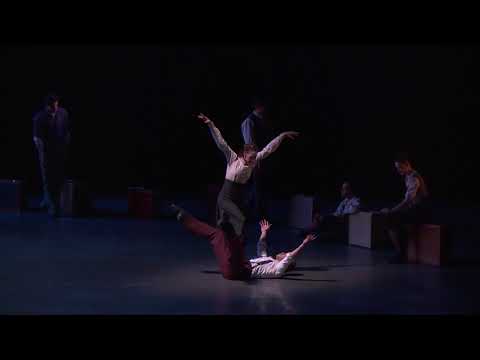
Oltremare is a ballet made by Mauro Bigonzetti for New York City Ballet, set to an eponymous score by Bruno Moretti and first given on January 23, 2008, at the New York State Theater, Lincoln Center. It is the third of three works Bigonzetti made for the company to music by Moretti, following Vespro and In Vento, which places it as part of a sustained choreographer-composer collaboration rather than a one-off commission.
What is danced
The source article does not describe the choreography itself — no synopsis, cast breakdown, or account of steps, holds, or partnering survives in it. What can be established from the record is the production team: Bigonzetti designed the costumes together with Marc Happel, and Mark Stanley lit the piece, which at minimum indicates a work conceived with a defined visual and atmospheric identity rather than a plotless leotard ballet in practice clothes. Beyond that, nothing in the article supports specific claims about vocabulary, and no dance style can be attached to the work on this evidence.
Context
Oltremare belongs to a period when New York City Ballet regularly commissioned European contemporary-ballet choreographers to make one-act works for its dancers, continuing the company's tradition of new-work programming inherited from Balanchine's era but opening it to outside voices. Bigonzetti, then a leading Italian ballet choreographer known for pairing classical technique with a more grounded, physically frank movement language, had by 2008 built a three-work relationship with the company through his repeated pairing with composer Bruno Moretti, making Oltremare the capstone of that specific collaboration rather than an isolated premiere.
Staging history
The article records only the January 23, 2008 premiere at the New York State Theater and a subsequent appearance in the company's 2008 spring season repertory (cited playbill dated Thursday, May 29). No later revivals, other companies, or restagings are mentioned.
How to watch it
Because no synopsis or number-by-number account survives in the source, a viewer has little to go on beyond the credited premiere details; attention should go to how the piece relates, thematically or musically, to the other two Bigonzetti/Moretti works, Vespro and In Vento, as a set. Reviews from the Times, Post, and Sun around the premiere date would be the place to look for firsthand description of the actual staging and choreography.