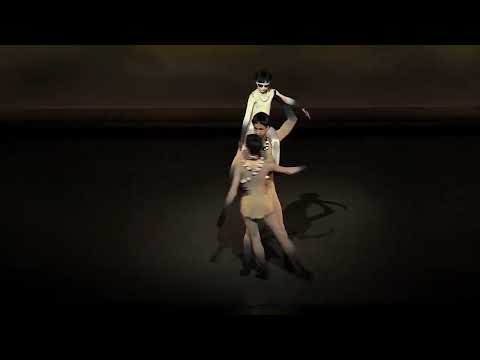
Still Life at the Penguin Cafe is a narrative ballet made by David Bintley to music by Simon Jeffes, founder of the Penguin Cafe Orchestra, first given by the Royal Ballet at Covent Garden. The article describes it as an 'ecocritical ballet': a frame story set in a cafe staffed by penguin waiters, inside which a sequence of solo and ensemble numbers presents endangered animal species (and, in one case, an endangered human culture) as characters, before a closing scene in which all the characters shelter from a flood on an ark-like boat.
What is danced
The article gives the structure as a run of named pieces rather than a step-by-step account of the choreography: The Penguin Cafe, Utah Longhorn Ram, Texan Kangaroo Rat, Humboldt's Hog Nosed Skunk Flea, Southern Cape Zebra, Rain Forest People, Brazilian Woolly Monkey and a Conclusion, each set to a specific Jeffes composition. The original cast list shows the ballet is built around featured soloist roles rather than a single central pas de deux: Deborah Bull and Guy Niblett as the Utah Longhorn Ram and her partner, Bruce Sansom as the Texan Kangaroo Rat, Fiona Brockway as the Skunk Flea, Phillip Broomhead as the Southern Cape Zebra, Stephen Jefferies as the Brazilian Woolly Monkey, and a group of three (Tracy Brown, Jonathan Cope, Michelle di Lorenzo) for the Rain Forest People, framed by a corps dressed as penguin waiters and a solo Great Auk (danced by Nicola Roberts).
Context
No direct discussion of the wider dance landscape of 1988 is given in the article; this section is necessarily limited to what can be inferred from production facts rather than quoted commentary.
Staging history
The ballet premiered with the Royal Ballet at Covent Garden in 1988, the year Bintley was resident choreographer there; the production was filmed that year by Thames Television and commercially released, and it received a United States premiere in 1991. It has been issued on LaserDisc (London/Decca, 1991), VHS (Polygram, 1992) and DVD (ArtHaus, 2008), the last two recording sources also carrying a 50-minute documentary on the Penguin Cafe Orchestra; a piano arrangement of the score was published by Peters Edition in 2002.
How to watch it
Watch for the frame device: the cafe setting and penguin-waiter corps establish a theatrical remove before each 'endangered species' number is presented almost as a specialty act for the onstage human audience to watch. Jeremy Irons's spoken narration, opening with an account of the extinction of the great auk, sets the ecological frame explicitly rather than leaving it to be read from movement alone, and the closing flood/ark tableau gathers all the individual character numbers into a single ensemble image.
Structure
- The Penguin CafeOpening setting: a cafe where humans are served by penguins dressed as waiters, framing the numbers that follow.
- Utah Longhorn RamA featured duet-led number danced by Deborah Bull with partner Guy Niblett, one of the 'endangered species' performances watched by the cafe's human patrons.
- Texan Kangaroo RatSolo number for the character danced by Bruce Sansom.
- Humboldt's Hog Nosed Skunk FleaSolo number for the character danced by Fiona Brockway.
- Southern Cape ZebraSolo number for the character danced by Phillip Broomhead.
- Rain Forest PeopleGroup number representing an endangered human culture, danced by Tracy Brown, Jonathan Cope and Michelle di Lorenzo.
- Brazilian Woolly MonkeySolo number for the character danced by Stephen Jefferies, set to music co-written by Geoffrey Richardson.
- ConclusionAll characters withstand a downpour by gathering together on an ark-like boat.
Structure read from an encyclopaedia article, not from a libretto or score we hold. Confirm against a programme before treating the numbering as authoritative.
Credits
- composer: Simon Jeffes