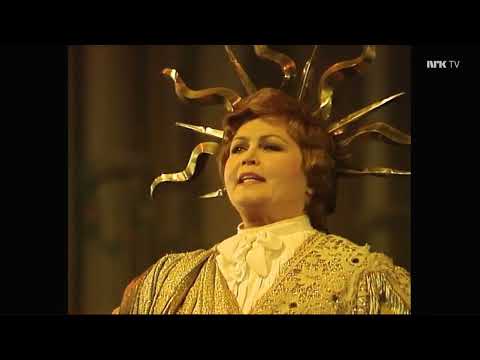
Terpsicore (HWV 8b) is not itself an opera but a prologue in the form of an opéra-ballet that Handel wrote in 1734 to precede a heavily revised version of his 1712 pastoral opera Il pastor fido. It was composed to launch Handel's first season at the newly built Covent Garden Theatre and to showcase the French dancer Marie Sallé, who appears alongside singers drawn from his Italian opera company. It sits in the catalogue as a ballet because dance is structurally load-bearing here in a way it rarely is in Handel's other stage works: the prologue exists specifically to let Terpsicore, muse of dance, demonstrate her art in movement, framed by choral and solo singing.
What is danced
The article is explicit that dance carries the dramatic argument of the piece: Terpsicore is summoned and 'gives a demonstration of the power of dance, illustrating diverse emotions through use of movement,' and the analysis section describes this as 'a series of contrasted dance movements, interspersed with duets and solos from the singers.' Beyond that framing, the source does not name individual steps, dance types, or technique — no minuet, sarabande, chaconne or other specific form is identified for the danced sections, so no set-piece vocabulary can be pinned down from this article.
Context
By 1734 Handel's Italian opera seria, built almost entirely around solo virtuoso singing, was under commercial pressure, and Il pastor fido itself had failed on its 1712 première for lacking spectacle. The article frames Terpsicore as Handel's answer: a prologue 'patterned after models in French operas,' explicitly indebted to Les festes grecques et romaines (Fuzelier/Colin de Blamont, Paris 1723) and, per the analysis, to the extended sung-and-danced prologues Jean-Philippe Rameau was writing for the Paris Opéra. The article calls it 'the only example of a Handel opera with a prologue,' making it a rare direct import of French opéra-ballet structure — chorus, aria, and organized theatrical dance in sequence — into the London opera house at a moment when Italian and French theatrical models were otherwise kept fairly separate on the London stage.
Staging history
According to the article, the revised Il pastor fido with Terpsicore opened Handel's first Covent Garden season on 9 November 1734, closing out a run that had begun at the King's Theatre, Haymarket the same season with a starring role for the castrato Carestini. Like other Baroque opera seria, it then went unperformed for a long stretch until the mid-twentieth-century revival of historically informed performance; the article notes it is now given at festivals and opera houses either attached to Il pastor fido or as a standalone piece, and cites a staged production at the Manoel Theatre, Malta, and at Château de Versailles Spectacles, France, in 2013.
How to watch it
Watch for the alternation the article lays out — opening chorus, then a bravura aria each for Apollo and Erato, then Terpsicore's danced demonstration interleaved with vocal duets and solos, then a closing ensemble of singers, chorus and dancers together. Because the surviving description gives emotional intent ('illustrating diverse emotions through use of movement') rather than named steps, any staging is necessarily a modern choreographic reconstruction rather than a transmitted set text; compare how a given production handles that gap between what Handel's audience saw danced and what the record actually tells us.
Structure
- Invocation of ApolloErato, muse of lyric poetry, and her followers call on Apollo, who descends from heaven with some of the Muses.
- Bravura ariasA bravura aria is given each to Apollo and to Erato before Terpsicore is summoned.
- Terpsicore's demonstration of danceTerpsicore is summoned and demonstrates the power of dance, illustrating diverse emotions through movement, in a series of contrasted dance movements interspersed with vocal duets and solos.
- Closing ensembleSolo singers, chorus and dancers join together to praise the virtuous deeds of wise men to be celebrated in the ensuing opera.
Structure read from an encyclopaedia article, not from a libretto or score we hold. Confirm against a programme before treating the numbering as authoritative.
Credits
- composer: George Frideric Handel
More from George Frideric Handel
Other staged works in the register connected to this one by author or lineage.