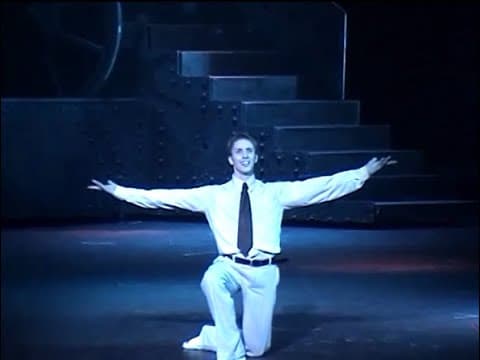
The Bolt is a full-length satirical ballet score composed by Dmitri Shostakovich in 1930-31, his second work for the stage, set to a libretto ironising slack labour discipline in a Soviet factory. Fyodor Lopukhov choreographed the original three-act, seven-scene production, which premiered in 1931 at the State Academic Theatre of Opera and Ballet in Leningrad and was then not performed again for 74 years.
What is danced
The article is written almost entirely from the score and reception side, not the choreography, so it does not describe steps, holds or technique for Lopukhov's original staging. What survives on the record is the plot's shape and the character of the music that would have accompanied it: an opening scene of workers doing a 'physical fitness class' before the conveyor belts start, entrances for 'pompous and opinionated officials and bureaucrats', a 'ridiculous church-going episode', and a climactic sabotage scene. These are described as musical set pieces ('every number full of drama and parody') rather than as danced sequences, so no vocabulary can be attributed to them from this source.
Context
The Bolt belongs to a group of three Shostakovich ballets, alongside The Golden Age and The Limpid Stream, that attempted to dramatise Soviet industrial and social themes for the stage in the early 1930s, at a moment when Soviet ballet was searching for a 'Soviet' subject matter to replace Imperial-era repertory. All three were banned by the authorities after Shostakovich's first official denunciation in 1936, and material from The Bolt was subsequently repurposed by the composer into other works.
Staging history
The 1931 Leningrad premiere, choreographed by Lopukhov, was jeered by its audience and condemned by critics for its 'un-Soviet intentions'; it was then suppressed along with Shostakovich's other ballets after 1936 and went unperformed for 74 years. The work resurfaced only in 2005, when Alexei Ratmansky made a new two-act choreography for the Bolshoi Theatre in Moscow, effectively a fresh staging rather than a reconstruction of Lopukhov's lost original.
How to watch it
Because Lopukhov's original steps are not documented in this source, what audiences now see in performance is Ratmansky's 2005 choreography rather than a restoration of 1931 movement. Listen for the score's parody of popular and 'serious' music and its imitation of factory machinery sounds, since the article credits these musical effects, more than any described step vocabulary, as the ballet's distinguishing feature.
Credits
- composer: Dmitri Shostakovich