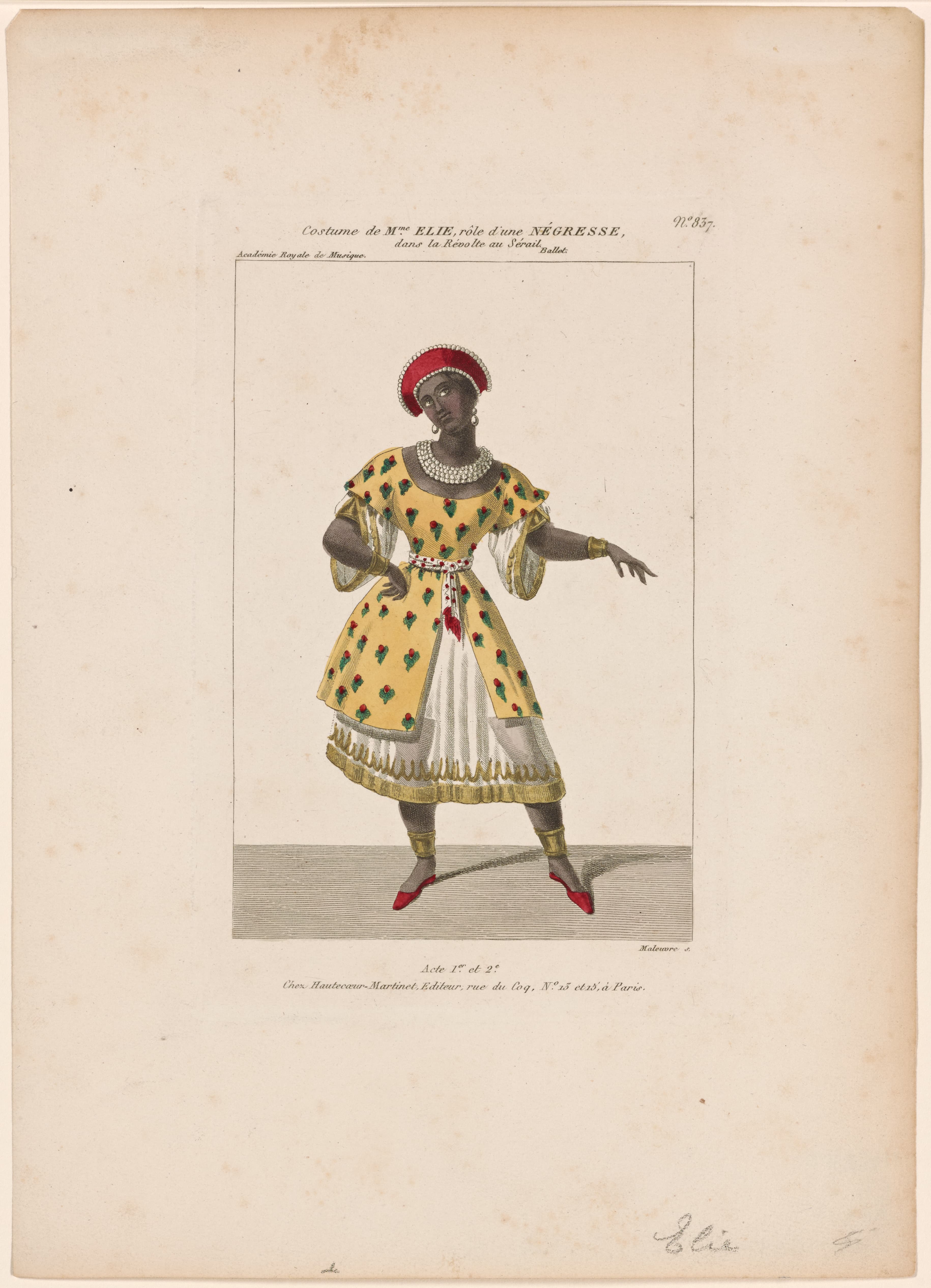
Scan by NYPL — https://digitalcollections.nypl.org/items/5a5a5600-8c35-0131-13ba-58d385a7b928 · Public domain
The Revolt of the Harem (1833)
The Revolt of the Harem is an 1830s narrative ballet first staged in Paris in 1833 as La Révolte au sérail, then reworked for English audiences at Covent Garden in 1834 and later brought to New York in 1844. It belongs to the wave of exoticised, Orient-set spectacle ballets that filled Paris and London stages in the early Romantic period, its plot turning on a harem uprising set in Muslim Granada.
What is danced
The article gives no libretto, scene breakdown, or description of steps, so nothing can be said with confidence about the actual choreographic vocabulary danced on stage. What can be said is structural: this was a full evening ballet substantial enough to run 43 sold-out performances in a single London season and to be restaged again a decade later in New York, which argues for a multi-scene work built around a corps de ballet and named soloists rather than a short divertissement.
Because the source material stops at a one-line plot summary, any claim about pointe work, mime conventions, or exotic/character dance passages would be speculation dressed as fact. A reader wanting that level of detail will need to go to promptbooks, playbills, or contemporary reviews of the 1833 Paris and 1834 London productions, none of which are cited here.
Context
The early 1830s in Paris were the opening years of the Romantic ballet, the period that produced La Sylphide (1832) and established the exoticised, escapist settings and heightened female-centred spectacle that would define the genre through the 1840s. A harem-set revolt drama staged at the Paris Opéra in 1833 sits squarely inside that vogue for Orientalist subject matter, alongside works built around seraglios, odalisques, and rebellious or supernatural women.
Staging history
The work began at l'Académie Royale in Paris on April 12, 1833. Alfred Bunn, manager of the Theatre Royal, Covent Garden, adapted, restaged, and renamed it for English audiences the following year, where it ran to 43 sold-out performances in the 1834 season and was seen by Princess Victoria at Covent Garden on February 11, 1834. It crossed the Atlantic a decade later, opening at Niblo's Garden in New York on July 8, 1844 under the direction of William Mitchell.
How to watch it
No performance record or promptbook detail survives in this source, so there is nothing here to guide attention to specific steps or set pieces. A viewer or reader should instead track it as a case study in cross-Channel and transatlantic repertory transfer: the same harem-revolt plot moving from a Paris Opéra premiere to an anglicised Covent Garden version to an American theatre within eleven years.