The Seagull
The Seagull is a two-act ballet by Rodion Shchedrin, adapted from Chekhov's 1896 play of the same name, with a libretto by Shchedrin and designer Valery Levental. It premiered at the Bolshoi Theatre in Moscow on 27 May 1980, choreographed by Maya Plisetskaya, who also danced the title role.
What it contains
- Contemporary Ballet · Whole work, particularly Plisetskaya's own performance of the title role across both acts — Choreography described as abandoning set academic ballet steps for pantomime and gesture generated by the character's inner emotional state rather than formal vocabulary. Source: "she breaks the traditional canons of ballet, replacing them with pantomime"
What is danced
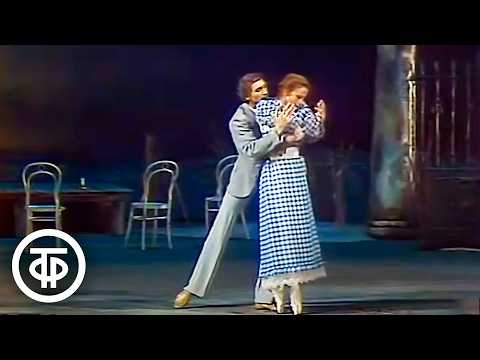
The article gives no scene-by-scene account of steps or set pieces, but it does describe the choreographic method: Plisetskaya, following on from her earlier Anna Karenina, is said to have moved away from codified academic ballet vocabulary toward a pantomime-based, psychologically driven physical language. The critic quoted in the article frames this explicitly as a rejection of "traditional canons of ballet" in favour of gesture that "flows freely from the soul" — dance built from the character's interior state (Nina Zarechnaya/the seagull figure) rather than from set steps or formal patterning.
Beyond this characterisation of approach and intent, no divertissements, pas de deux, corps de ballet numbers or named dances are described in the source, so nothing more specific about technique, partnering or ensemble work can be stated with confidence.
Context
The work belongs to Plisetskaya's run of choreographic collaborations with her husband Shchedrin (following Carmen Suite and Anna Karenina), made within the Bolshoi's late-Soviet repertoire at a moment when Soviet ballet's long-standing "drambalet" (dramatic ballet) tradition of pantomime-inflected narrative was being reworked by dancer-choreographers rather than staff choreographers. The article frames Plisetskaya's approach here as a deliberate departure from academic convention, invoking Chekhov's own character Treplev and his call that "new forms are needed" as a stated justification for the choreography.
How to watch it
Watch for passages where mime and gesture replace set steps or virtuosic display — the article frames this substitution as the choreography's central idea, not an incidental device. Note also how the staging folds in non-balletic theatrical effect (a gunshot sound cue aimed at the audience, per the anecdote below), suggesting a production invested in immersive dramatic realism rather than pure spectacle.
Credits
- composer: Rodion Shchedrin