History & Cultural Context
Lazgi is a folk dance from the Khorazm region of Uzbekistan whose roots reach back well over a thousand years: paintings of the dance at the Tuproq-qala archaeological site in Khorazm (1st-6th centuries CE) testify to its antiquity. Initially associated with Khorazm, it is now performed throughout Uzbekistan. The dance reflects the social life and everyday activities of local communities - UNESCO describes it as representing "real life in all its movements," reflecting the sounds and phenomena of surrounding nature alongside feelings of love and happiness. Its movement vocabulary is distinctive: dancing on half-bent legs with trembling, shaking movements of the shoulders and arms, often with ringing bells attached to them.
Two forms exist: a staged "scenery" dance that represents these themes through fixed, concrete movements, and an interpretive improvised form in which the rhythm and movements grow progressively more dynamic. In performance, musicians, singers, and dancers act in close coordination, with song lyrics largely devoted to love and kindness. The dance has been transmitted across generations through the continual creation of new versions of performances.
In 2019, UNESCO inscribed "Khorazm dance, Lazgi" on the Representative List of the Intangible Cultural Heritage of Humanity (Decision 14.COM 10.b.41). It is performed in its staged form at national holidays and folk festivities, and in its improvised form at community and family events. See Sources.
Lazgi — In Depth
Lazgi (also transliterated Lyazgi) is a traditional dance of the Khorezm oasis in northwestern Uzbekistan, a region historically centered on the ancient Silk Road city of Khiva. It is regarded as one of the oldest and most emblematic dance forms of Central Asia, and its antiquity is often supported by references to depictions of dancing figures at the Tuproq-qala archaeological site, dated to roughly the first through sixth centuries AD. While no precise date of origin can be established, sources consistently describe it as having ancient roots. The name itself is commonly traced to an old word meaning "to tremble" or "shiver," which aptly captures the dance's defining quality.
On 12 December 2019, at the 14th session of UNESCO's Intergovernmental Committee held in Bogotá, Colombia, the dance was inscribed on the Representative List of the Intangible Cultural Heritage of Humanity under the name "Khorazm dance, Lazgi." UNESCO characterizes it as a key form of self-expression that reflects the sounds and phenomena of surrounding nature as well as feelings of love and happiness, transmitted across generations through continually evolving performance versions.
The dance's character is its most celebrated feature: it begins slowly and subtly, with tiny, almost imperceptible movements of the fingers, wrists and elbows, then gradually awakens the shoulders, neck, arms and finally the entire body, accelerating into an intense, ecstatic climax that ends abruptly. This progression is frequently interpreted symbolically as the awakening of nature and life, or as the process of the soul entering the body. Technically, dancers work on half-bent legs, with characteristic shaking of the shoulders and arms, fluttering "broken-hand" movements of the hands, and side-to-side motions of the neck and head; small bells attached to the arms ring in time with the rhythm. A well-known legend attributes the distinctive bent-finger style to a Khorezmian ruler's wife who injured her leg mid-performance and continued dancing without straightening her fingers. Men typically perform in a heroic, courageous manner, women in a lyrical and humorous one.
Musically, Lazgi is driven by live Khorezm folk ensembles featuring the dutar, surnay, doira, chang and garmon, with an accelerating, lively rhythm (documented in 6/8 meter) and songs glorifying love and kindness. It exists both as a set, staged choreography and as an improvisational form prizing rhythmic dynamism. Among its most celebrated interpreters are Tamara Khanum, Mukarram Turgunbayeva and Gavhar Matyakubova, who brought the dance to international stages. Since 2022, an International Lazgi Dance Festival, established by presidential decree in 2020, has been held biennially in Khiva.
Sources: https://en.wikipedia.org/wiki/Lazgi ; https://www.unesco.org/en/articles/uzbek-khorazm-dance-lazgi-included-representative-list-intangible-cultural-heritage-humanity-unesco ; https://uzbekistan.travel/en/o/lyazgi-dance-soul-khorezm-folklore/ ; https://voicesoncentralasia.org/khorezm-lazgi-the-sunniest-dance-on-earth/
Lazgi Playlists
Curated collections on the LODance YouTube channel — performances to watch, lessons to learn from, and the right music to practice with. Tap a collection to play.
▶ Performances · Open on YouTube →
Lazgi Music & Tempo
Drawn from 21 Lazgi tracks in the LODance music library.
Example tracks at practice tempo
- Lazgi (feat. Og'abek Sobirov) — Dilmurod Otajonov134 BPM
- Lazgi — Avazbek Alimov129 BPM
- Lazgi — Hulkar Abdullaeva184 BPM
- Lazgi — Nazokat Jabborova138 BPM
- Lazgi — To'lqin Jabborov141 BPM
- Lazgi — Gulsanam Mamazoitova117 BPM
Lazgi on screen
Films and television where Lazgi appears, with the sequences worth watching for.
 This site uses TMDB and the TMDB APIs but is not endorsed, certified, or otherwise approved by TMDB.
What to Wear
Attire guidance for Lazgi and other Global Central Asian Nomadic & Folk dances. Each card below is sized to the moment — class, practice, social, or competition — because the wardrobe shifts as the stakes do.
Reading the cards
In Class
Comfortable clothing allowing wide arm and leg movements. Long skirts or wide pants for women's traditions.
Social Dancing
Traditional dress of the specific cultural tradition for celebrations and performances.
Competition
Full traditional costume specific to the dance's origin culture — often featuring embroidered fabrics, headdresses, and culturally significant jewelry.
Shoes
Soft leather boots or flat shoes traditional to the culture. Some forms use heeled character boots. Modern practice: flat dance shoes or character shoes.
In Practice
Long practice skirts or wide pants are useful early — the dances assume the silhouette and the foot has to learn how the fabric moves.
Price Range
- Budget: Long skirt or wide pants from existing wardrobe; flat dance shoes $30–80.
- Mid: Soft leather character boots $150–350; traditional embroidered pieces $200–700.
- Premium: Hand-embroidered ceremonial costumes $1,500–6,000+.
Quick Tips
- •Suede-soled shoes allow controlled sliding and pivoting — essential for most partner dances.
- •Avoid rubber soles on dance floors; they grip too much and can cause knee injuries.
- •Bring a separate pair of clean shoes for the dance floor to keep it in good condition.
Sources & Further Reading
Where This Dance Is Documented
Botir Rakhimov – The Eternity of Lazgi (2020)
An editor's note on where the technique for this dance is actually written down — sometimes a named book, sometimes the fact that no such book exists. A judgement, not a count of what we hold.
Cultural & Historical Context
Lazgi emerged from Uzbekistan (Khorazm region) during the 1000s—present day. Understanding the cultural roots, musical traditions, and social circumstances of this era enriches appreciation for the dance's characteristics and significance.
Primary Source Documents
The Library of Dance contains public-domain primary sources for dance history. Copyrighted modern syllabi are indexed with purchase links to their respective copyright owners. Search by dance name or codifier to discover primary source documents.
Last reviewed: October 2026 — This dance profile synthesizes historical research, cultural documentation, and contemporary practice knowledge to provide authoritative context.
More in Global Central Asian Nomadic & Folk
Kara-Jorga (Kara Jorgo)
Kazakh folk dance imitating the ambling gait of a pacer horse, danced with rhythmic shoulder sways and articulated joint movements; also performed in Kyrgyzstan as Kara Jorgo.
Kiyiz
Dance depicting felt production process; starts with light running steps and includes stamping movements.
Tajik Eagle Dance
Male dance mimicking eagle movements in majestic flight; demonstrates ancient Tajik culture.
Uzbek Classical Dances
High art classical dances characterized by complex hand gestures and vivid facial expressions; three regional schools.
Global Central Asian Nomadic & Folk in art
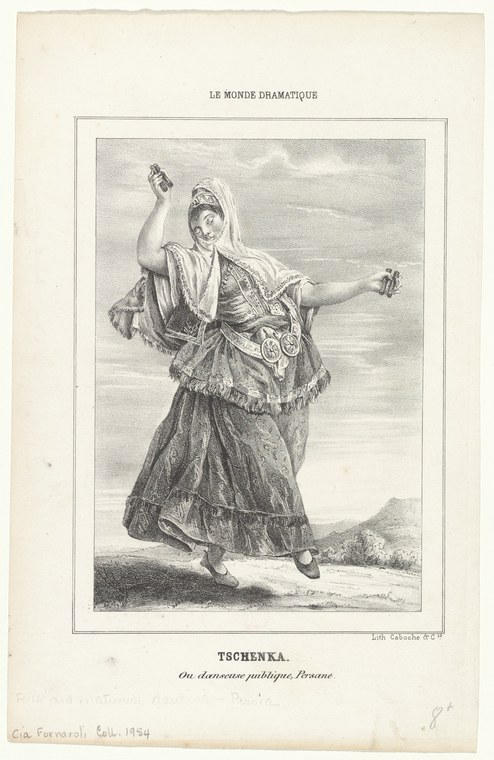
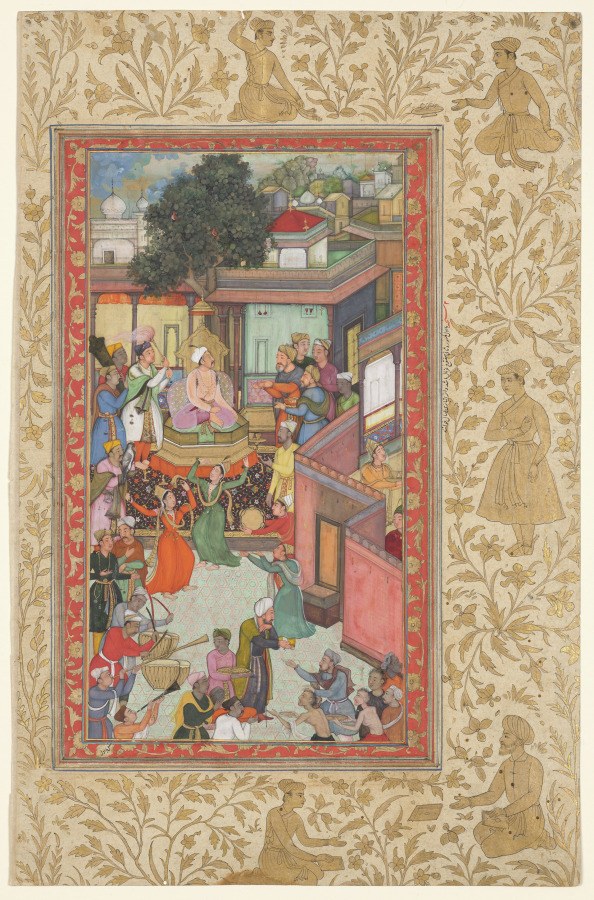
Browse the gallery →Works from the wider Global Central Asian Nomadic & Folk tradition — we have not yet identified enough that depict Lazgi specifically.

Continue Exploring
Lineage of Dance
500 years of dance evolution
Champions of Dance
Winners of marquee national & world titles
Language of Dance
161 dance terms & translations
Listening of Dance
Tempo, timing & musicality tools
Gallery of Dance
5,700+ artworks from museum collections
Attire of Dance
Evolution of dance dress across eras
Keep the thread going
Dance history, technique, and the occasional rabbit hole — in your inbox. Thoughtful, infrequent, unsubscribe anytime.
Free. No spam. One click to leave.