Raqs Sharqi (Belly Dance)
History & Cultural Context
Raqs Sharqi (literally "Eastern Dance"), known internationally as belly dance, encompasses a family of solo improvisational dance forms characterized by fluid, articulated movements of the torso — particularly the hips, abdomen, and chest. The style that became codified as Raqs Sharqi emerged in Egypt in the late nineteenth and early twentieth centuries, blending indigenous Egyptian dance traditions with influences from the broader Arab world, Ottoman court dance, and eventually Western theatrical staging.
The movement vocabulary emphasizes isolation — the ability to move one body part independently while keeping others still — creating the undulations, shimmies, and figure-eights that define the form. Key movements include the hip drop, hip circle, chest lift, shoulder shimmy, and snake arms. Egyptian style (Raqs Sharqi proper) tends toward elegance and musical interpretation, while Turkish Oriental dance favors more dynamic, athletic movement. Lebanese and Gulf styles each contribute their own aesthetic preferences. The dance is typically performed to Arabic music featuring the oud, qanun, tabla, and ney, with improvisation guided by the musical structure of taqsim (instrumental solo) and rhythmic sections.
Raqs Sharqi (Belly Dance) Playlists
Curated collections on the LODance YouTube channel — performances to watch, lessons to learn from, and the right music to practice with. Tap a collection to play.
▶ Performances · Open on YouTube →
Raqs Sharqi (Belly Dance) Music & Tempo
Drawn from 20 Raqs Sharqi (Belly Dance) tracks in the LODance music library.
Example tracks at practice tempo
- Tigers' Eyes — Hossam Ramzy & Ossama El Hendy120 BPM
- Diamond in the Rough — Hossam Ramzy & Ossama El Hendy120 BPM
- The Pearl in My Heart — Hossam Ramzy & Ossama El Hendy120 BPM
- Layali Al Sharq — Al-Ahram Orchestra119 BPM
- Akhod Habibi — Al-Ahram Orchestra131 BPM
- Saher Al Sharq Etneen — Al-Ahram Orchestra119 BPM
What to Wear
Attire guidance for Raqs Sharqi (Belly Dance) and other Global Middle Eastern dances. Each card below is sized to the moment — class, practice, social, or competition — because the wardrobe shifts as the stakes do.
Reading the cards
In Class
Comfortable, fitted clothing that shows hip movement. Hip scarves with coins are traditional for belly dance class. Stretchy pants and crop tops or fitted T-shirts.
Social Dancing
Belly dance performances: decorated costumes (bedlah) with beading and fringe. Social dabke and folk dance: comfortable street clothes.
Competition
Elaborate costumes — Egyptian-style cabaret, tribal fusion, or folkloric depending on category. Heavily beaded and embellished.
Shoes
Barefoot is traditional for belly dance. Foot undies or dance paws for stage performances. Folk forms (dabke): flat shoes or boots.
In Practice
Coin hip scarves are essentially audible feedback — beginners use them in every class. Crop tops or fitted tanks show the abdominal isolation an instructor needs to see.
Price Range
- Budget: Coin hip scarf $15–40; practice wear from existing wardrobe.
- Mid: Performance bedlah $200–700; tribal fusion costuming $300–1,000.
- Premium: Egyptian designer cabaret costumes (Bella, Pharaonics, Hanan) $1,200–5,000+.
Key Terms
- Bedlah
- The classic two-piece belly dance costume — embellished bra and belt with skirt or harem pants.
- Coin hip scarf
- Wrap with attached coins worn at the hips during practice; the audible feedback helps train precise hip articulation.
Quick Tips
- •Suede-soled shoes allow controlled sliding and pivoting — essential for most partner dances.
- •Avoid rubber soles on dance floors; they grip too much and can cause knee injuries.
- •Bring a separate pair of clean shoes for the dance floor to keep it in good condition.
Sources & Further Reading
Cultural & Historical Context
Raqs Sharqi (Belly Dance) emerged from Egypt / Arab World during the 1890s—present day. Understanding the cultural roots, musical traditions, and social circumstances of this era enriches appreciation for the dance's characteristics and significance.
Primary Source Documents
The Library of Dance contains public-domain primary sources for dance history. Copyrighted modern syllabi are indexed with purchase links to their respective copyright owners. Search by dance name or codifier to discover primary source documents.
Last reviewed: October 2026 — This dance profile synthesizes historical research, cultural documentation, and contemporary practice knowledge to provide authoritative context.
More in Global Middle Eastern & Arab Classical & Folk
Tanoura
Egyptian folkloric dance derived from Sufi (Mevlevi) whirling; a dancer spins continuously in a wide, multicolored skirt. Performed at Sufi gatherings and as secular entertainment.
Dabke
Levantine line dance performed in linked lines and semicircles, with synchronized stamping footwork; part of the shared cultural landscape of Lebanon, Syria, Jordan, Palestine, and Iraq.
Khaleegy
Traditional dance of the Arabian Gulf region.
Ardah
Traditionally performed by sword-wielding men in lines; celebration of martial prowess.
Guedra
Trance-inducing desert dance with hand movements followed by head and torso swinging.
Mevlevi Sema (Whirling Dervish)
Sufi spiritual meditation through whirling; seeks connection with Allah by abandoning ego; UNESCO Heritage (2005).
Halay
Turkish folk circle dance performed at celebrations.
Horon
Turkish Black Sea region folk dance tradition.
Zeybek
Solo Turkish male folk dance showing off athletic prowess.
Raqs Sharqi (Belly Dance) in art
Browse the gallery →Works our catalogue identifies as depicting raqs sharqi (belly dance).
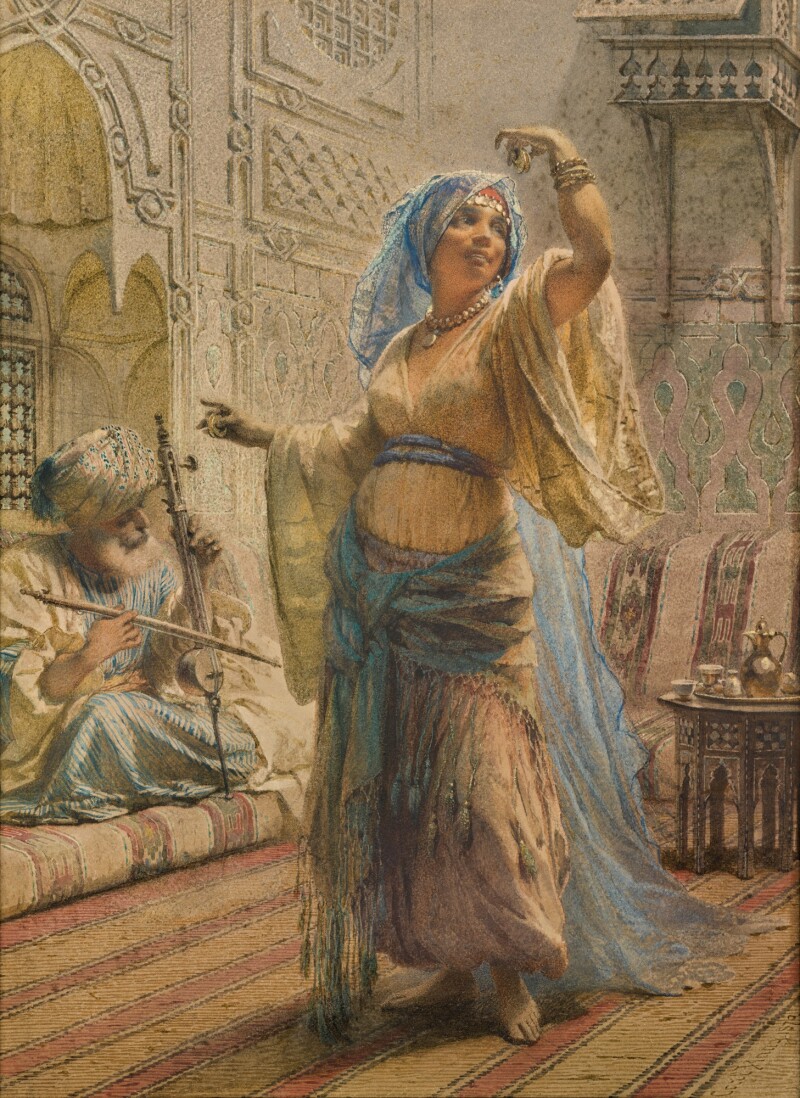
The Dance of the Almeh
Jean-Léon Gérôme
public_domain
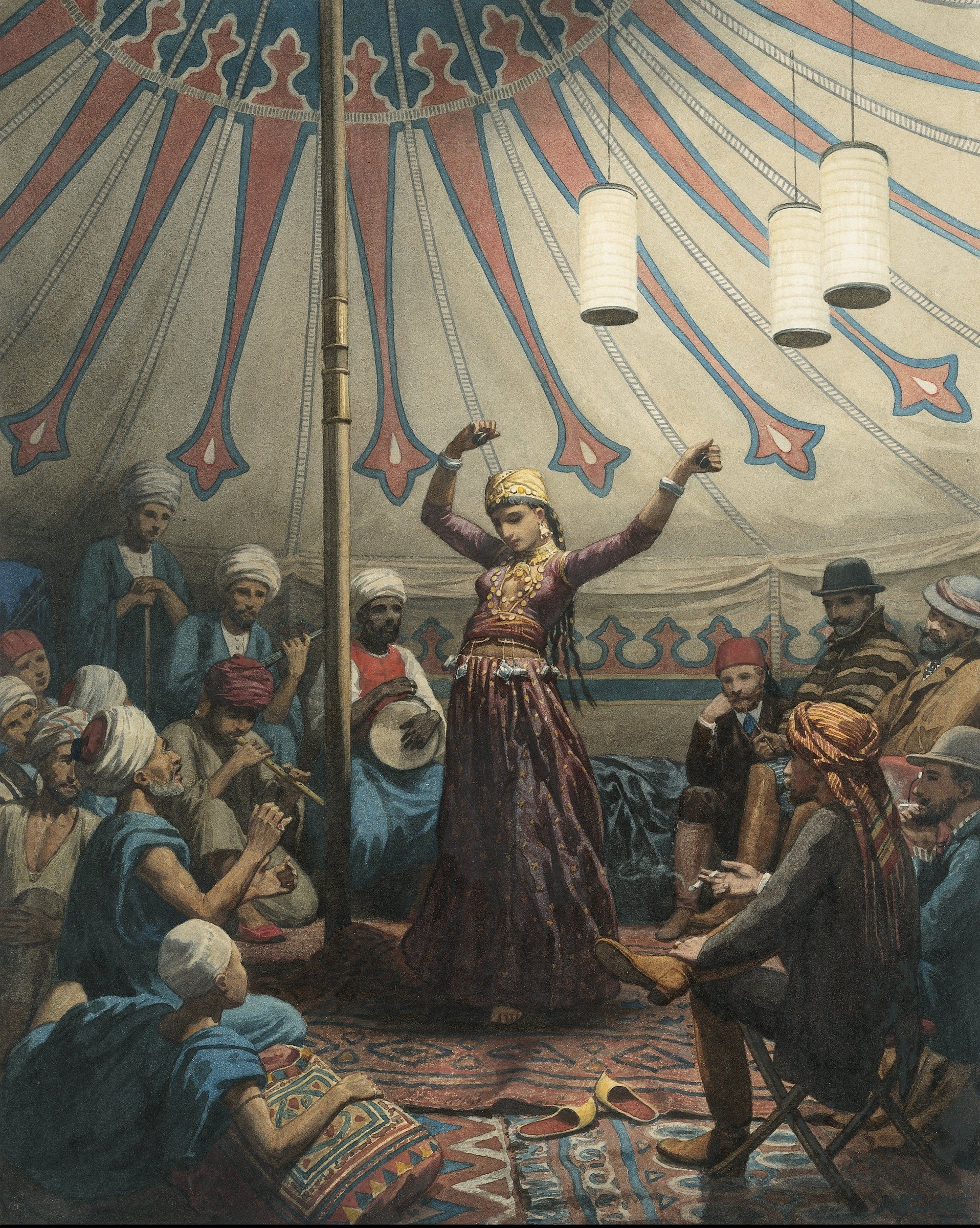
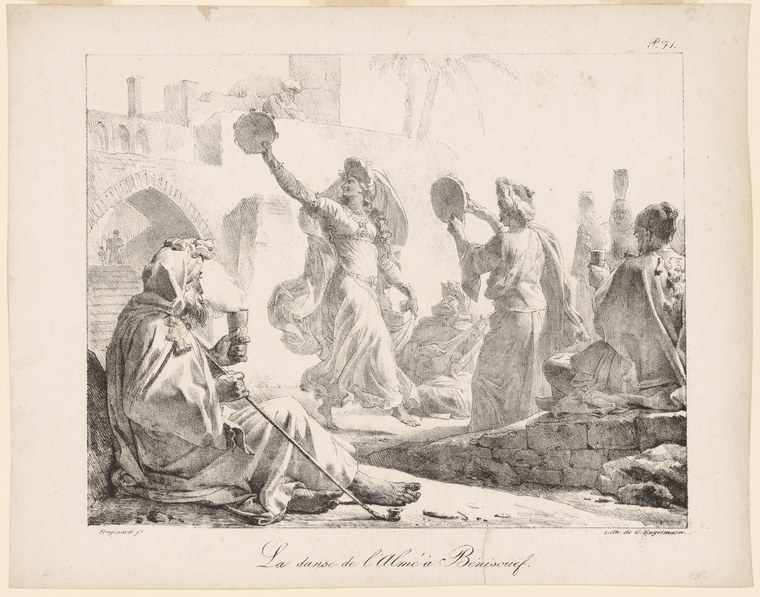
La danse de l'Almé à Bénisouëf
Unknown artist
Public Domain
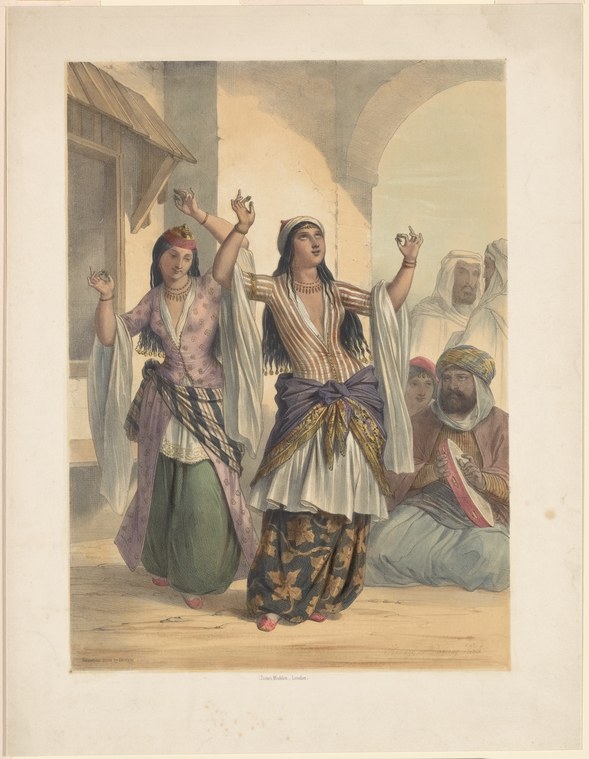
Dancing girls
Unknown artist
Public Domain
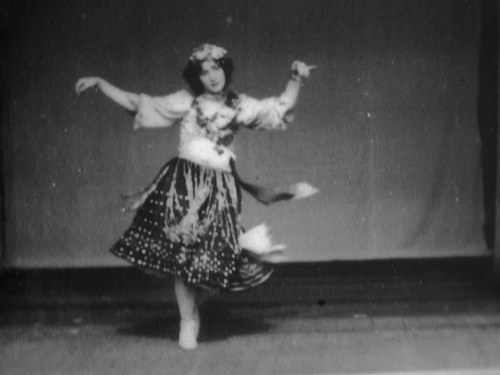
Turkish dance, Ella Lola
Unknown artist · 1898
Public Domain
Continue Exploring
Lineage of Dance
500 years of dance evolution
Champions of Dance
Winners of marquee national & world titles
Language of Dance
161 dance terms & translations
Listening of Dance
Tempo, timing & musicality tools
Gallery of Dance
5,700+ artworks from museum collections
Attire of Dance
Evolution of dance dress across eras
Keep the thread going
Dance history, technique, and the occasional rabbit hole — in your inbox. Thoughtful, infrequent, unsubscribe anytime.
Free. No spam. One click to leave.