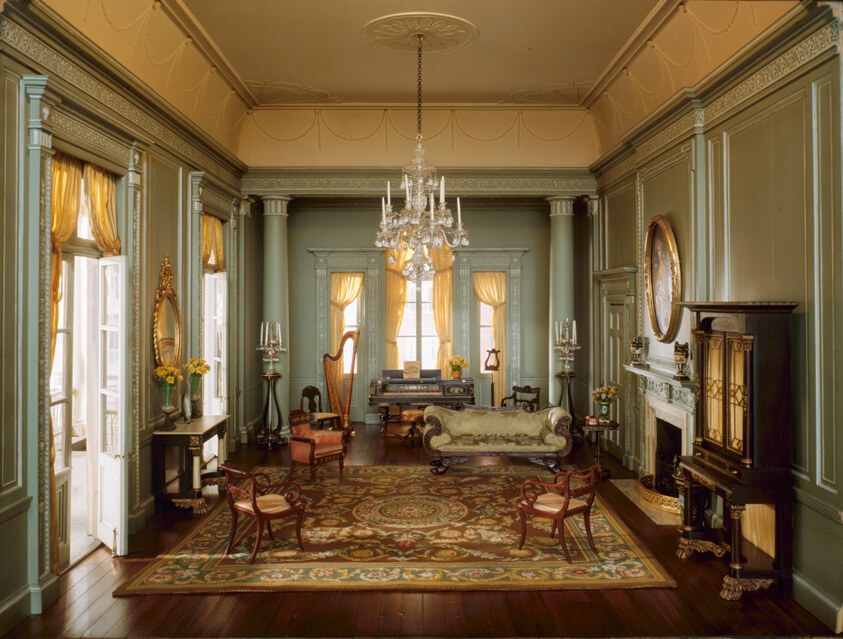
Historic American Contra
American contra dances developed from 17th-c. English country dances, with secondary Scottish and French influences. They are danced in two facing lines of couples, with a caller prompting figures over live music — primarily a New England tradition with related forms in Appalachia.
3 dance styles in this genre
Historical Origins
American contra dancing developed from English country dance traditions brought to colonial North America, with secondary input from Scottish and French sources. The form took its enduring shape primarily in New England — most prominently in northern New England (New Hampshire, Vermont, Maine) — where dancers organized in two long facing lines of couples and executed figures with their partner and the adjacent couple. Related but distinct figure-dance traditions developed in Appalachia, including running sets and big-circle dances documented there by Cecil Sharp circa 1916–1918. Contra dances were transmitted through oral tradition, locally published dance manuals, and itinerant dance masters. In the mid-20th century, when many local dance traditions faded, caller and publisher Ralph Page (1903–1985) sustained the form through his weekly dances and the mimeographed Northern Junket (1949–1984). A broader revival followed from the 1970s onward, accelerated by callers such as Dudley Laufman and Larry Jennings and by the New England Folk Festival Association. Contra dancing is now one of the oldest continuously-practiced European-derived social dance traditions in North America.
Cultural Significance
Contra dance served as a structured social setting in rural New England — for community gatherings, courtship, and inter-household contact — and continued in that role into the 20th century. The form retains regional identity in New England, especially in northern New England where Grange halls and town halls remain common venues. Dance scholar Mary McNab Dart (1995) treats the modern revival community as organized around participatory norms (open invitation, no audition, partner rotation), though the framing of these norms varies among practitioners. The folk revival of the 1960s–1970s reconnected new dancers to existing tradition-bearers; today contra dancing is practiced in the United States, Canada, the United Kingdom, Germany, and Japan, among other countries.
Musical Characteristics
Contra dance music is structured in 64-beat sequences (typically 4×16) matching the dance's phrase length, usually in duple meter at roughly 110–130 BPM. The core New England instrumentation is fiddle and piano — fiddle carrying the melody, piano providing steady chordal rhythm. Guitar, mandolin, accordion, flute, double bass, and (less commonly) banjo are frequent additions; a typical band has three to five musicians. The repertoire draws from Scottish, Irish, English, French-Canadian, and American old-time tune traditions, alongside newly composed tunes by contemporary players. Phrase clarity is essential because dancers cue figure transitions to the music. Live music is the standard at recurring dances.
Core Movement Principles
Dancers form two long lines, partners facing across. Each contra is built from a sequence of 4–8 figures executed with the partner and the neighboring couple (the "minor set"), then the couples progress along the line so that each pair eventually dances with every other pair. Common figures include do-si-do (partners pass back-to-back without turning), allemande (partners join one hand and rotate around a shared center), promenade (partners cross hands and travel together in a chosen direction), and swing (partners hold a buzz-step ballroom hold and rotate). Footwork is a walking step in tempo; precise placement is less important than staying on the beat and meeting the partner on the correct count. The caller announces each figure one phrase ahead until dancers can execute the sequence without prompts, typically by the third or fourth time through. The form is designed to be learnable in a single evening by a complete newcomer.
Modern Usage
Contra dancing is an active recreational tradition in the United States and Canada, with smaller scenes in the United Kingdom, Germany, Japan, and a handful of other countries. CDSS lists hundreds of recurring dance series in the U.S., typically held weekly or monthly in town halls, Grange halls, church basements, or community centers. Each dance is led by a caller (who teaches and prompts figures) and a live band. Major recurring events include the Ralph Page Dance Legacy Weekend (UNH, since 1988), the New England Folk Festival (NEFFA), and Down East Country Dance Festival. Some universities host student contra series. Recurring weeklong dance camps — including Pinewoods (CDSS), Augusta, and Lady of the Lake — host hundreds of dancers from multiple states each summer.
Dance Styles
Contra Dance
Also known as: American Contra, New England Contra
Contra dances were American adaptations of English country dances, performed in two parallel lines with caller direction, and remain popular in contemporary folk dance communities.
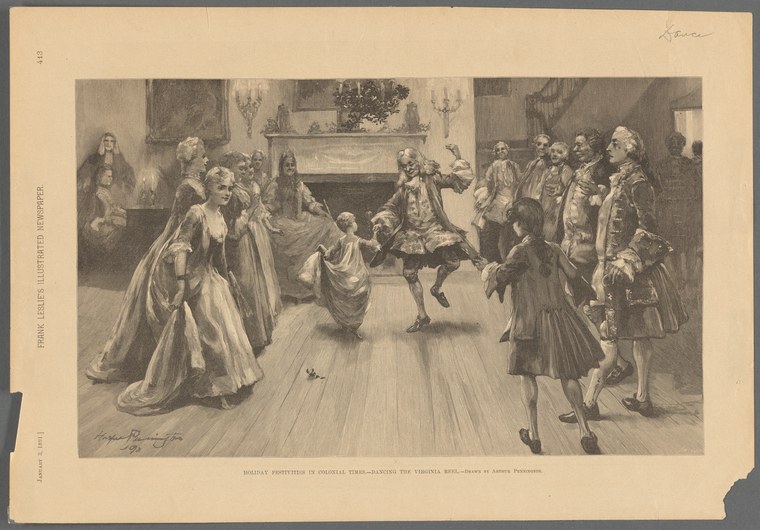
Virginia Reel
Also known as: Virginia Reel, American Reel
The Virginia Reel was a specific contra dance tradition from colonial Virginia featuring specific figures and remaining popular in American schools and folk communities.
Square Dance
Also known as: American Square Dance
American square dances evolved from French quadrilles and English country dances, adapted to frontier life with caller direction and remaining central to American folk culture.
Historic American Contra on screen
Films and television where historic american contra appears, with the sequences worth watching for.
 Appalachian Spring (1958)1 sequence indexed“Simple Gifts” daily-life sequence · chor. Martha Graham
 This site uses TMDB and the TMDB APIs but is not endorsed, certified, or otherwise approved by TMDB.
Historic American Contra FAQs
Historic American Contra in art
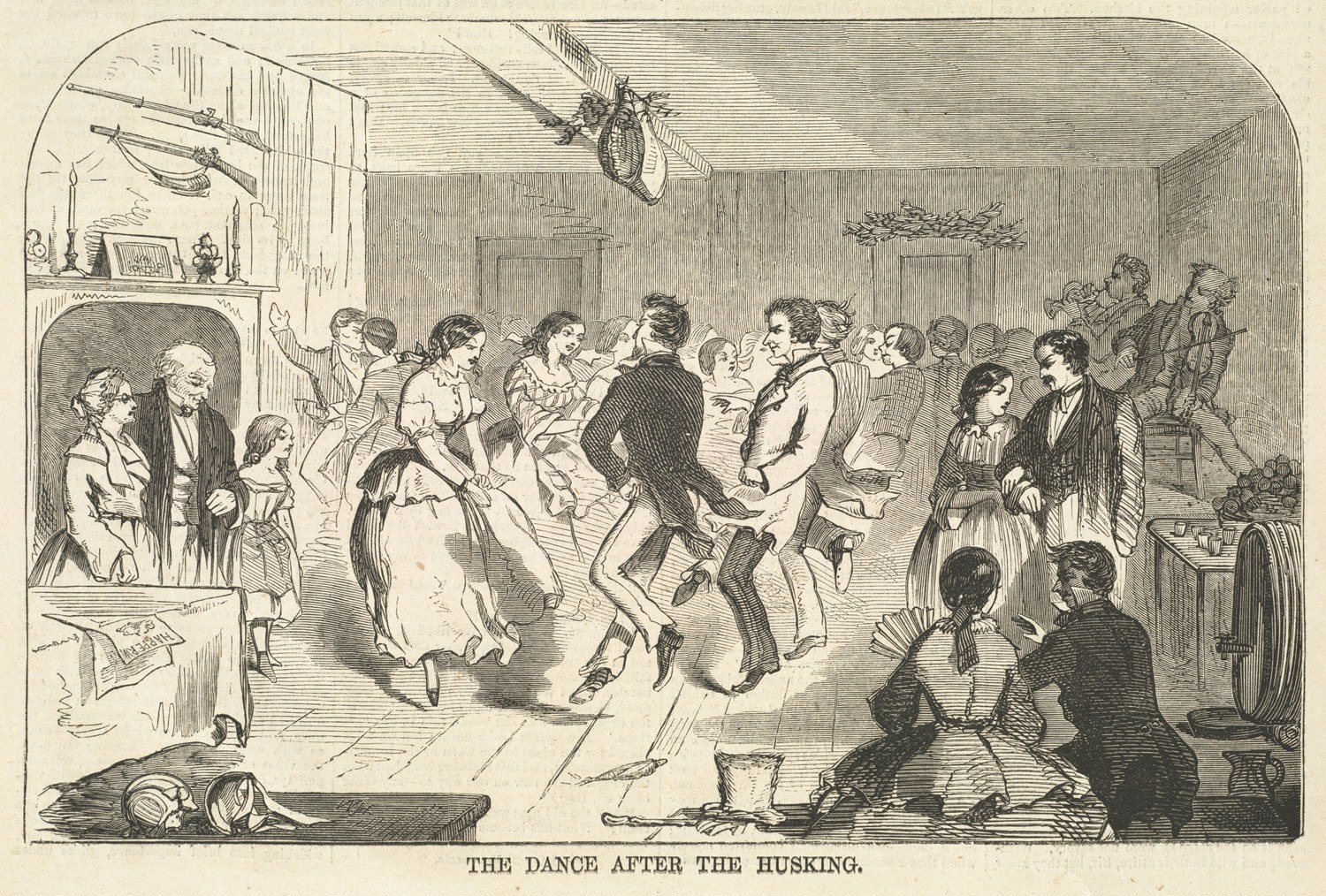
Browse the gallery →Works our catalogue identifies as depicting historic american contra.
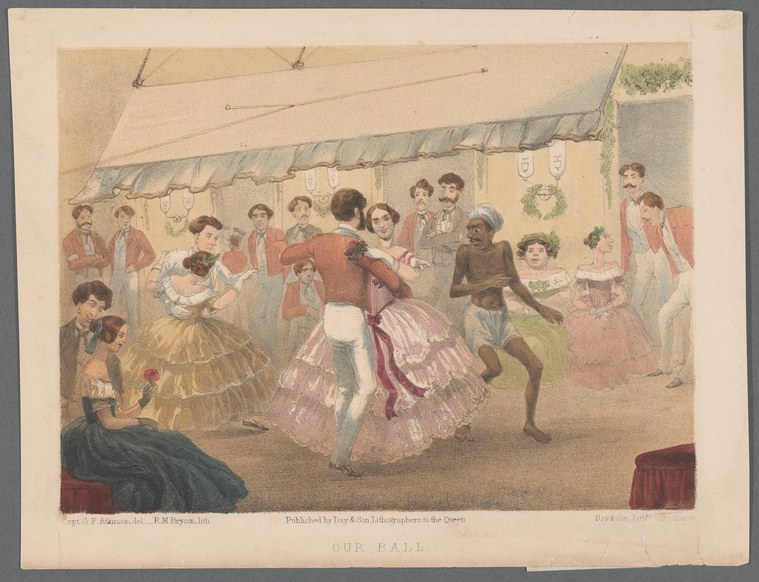
Our ball
Unknown artist
Public Domain
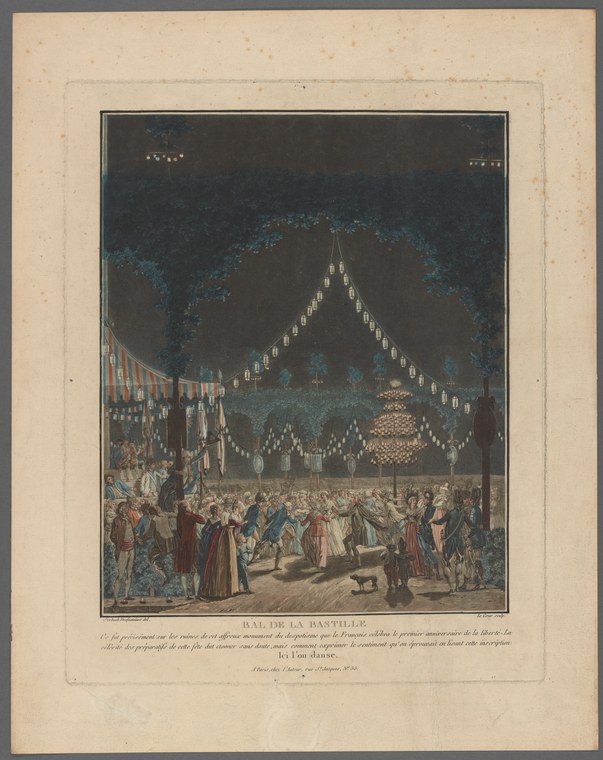
Bal de la Bastille
Unknown artist
Public Domain