Courante
Also known as: Courant, Corrente
History & Cultural Context
The Courante emerged during the Renaissance and became one of the dominant dances of the Baroque period. The dance featured rapid running steps (hence 'courante' meaning 'running') with smooth, flowing movement and frequent turning figures. Unlike the stately pavane or formal minuet, the courante emphasized continuous motion and grace. The courante typically followed the pavane in paired dance suites. Famous composers including Bach and Handel included courantes in their instrumental suites. The dance remained popular through the 18th century.
Cultural Significance
The courante was one of the most prominent dances in the Baroque instrumental suite, appearing as the standard second movement after the allemande. The French courante was associated with the formal court ballets of Louis XIV, while the Italian corrente circulated more widely as a lively social dance.
Courante Playlists
Curated collections on the LODance YouTube channel — performances to watch, lessons to learn from, and the right music to practice with. Tap a collection to play.
▶ Performances · Open on YouTube →
Courante Music & Tempo
Drawn from 25 Courante tracks in the LODance music library.
Example tracks at practice tempo
- Courante from Partita No. 1 in B-flat Major — Johann Sebastian Bach92 BPM
- Courante from Le Bourgeois Gentilhomme — Jean-Baptiste Lully80 BPM
- Courante from Suite No. 8 in F Minor — George Frideric Handel84 BPM
- Courante from Cello Suite No. 1 in G Major — Johann Sebastian Bach88 BPM
- Corrente from Violin Sonata Op. 5 No. 1 — Arcangelo Corelli96 BPM
- Courante from Pièces de Clavecin — Jean-Philippe Rameau116 BPM
Who governs Courante
Federations, councils and examining bodies with a recorded role in this style. No single organisation can tell you this — each one knows only itself.
Legends of Courante
Dancers, choreographers and teachers whose work shaped this style.
What to Wear
Attire guidance for Courante and other Historic Baroque Court dances. Each card below is sized to the moment — class, practice, social, or competition — because the wardrobe shifts as the stakes do.
Reading the cards
In Class
Comfortable clothing with period-appropriate character shoes if available. Many historical dance classes welcome modern practice wear.
Social Dancing
Period recreation events call for Baroque-era costumes: women in corsets and full skirts, men in breeches and frock coats. Social historical dance events range from costumed to smart casual.
Competition
Rarely competed; performance events typically expect full period costume authentic to the 17th–18th century.
Shoes
Character shoes with a low (1–1.5") shaped heel. Historically accurate shoes have buckles and a Louis heel. For class: any low-heeled shoe with a smooth sole.
In Practice
Modern practice wear is welcome in most academic Baroque classes; serious reconstruction groups practice in period-appropriate footwear so the body learns the geometry the dances were designed for.
Price Range
- Budget: Modern character shoes $40–80; loose historically-styled clothing from costume retailers.
- Mid: Replica Louis-heel shoes $150–300; commissioned period-styled garments $200–800.
- Premium: Hand-stitched 18th-century reproduction costume $1,500–5,000+; bespoke buckle shoes $400–900.
Quick Tips
- •Suede-soled shoes allow controlled sliding and pivoting — essential for most partner dances.
- •Avoid rubber soles on dance floors; they grip too much and can cause knee injuries.
- •Bring a separate pair of clean shoes for the dance floor to keep it in good condition.
Sources & Further Reading
Where This Dance Is Documented
Feuillet notation; Rameau (1725)
An editor's note on where the technique for this dance is actually written down — sometimes a named book, sometimes the fact that no such book exists. A judgement, not a count of what we hold.
Cultural & Historical Context
Courante emerged from France/Italy during the 1540s—1620s. Understanding the cultural roots, musical traditions, and social circumstances of this era enriches appreciation for the dance's characteristics and significance.
Formative Influences
Codifiers & Standardizers:
Fabrizio Caroso, Pierre Rameau
Signature Movement Vocabulary:
Double, Single, Turn
Primary Source Documents
The Library of Dance contains public-domain primary sources for dance history. Copyrighted modern syllabi are indexed with purchase links to their respective copyright owners. Search by dance name or codifier to discover primary source documents.
Last reviewed: October 2026 — This dance profile synthesizes historical research, cultural documentation, and contemporary practice knowledge to provide authoritative context.
Related Dances
More in Historic Baroque Court
Minuet
The Minuet was a stately Baroque couple dance with small, delicate steps and refined posture. It became the quintessential court dance of the 17th-18th centuries, symbolizing aristocratic elegance.
Gavotte
The Gavotte was a moderate-tempo Baroque couple dance featuring hopping steps and beginning on the third beat of the measure. It was second in popularity only to the minuet in 18th-century courts.
Bourrée
The Bourrée was a brisk Baroque couple dance featuring quick steps and a bouncy character. It was typically performed as part of dance suites and appeared in instrumental compositions by major composers.
Sarabande
The Sarabande was a slow, dignified Baroque couple dance of Spanish and Spanish-colonial origin, featuring stately movement. In the standard Baroque instrumental suite it formed the slow third movement, after the allemande and courante. It was one of the most widely used Baroque dance forms.
Canarie
A fast dance in dotted triple or compound time, current at Italian and French courts from the late sixteenth century and named for the Atlantic islands from which Europeans believed it came. Its signature is percussive footwork — heels and toes struck audibly against the floor — over a driving dotted rhythm. It survived into the Baroque mainly as a theatrical dance and as one of the quickest members of the gigue family.
Chaconne
A continuous set of variations in triple time over a short repeating bass, which entered Europe around 1600 as a fast, disreputable song-dance and left it a century later as the grandest form in the French court and theatre. At the Paris Opéra it commonly closed the work, gathering soloists and corps through a long chain of couplets. Its scale and cumulative build made it the most ambitious dance a Baroque performer could be given.
Furlana
A quick couple dance in compound time from Friuli that became strongly identified with Venice, where it was danced at Carnival and in the streets as well as in polite rooms. Around the turn of the eighteenth century it was briefly taken up in Paris, where its Venetian associations were part of the point. Unlike most court dances of the period it never stopped being a folk dance in its home region.
Passacaille
A slow to moderate set of variations in triple time over a repeating bass, closely bound up with the chaconne and often indistinguishable from it. In the French theatre it supplied the long, weighty dance number — frequently a vehicle for a single star performer — and tends toward the minor mode and a grave sustained manner. Its name comes from Spanish instrumental practice rather than from any Spanish choreography.
Passepied
A quick dance in 3/8 beginning on an upbeat, taken from Breton popular tradition into the Paris ballroom and theatre in the seventeenth century. At court it used essentially the same footwork as the minuet, carried at markedly higher speed, which gave it a light, skimming quality rather than a stately one. It was a staple of the danced suite and of French opera-ballet through the first half of the eighteenth century.
Rigaudon
A brisk duple-time dance of Provençal popular origin that entered the French court repertory in the later seventeenth century and became equally popular in England. It begins on an upbeat, runs in clear four-bar phrases, and is characterised by springing steps that keep it lighter and more direct than the courtlier dances around it. It remained in ballroom and theatre use through the first half of the eighteenth century.
What did dancers wear?
Courante belongs to the Renaissance Courts (1400s–1600s) era. See how attire shaped the choreography — and the other way around.
Explore Renaissance Courts attire →Historic Baroque Court in art
Browse the gallery →Works from the wider Historic Baroque Court tradition — we have not yet identified enough that depict Courante specifically.
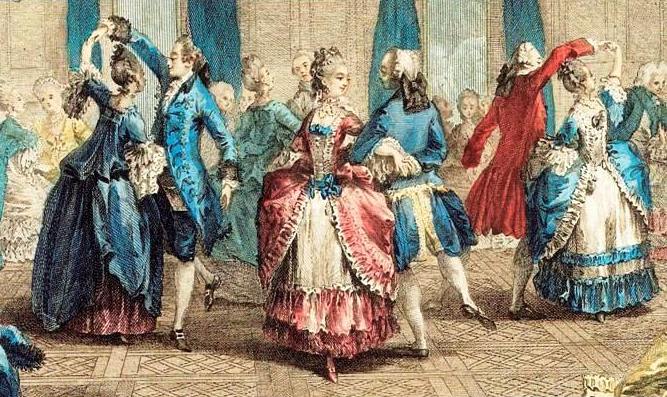
Le Bal paré
Augustin de Saint-Aubin
public_domain
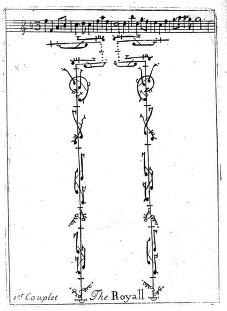
The royall : Mr. Isaac's new dance made for Her Majesty's birth day 1711
Unknown artist · 1711
public_domain
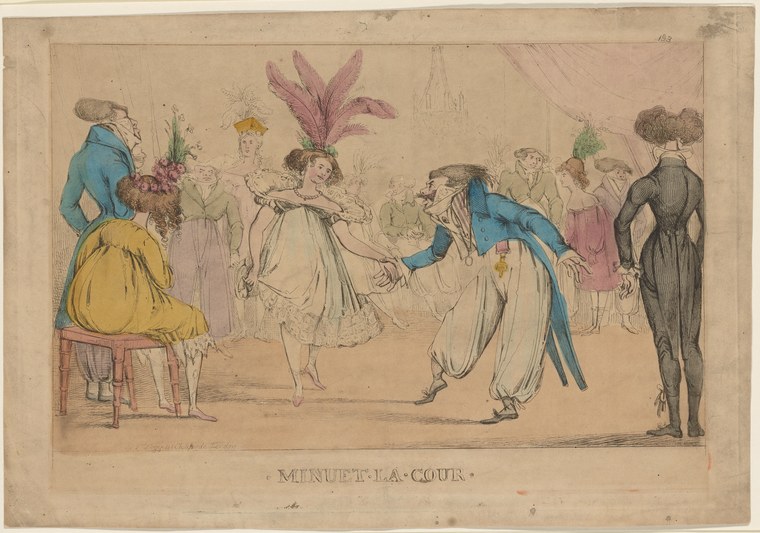
Minuet la cour
Unknown artist
public_domain

A long minuet as danced at Bath
Unknown artist · 2021
public_domain
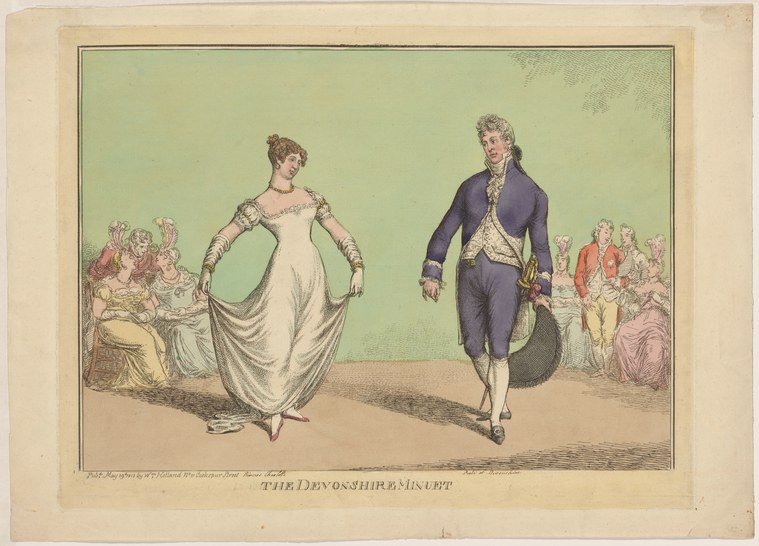
The Devonshire minuet
Unknown artist
public_domain
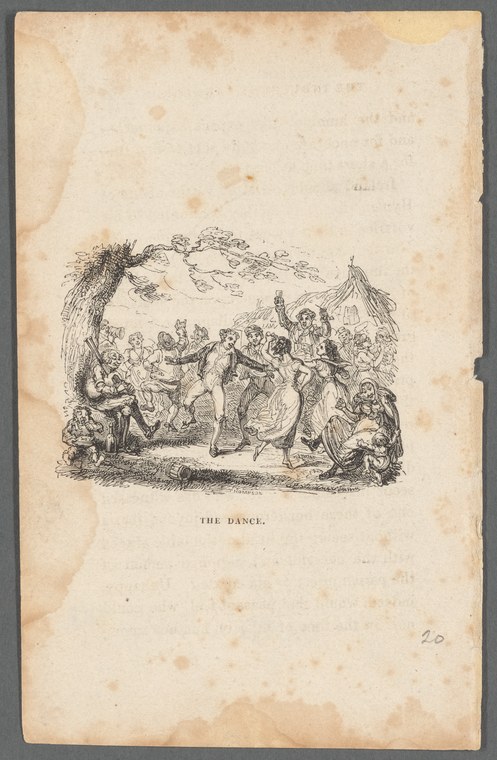
The dance
Unknown artist
public_domain
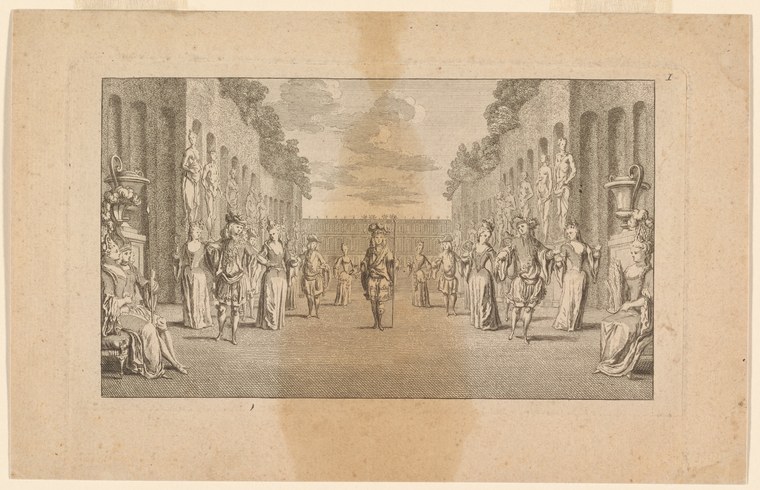
Scene de ballet
Unknown artist
public_domain
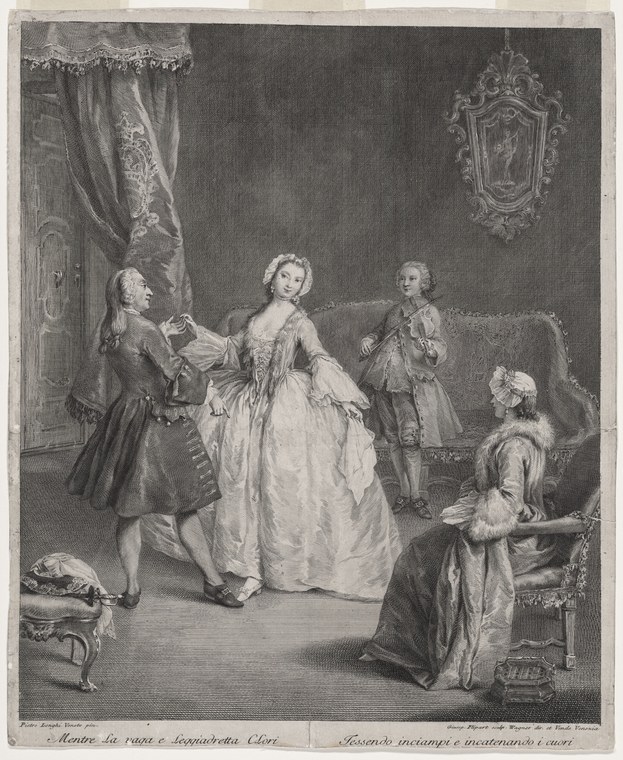
The dancing lesson
Unknown artist · 2019
public_domain
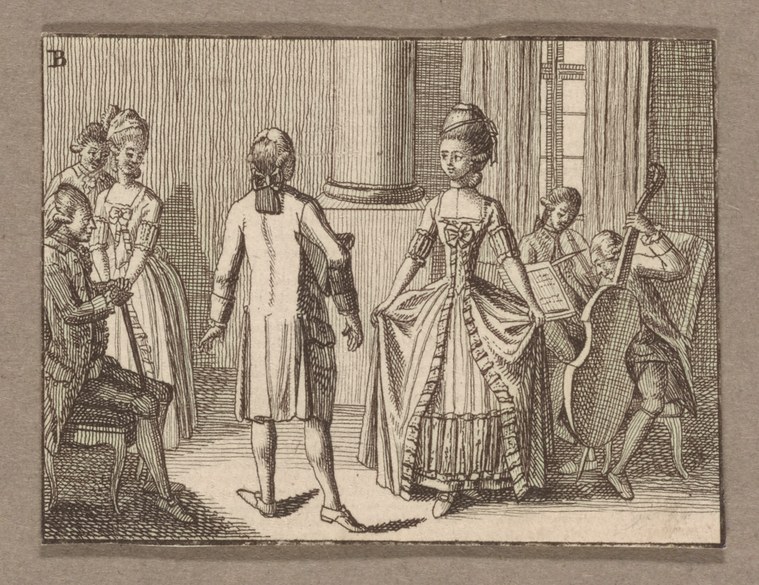
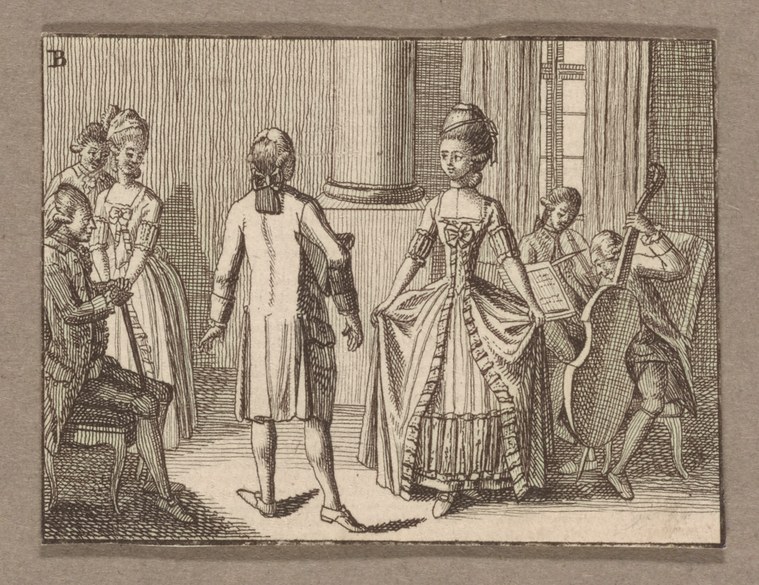
Dancers bowing before the minuet?
Unknown artist
public_domain
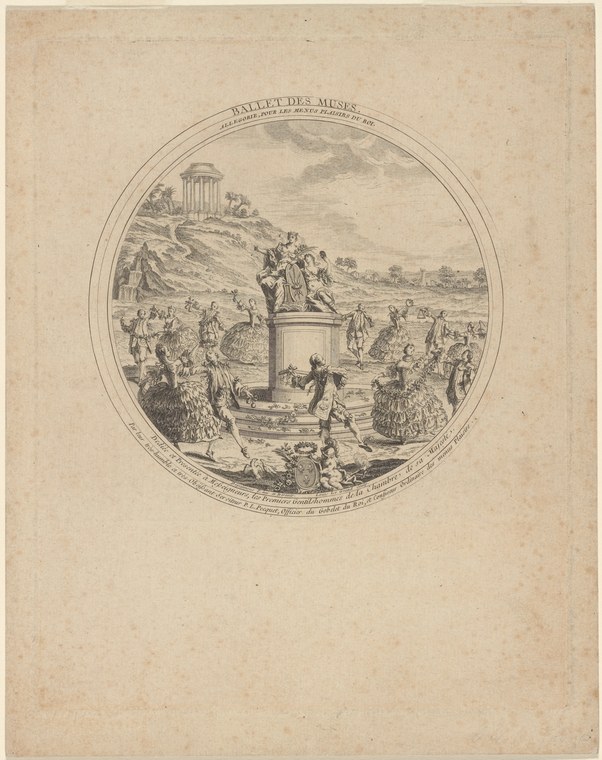
Ballet des muses
Unknown artist
public_domain
Continue Exploring
Lineage of Dance
500 years of dance evolution
Champions of Dance
Winners of marquee national & world titles
Language of Dance
161 dance terms & translations
Listening of Dance
Tempo, timing & musicality tools
Gallery of Dance
5,700+ artworks from museum collections
Attire of Dance
Evolution of dance dress across eras
Keep the thread going
Dance history, technique, and the occasional rabbit hole — in your inbox. Thoughtful, infrequent, unsubscribe anytime.
Free. No spam. One click to leave.