Club & Social Latin
Partner social dances that share contemporary nightclub and social-dance spaces, drawn from Caribbean, Latin American, and Lusophone-African traditions. Constituent dances include Salsa (NYC, mid-20th century, from Cuban son and Puerto Rican forms), Bachata and Merengue (Dominican Republic), Cumbia (Colombia), Forro/Lambada/Lambazouk (Brazil), Zouk (Guadeloupe/Martinique), and Kizomba (Angola).
15 dance styles in this genre
Historical Origins
"Club & Social Latin" is a curatorial grouping for partner dances that today share nightclub and social-dance spaces. Most of the constituent dances are older than the grouping itself and developed in their countries of origin, not in U.S. ballrooms: Cumbia in colonial-era coastal Colombia; Merengue in 19th-century Dominican Republic; Salsa in New York City Latino neighborhoods in the 1960s-70s, drawing on Cuban son and Puerto Rican plena (the term "salsa" was coined as a marketing label by Fania Records, founded 1964); Bachata in working-class Santo Domingo in the early 1960s (UNESCO Intangible Cultural Heritage, 2019); Zouk in Guadeloupe and Martinique in the early 1980s; Kizomba in Luanda, Angola in the late 1970s-early 1980s as a fusion of Semba with Antillean zouk; Forro in northeastern Brazil. The ballroom Latin syllabus codified versions of some of these (notably rumba and cha-cha) for competition use, but the social-dance forms in this genre developed independently of and largely in parallel with ballroom Latin.
Cultural Significance
Club & Social Latin dances function primarily as community social dance forms rather than competitive disciplines. Several carry national-heritage status in their countries of origin: bachata and merengue are UNESCO Intangible Cultural Heritage of Humanity (2019 and 2016, respectively); kizomba is recognized as Angolan national heritage. In diaspora communities — particularly Dominican, Puerto Rican, Cuban, Colombian, Angolan, and Brazilian — these dances function as ongoing cultural transmission. Since the 1990s the genre has spread through international congresses (e.g., the World Salsa Congress, founded 1997), dedicated festivals, and social-media instructional video, producing local scenes in cities without significant heritage diaspora.
Musical Characteristics
Each dance in this genre is danced to its own associated music. Approximate tempo ranges (community-corroborated; varies by sub-style): Cumbia ~80-100 BPM; Kizomba ~60-90 BPM; Bachata ~120-160 BPM (modern/sensual ~120-130, Dominican traditional ~150-160); Salsa ~150-220 BPM (NY On2, LA On1, and Cuban casino all draw on Cuban son clave); Merengue ~160-200 BPM (driven by a 2/4 march feel, often with tambora and güira); Zouk and Lambada/Lambazouk in the broader Caribbean-Brazilian zouk family. Reggaeton, Latin trap, and dembow are distinct musical genres with their own dance vocabulary (e.g., perreo); they are not the music for the partner dances listed in this section. Timba is a Cuban salsa subgenre and is appropriate to salsa contexts.
Core Movement Principles
Movement vocabulary varies significantly across the dances in this group. Salsa, merengue, and (to a lesser extent) bachata use Cuban-derived hip action driven by alternating weight transfer through bent knees. Kizomba and zouk are danced primarily in close embrace with smooth, grounded weight transfer and minimal hip isolation; lead/follow runs through chest and torso contact rather than Cuban motion. Bachata varies by sub-style: traditional Dominican is bouncy and footwork-focused; modern/sensual bachata adds body-wave and torso isolations. Across the group, frames tend to be more compact than ballroom Latin, with smaller floor footprints suitable for crowded club spaces. Improvisation and lead/follow communication, rather than codified figure sequences, are the norm in social settings.
Modern Usage
Club Latin is actively danced in nightclubs, dance studios, music festivals, and social venues throughout urban areas with significant Latino populations and in many international cities. Weekly club nights feature live bands, DJs, and social dancing. Dance studios offer club Latin classes ranging from beginner to advanced levels. The genre appears prominently in Latin music videos, concert performances, and festival settings. Professional dancers perform club Latin in theatrical productions and exhibitions. The social aspect remains central, with club Latin primarily functioning as a social dance form for pleasure and cultural expression rather than competition. Contemporary club Latin continues to evolve with emerging music styles and generational variations in movement vocabulary and styling.
Dance Styles
Salsa
Also known as: LA Salsa
Salsa is a vibrant Latin partner dance developed from Cuban son traditions and popularized in New York during the 1960s-1970s. It features Cuban motion, rhythmic patterns, and lively musicality.
Bachata
Also known as: Dominican Bachata
Bachata is a romantic Latin couple dance that emerged in the Dominican Republic, characterized by smooth movements, hip motion, and gentle turns with close partnership and intimate character.
Merengue
Also known as: Dominican Merengue
Merengue is a fast, energetic Latin couple dance from the Dominican Republic, featuring characteristic hip motion driven by knee action and syncopated rhythm patterns. A related méringue tradition exists in Haiti.
Cumbia
Also known as: Colombian Cumbia
Cumbia is a Colombian couple dance with African-influenced rhythms and hip motion, featuring rotating movement patterns and steady rhythmic pulse. It remains central to Colombian and Latin American culture.
Zouk
Also known as: Martinique Zouk, Contemporary Zouk
Zouk is a Caribbean couple dance developed in Guadeloupe and Martinique during the 1970s-1980s, featuring fast footwork, smooth body motion, and contemporary styling with African-influenced rhythms.
Kizomba
Also known as: Angolan Kizomba
Kizomba is an Angolan couple dance with romantic, close-connection character, featuring smooth steps and hip motion influenced by Brazilian and Caribbean traditions.
Forró
Also known as: Brazilian Forró
Forró is a Brazilian couple dance with accordion-driven rhythm, bouncy hip action, and celebratory character, popular for festivals and social gatherings throughout Brazil.
Lambada
Also known as: Brazilian Lambada
Lambada is a contemporary Latin couple dance with sensual, close-connection character and hip-driven motion that emerged in Brazil during the 1980s and became a global phenomenon.
Lambazouk
Also known as: Lambazouk
Lambazouk is a contemporary fusion dance blending lambada and zouk traditions, emerging in the 1990s as dancers synthesized Caribbean and contemporary styles.
Reggaeton (Perreo)
Also known as: Perreo, Reggaeton Dance, Reguetón, Sandungueo
The club dance of reggaeton, centred on perreo: a grounded, hip-driven couple dance most often danced back-to-front and phrased to the dembow rhythm.
Casino & Rueda de Casino
Also known as: Cuban Salsa, Casino, Rueda, Salsa Rueda, Wheel of Casino
Cuba's circular partner dance, in which multiple couples dance casino simultaneously and swap partners on a caller's shouted and hand-signalled commands.
Bachata Sensual
Also known as: Sensual Bachata, Bachata Sensual Style, Spanish Bachata
A Spanish-developed bachata style built on body waves, isolations and extended partner shapes, danced closer and often slower than traditional Dominican bachata.
Sertanejo Universitário
Also known as: Sertanejo, Dança Sertaneja, Sertanejo Universitario, Dois pra lá, dois pra cá
The close-embrace Brazilian couple dance danced to sertanejo universitário, a pop-inflected country music that swept Brazilian university party culture from the mid-2000s.
Bachata Dominican
Also known as: Bachata Dominicana, Traditional Bachata, Bachata Tipica, Amargue
The original Dominican form of bachata, danced socially to guitar-led music in a close or open hold with small steps, footwork improvisation and a tap or hip accent on the fourth beat. It was the music and dance of the Dominican rural and urban poor, dismissed and excluded from respectable media for decades before becoming a national and then international export.
Salsa NY
Also known as: New York Style Salsa, Salsa On2, Mambo On2, Eddie Torres Style, On2
Linear salsa danced with the break on counts two and six, aligned to the tumbao of the conga rather than to the first beat of the bar. It descends from the Palladium mambo of the 1950s and was codified for teaching in New York by Eddie Torres, and it remains the reference style for on2 dancing worldwide.
Legends of Club & Social Latin
Dancers, choreographers and teachers whose work shaped the styles in this genre.
Club & Social Latin on screen
Films and television where club & social latin appears, with the sequences worth watching for.
 The Forbidden Dance (1990)17 sequences indexedAmazon village Lambada · chor. Miranda Garrison; Felix ChavezNisa dances alone in the Anderson house · 00:16:20 · chor. Miranda Garrison; Felix ChavezNisa teaches Jason Lambada at Creation · 00:20:47 · chor. Miranda Garrison; Felix Chavez
 Cuban Fury (2014)16 sequences indexedBejan's reggaeton drill · 01:02:07 · chor. Richard MarcelAlicia's cabaret-style road test · 00:28:29 · chor. Richard MarcelBruce commits to the counted basics · 00:34:54 · chor. Richard Marcel
 Mad Hot Ballroom (2005)8 sequences indexedVictoria's merengue refinement drillFirst Washington Heights merengue classMerengue break after the foxtrot lesson
 Dance With Me (1998)5 sequences indexedCuban engagement-party rueda · chor. Daryl Matthews; Liz CurtisRafael's first club-floor reveal · chor. Daryl Matthews; Liz CurtisSecond-club salsa with Ruby · chor. Daryl Matthews; Liz Curtis
 Marilyn Hotchkiss' Ballroom Dancing & Charm School (2005)2 sequences indexedMarienne and Blake's merengue demonstration · 00:57:15 · chor. JoAnn Fregalette JansenMerengue partner rotation — Frank and Meredith talk · 00:58:54 · chor. JoAnn Fregalette Jansen
 Take the Lead (2006)2 sequences indexedSalsa remix lesson · 00:51:25 · chor. JoAnn Jansen; Rich Talauega; Tone TalauegaCompetition salsa round · 01:32:57 · chor. JoAnn Jansen; Rich Talauega; Tone Talauega
 Aftersun (2022)1 sequence indexedResort Macarena
 Bailando con Margot (2015)1 sequence indexedThe detective dances Danzón with MargotBlood on the Dance Floor (1997)1 sequence indexedSalsa courtship duet with Susie · chor. Vincent Paterson
 Center Stage (2000)1 sequence indexedKit Kat Club salsa · 00:34:49 · chor. Susan StromanChega de Saudade (2007)1 sequence indexedForró passage in the researched dance-hall repertoire · chor. L.C. Violla
 Dirty Dancing (1987)1 sequence indexedKellerman's gazebo merengue lesson · 00:04:35 · chor. Kenny Ortega
Poster artwork from TMDB.
 This site uses TMDB and the TMDB APIs but is not endorsed, certified, or otherwise approved by TMDB.
Showing the 12 most-documented of 17 titles — browse the full library.
Club & Social Latin FAQs
Club & Social Latin in art
Browse the gallery →Works our catalog identifies as depicting club & social latin.
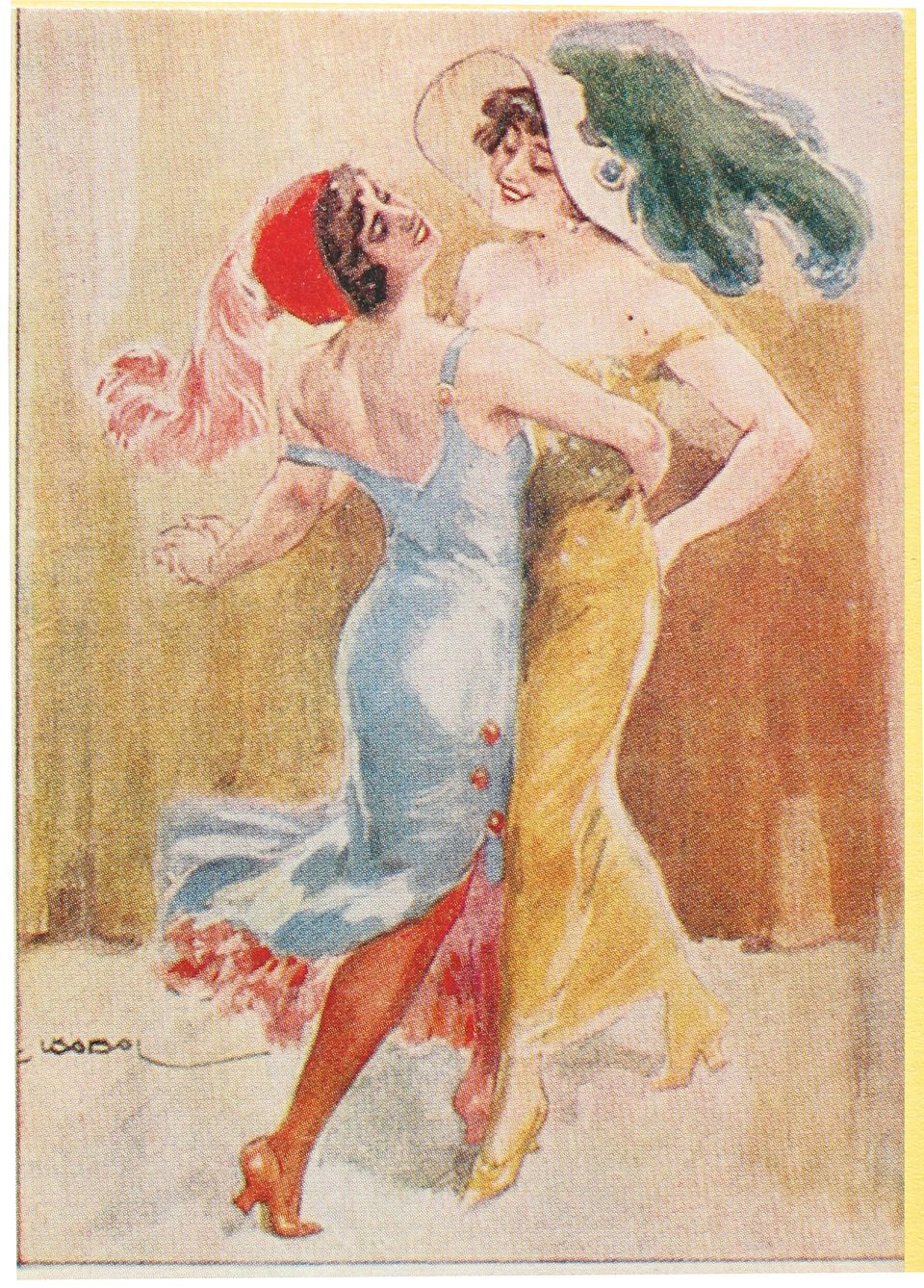
Tango at the Street Cafe
Unknown
public_domain
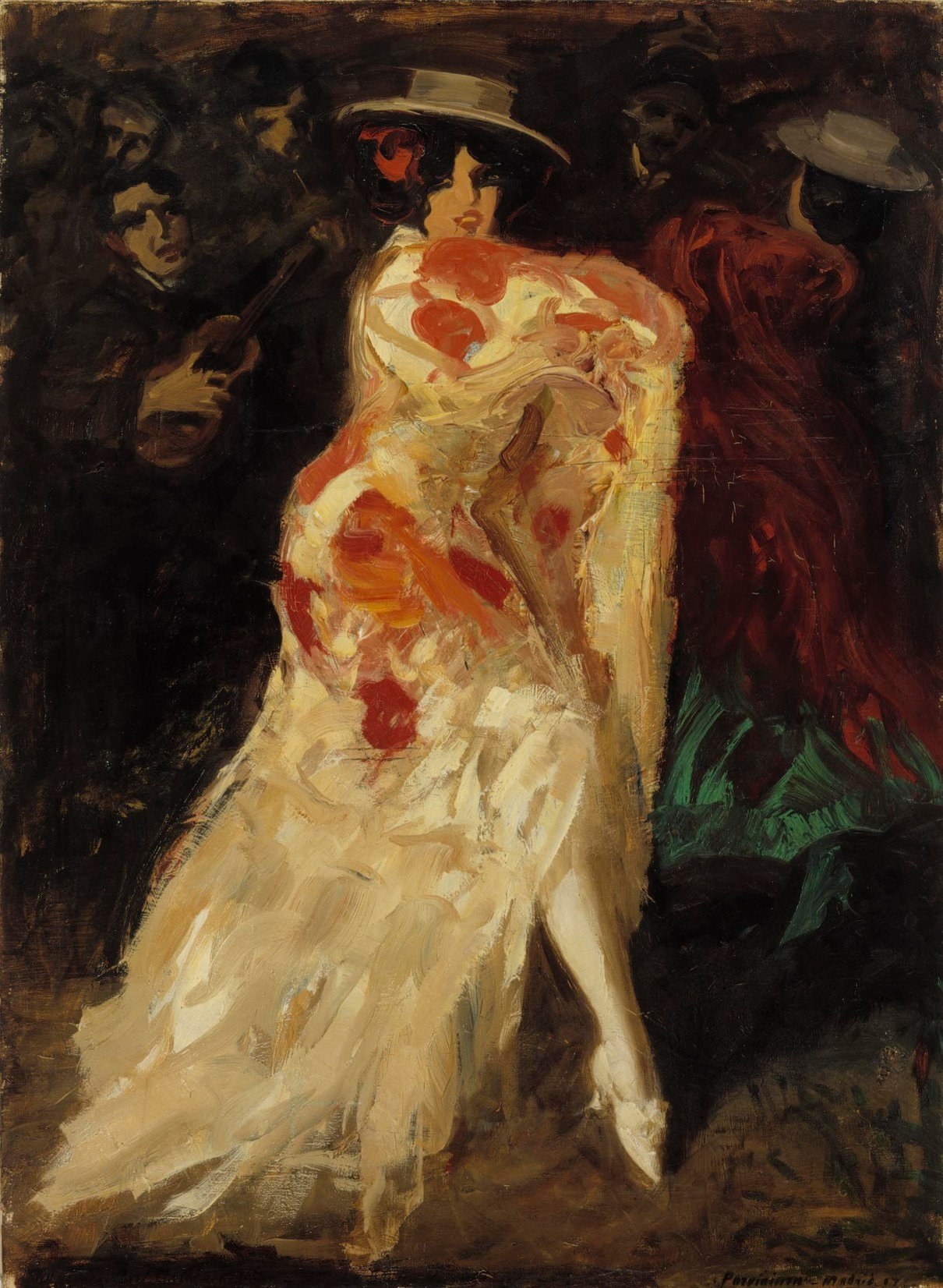
Oscar Parviainen - Espanjalainen tanssijatar (Tango) - A III 1792 - Finnish National Gallery
Oscar Parviainen · 1907
Public Domain
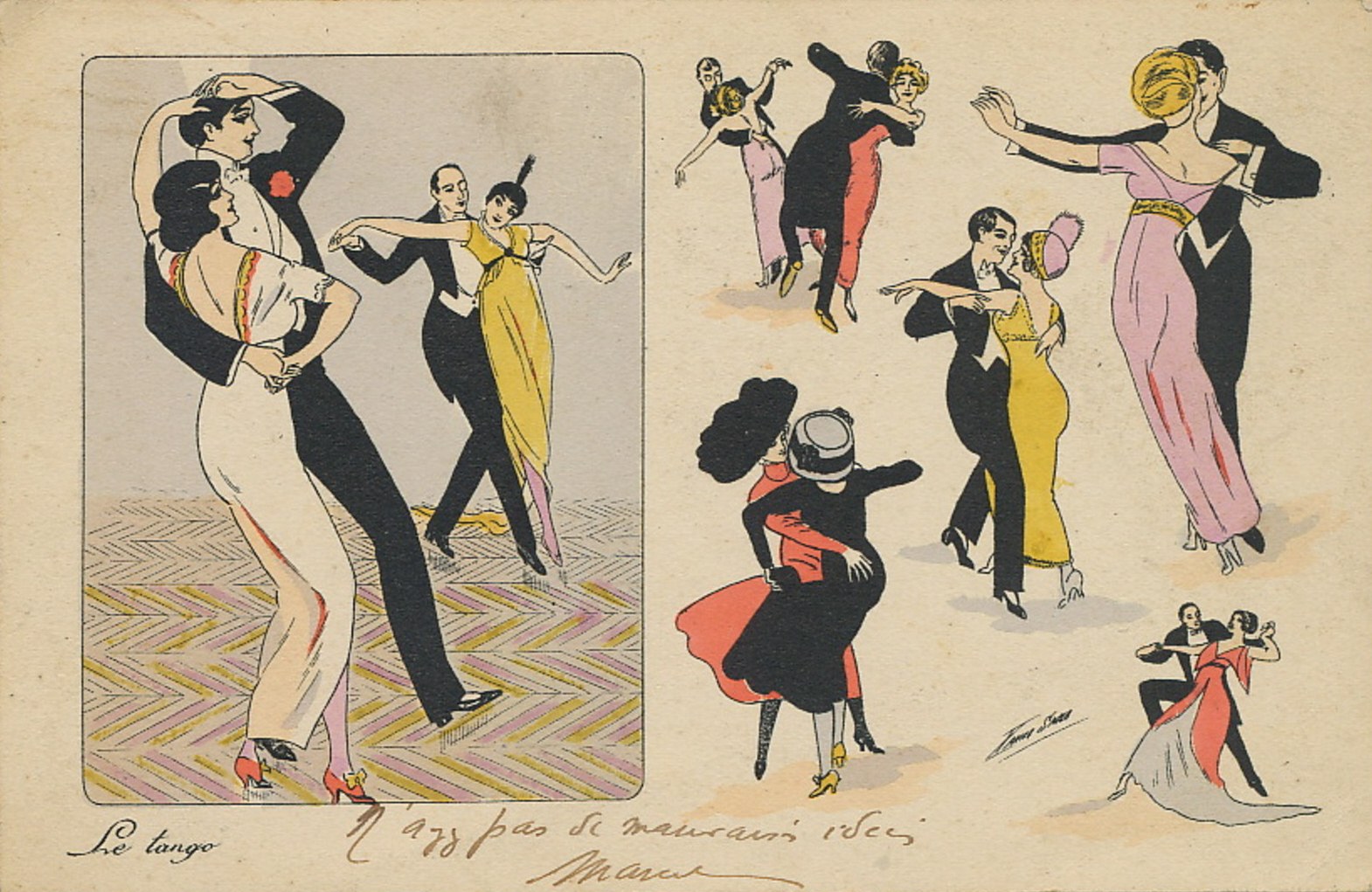
Xavier Sager Le Tango 4
Xavier Sager · 1930
Public Domain
Tango tee
Unknown artist · 1914
Public Domain
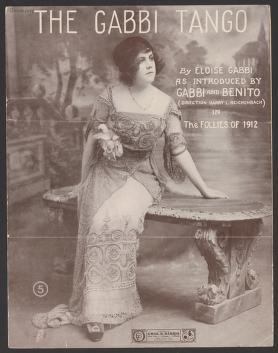
The Gabbi tango
Unknown artist · 1912
Public Domain
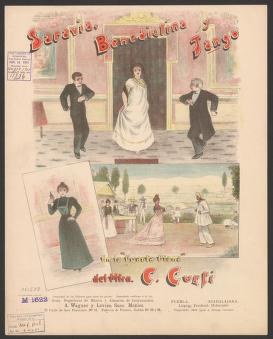
Tango
Unknown artist · 1901
Public Domain