Swing & Jazz
Partner and solo dances rooted in the Lindy Hop, developed in Harlem in the late 1920s and codified during the Swing Era (1935-1945), with later regional variants (East Coast Swing, West Coast Swing) and revival scenes from the 1980s onward.
19 dance styles in this genre
Historical Origins
Swing dancing developed in late-1920s Harlem, New York City, out of African American jazz culture and existing social dance traditions. As jazz tempos accelerated and syncopation grew more pronounced, dancers improvised steps to match. The Lindy Hop, the foundational swing dance, is generally traced to a June 1928 dance marathon at the Savoy Ballroom in Harlem, where George "Shorty" Snowden is credited with naming the step (Stearns interview, 1959; Hubbard & Monaghan 2009). Lindy Hop spread through African American communities through the 1930s and, during the Swing Era (commonly dated 1935-1945), crossed racial lines to become a nationwide social dance. East Coast Swing is a related but distinct form, codified by Arthur Murray studios around 1942 as a simplified syllabus version of Lindy. West Coast Swing developed later, primarily in Southern California in the 1940s-50s. Jive — sometimes confused with East Coast Swing — is a separate, faster competition style now governed under International Latin syllabi.
Cultural Significance
Swing dancing originated in African American communities during the Jim Crow era of legal racial segregation. The Lindy Hop and related swing forms developed in Harlem during the same period as the Harlem Renaissance, and were a primary artistic and social outlet within communities subject to widespread legal and social discrimination. As swing spread to white audiences during the late 1930s, ballrooms such as the Savoy in Harlem were among the few large U.S. venues with integrated dance floors — though full integration was uneven and contested across regions and venues. The swing tradition is one of the documented foundations of American social dance and is preserved today through performance, competition, and revival scenes that trace lineage back to the original Savoy-era dancers.
Musical Characteristics
Swing dances are performed to jazz, with tempos varying by sub-style: East Coast Swing is typically danced at roughly 136-144 BPM (single/double/triple time), Jive at roughly 140-175 BPM, and Lindy Hop is danced across a wide range from medium tempos up to 200+ BPM. The music features syncopated rhythms, brass sections (saxophones, trumpets, trombones), walking bass lines, and an emphasized backbeat. Big-band leaders associated with the swing era include Duke Ellington, Count Basie, Benny Goodman, Chick Webb, and Fletcher Henderson. Call-and-response between horns and rhythm sections, and off-beat syncopation, are common structural features. Later revival and contemporary scenes have incorporated R&B, rockabilly, and electroswing.
Core Movement Principles
Swing movement is characterized by elasticity in the legs, a grounded center of gravity, and improvisation against a syncopated rhythmic frame. Basic patterns are typically built in six- or eight-count units (East Coast Swing uses six-count triple-step or single-step structures; Lindy Hop uses an eight-count basic with the "swing-out" as its signature figure). Footwork emphasizes off-beat weight changes and triple-steps. Hand connection is typically light and elastic, enabling separation, breakaways, and turn patterns while preserving lead-follow contact. Upper body styling varies by sub-style. The defining technical feature is improvisation within a partnered structure, rather than memorized choreography.
Modern Usage
Swing dancing is practiced today in recreational, competitive, social, and performance contexts. Weekly social dances run in most major cities in North America, Europe, and parts of Asia. Competitive swing falls into two largely separate ecosystems: ballroom-style circuits (where East Coast Swing is a syllabus dance, and Jive is part of International Latin) and Lindy Hop-specific events and exchanges that descend from the 1980s-1990s revival (notably the work of Frankie Manning and the original Savoy dancers who returned to teach). Annual events such as the International Lindy Hop Championships and regional exchanges anchor the Lindy scene. Contemporary swing dancers also work with non-traditional music, including electroswing and modern jazz.
Dance Styles
Lindy Hop
Also known as: Lindy, Lindy Swing
Lindy Hop was an African-American swing dance developed in 1920s-1930s Harlem, featuring aerials, swing-outs, and partner exchanges. It became the defining dance of the swing era and influenced all subsequent swing traditions.
West Coast Swing
Also known as: WCS, California Swing
West Coast Swing emerged from Los Angeles–area Lindy Hop in the late 1930s–1950s. Arthur Murray national dance director Lauré Haile documented the local style as "Western Swing" in 1951, and California organizations led by Skippy Blair renamed it "West Coast Swing" in 1959. The dance is distinguished by a linear slot pattern, an elastic stretch-and-compression connection, and a syncopated triple-step rhythm performed to a wide range of contemporary popular music.
Triple Swing
Also known as: Triple Step, Slow Swing
Triple Step Swing is a simpler swing variation with a basic 8-count pattern, making it accessible to beginners while maintaining authentic swing character and musicality.
Boogie-Woogie
Also known as: Swing Boogie
Boogie-Woogie is a partner dance derived from Jitterbug and Lindy Hop and standardised in continental Europe in the second half of the 20th century. It is governed competitively by the World Rock'n'Roll Confederation (WRRC), separately from ballroom federations such as WDSF and WDC.
Jitterbug
Also known as: Jive Swing, American Jitterbug
Jitterbug is a fast, energetic partner swing dance with aerials and rapid footwork, developed during the 1930s-1940s swing era and popularized through dance competitions and entertainment.
Slow Swing
Also known as: Slow Swing Style
Slow Swing is a slower, more intimate swing variation allowing for musical interpretation and partner connection, developed as an alternative to faster swing styles.
Balboa
Also known as: Bal-Swing, Balboa Swing
Balboa is a close-position swing dance that crystallized in the early 1930s at the Rendezvous Ballroom on the Balboa Peninsula (Newport Beach, California). Dancers kept torsos in contact and let the rhythm travel through the feet, producing rapid eight-count footwork patterns within a small floor footprint.
Disco Hustle
Also known as: Hustle, NYC Hustle
Disco Hustle is a partner dance originated in the South Bronx in late 1972 by Puerto Rican teenagers and adopted into the wider disco-club scene of the mid-1970s. It is danced to disco music (typically 100-128 BPM) and uses a syncopated &1-2-3 6-beat basic with spins, turns, and partner connection patterns.
Nightclub Two-Step
Also known as: NC2S, Two-Step (Nightclub), Buddy Schwimmer Two-Step
Nightclub Two-Step is a smooth, romantic partner dance created by Buddy Schwimmer in the mid-1960s, designed for slow to mid-tempo contemporary music in social dance settings.
Contemporary Swing
Also known as: Modern Swing, New Swing
Contemporary swing represents modern innovations in swing dancing, incorporating contemporary music, freestyle movement, and artistic expression within swing traditions.
Charleston
Also known as: 1920s Charleston, Solo Charleston, Partner Charleston, Lindy Charleston
The Charleston entered mainstream American popular culture in October 1923 through the Broadway musical Runnin' Wild and is widely regarded as the signature social dance of the Jazz Age. It is characterised by forward-and-back kicks, turned-in knees, and arms swinging in opposition to the legs.
Single Swing
Also known as: Single Time Swing, Single Rhythm Swing
Single Swing is a simplified swing dance using single-step timing rather than the triple-step pattern, making it accessible to beginners and practical for very fast tempos where triple steps become difficult.
Disco Fox
Also known as: Disco Fox, Discofox, Fox
DiscoFox is a European partner dance blending Foxtrot basics with disco-era freestyle, becoming the most popular social partner dance in Germany and widely danced across Northern Europe.
Club Swing
Also known as: Club Style Swing, Social Swing
Club Swing is a modern social swing style adapted for contemporary club and social settings, blending swing fundamentals with club dance sensibilities and contemporary music.
Carolina Shag
Also known as: Beach Shag, Carolina Beach Shag, Ocean Drive Shag
A six-count partner swing dance done to mid-tempo rhythm and blues, built on smooth gliding footwork kept low to the floor while the upper body stays quiet. It grew out of the beach club and jukebox culture of the Carolina coast in the 1940s and 1950s and remains a living social dance with its own clubs and events. South Carolina named it the state's official popular dance in 1984.
Collegiate Shag
Also known as: Single Shag, Double Shag, Triple Shag
A fast, bouncy six-count swing dance held in a close, high-handed frame, danced to hot jazz at tempos where most other swing dances become unworkable. It was widespread in the 1930s, largely disappeared by the 1950s, and was reconstructed from film and surviving dancers during the swing revival.
St Louis Shag
Also known as: St. Louis Shag, STL Shag
A compact, fast six-count swing dance built almost entirely on kick-step patterns, danced low to the floor with the partners close and often side by side. It stayed a local St. Louis dance for most of its life and reached a wider audience only through the swing revival.
Foxtrot Social
Also known as: Social Foxtrot, Rhythm Foxtrot, Box Step Foxtrot, Magic Step Foxtrot
The plain, non-competitive foxtrot danced in American social ballrooms, hotel ballrooms and function rooms, built on slow-slow-quick-quick over 4/4 in a small, adaptable pattern that does not require the room to itself. It is the form most people mean when they say they learned foxtrot for a wedding, and it is the direct survivor of the 1920s and 1930s ballroom practice from which the competitive versions were later refined.
Hustle
Also known as: New York Hustle, Three-Count Hustle, Street Hustle, Partner Hustle
A fast, continuously rotating partner dance counted over three beats against 4/4 music, driven by the follower travelling through the leader's centre and by elastic tension in the arms. It came out of Puerto Rican and African American youth culture in New York in the early 1970s, and the three-count form is the version taught and danced today.
Legends of Swing & Jazz
Dancers, choreographers and teachers whose work shaped the styles in this genre.
3 more swing & jazz figures have pages — browse all legends.
Swing & Jazz on screen
Films and television where swing & jazz appears, with the sequences worth watching for.
 Alive and Kicking (2016)11 sequences indexedAugie Freeman’s Balboa passage after IraqAugie Freeman's Balboa passage after IraqSteve Sayer and Chanzie Roettig at Camp Hollywood and world contests
 Swing Kids (1993)5 sequences indexedFinal club dance — ‘Bei Mir Bist Du Schön’ · 01:40:07 · chor. Otis Sallid; Ryan Francois (assistant choreographer for the Lindy Hop scenes)Opening Bismarck dance — ‘Sing, Sing, Sing’ · chor. Otis Sallid; Ryan Francois (assistant choreographer for the Lindy Hop scenes)Trichter jitterbug and swing-line passage · 00:51:54 · chor. Otis Sallid; Ryan Francois (assistant choreographer for the Lindy Hop scenes)
 Marilyn Hotchkiss' Ballroom Dancing & Charm School (2005)4 sequences indexedMarienne and Randall's opening Lindy Hop demonstration · 00:15:01 · chor. JoAnn Fregalette JansenFrank's first Lindy Hop lesson and partner rotation · 00:16:26 · chor. JoAnn Fregalette JansenFrank teaches the grief group a Lindy Hop count · 00:26:04 · chor. JoAnn Fregalette JansenAfter Seben (1929)3 sequences indexedFirst Savoy couple: transitional partnered CharlestonSecond Savoy couple: partnered Charleston variationShorty George Snowden and Mattie Purnell: breakaway climax
 Saturday Night Fever (1977)3 sequences indexedTony and Annette's counted rehearsal · 00:33:14 · chor. Lester WilsonMore Than a Woman — studio rehearsal · 00:54:29 · chor. Lester WilsonMore Than a Woman — dance contest · 01:36:37 · chor. Lester Wilson
 Hellzapoppin' (1941)2 sequences indexedWatch the Birdie — Martha Raye and Dean CollinsHellzapoppin' Jam — Whitey's Lindy Hoppers · chor. Frankie Manning
 An All-Colored Vaudeville Show (1935)1 sequence indexedEunice Wilson and Five Racketeers finale
 Singin' in the Rain (1952)1 sequence indexedAll I Do Is Dream of You · 00:23:09 · chor. Gene Kelly; Stanley Donen
 Uprooted: The Journey of Jazz Dance (2020)1 sequence indexedSavoy Ballroom and Lindy Hop improvisation · 00:16:24
Poster artwork from TMDB.
 This site uses TMDB and the TMDB APIs but is not endorsed, certified, or otherwise approved by TMDB.
Swing & Jazz FAQs
Swing & Jazz in art
Browse the gallery →Works our catalogue identifies as depicting swing & jazz.
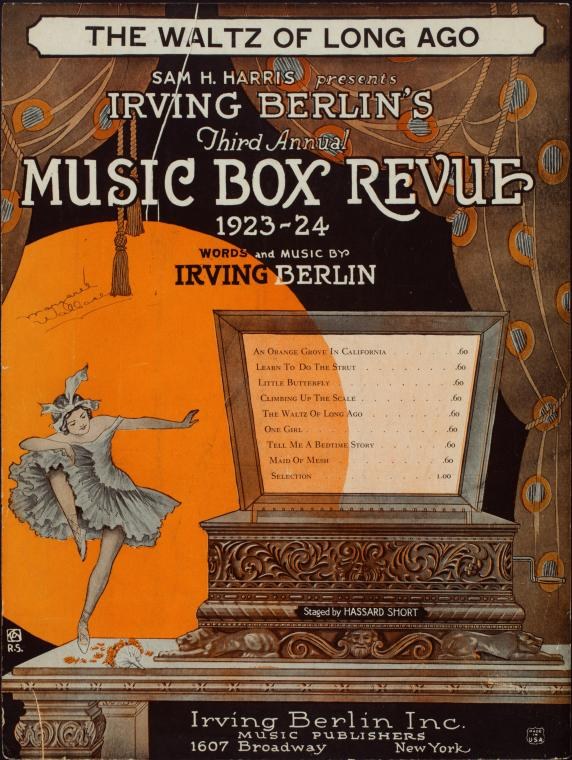
The waltz of long ago
Unknown artist
public_domain
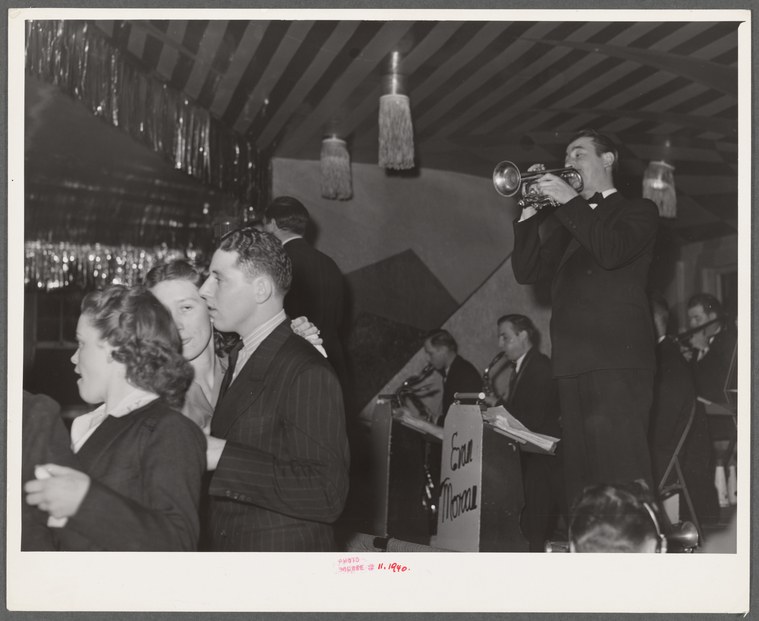
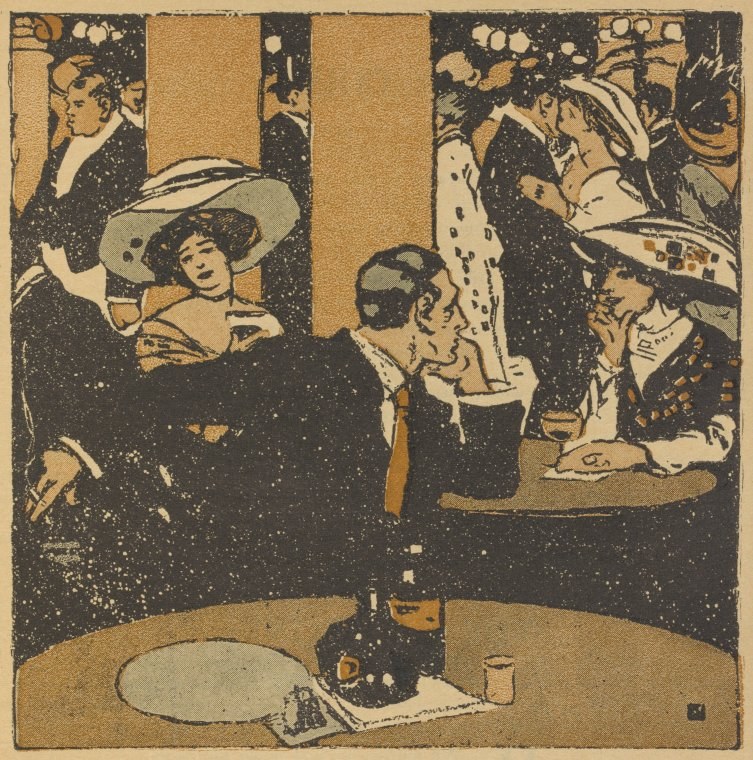
The lure of the dance
Unknown artist · 2021
public_domain
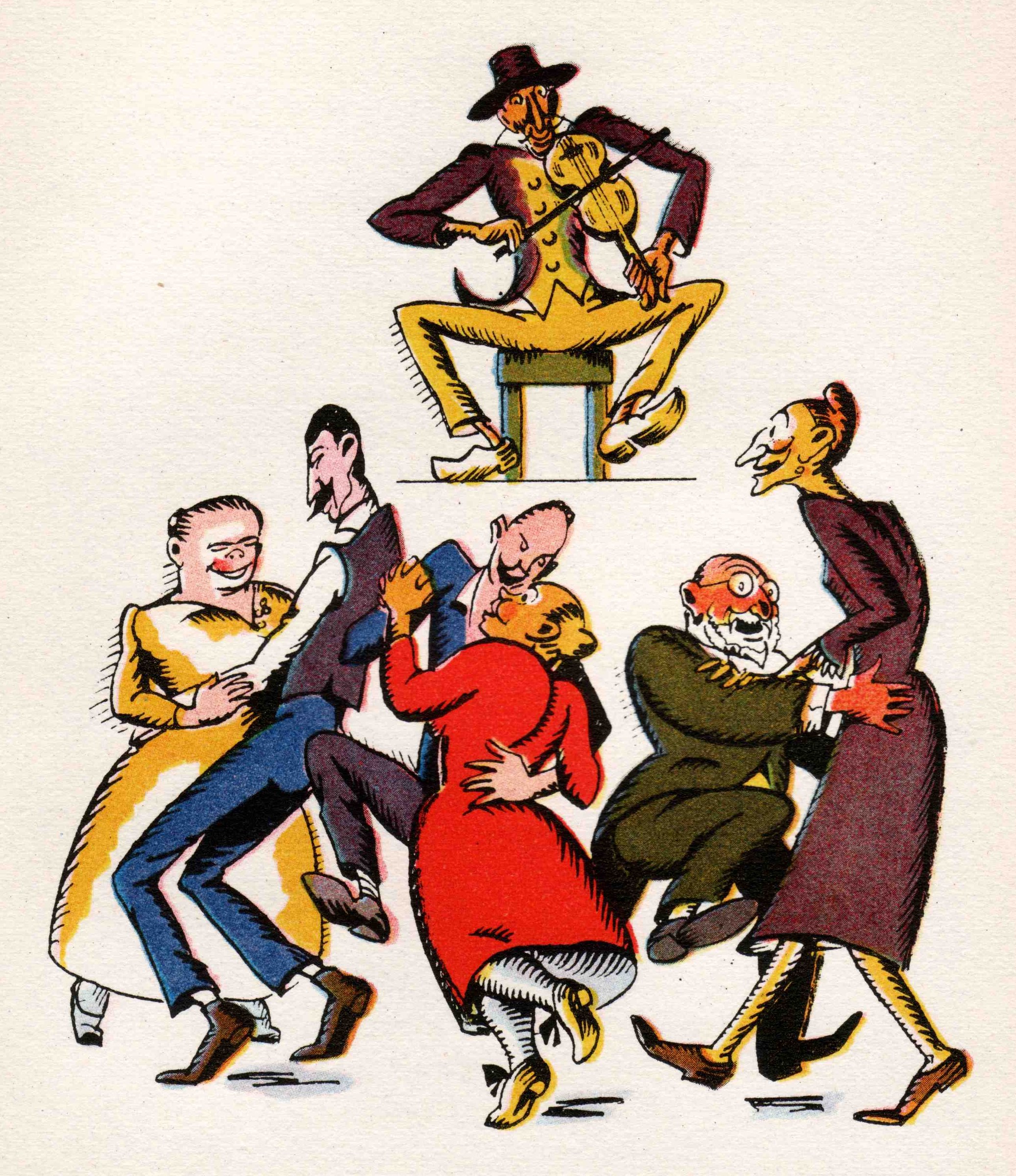
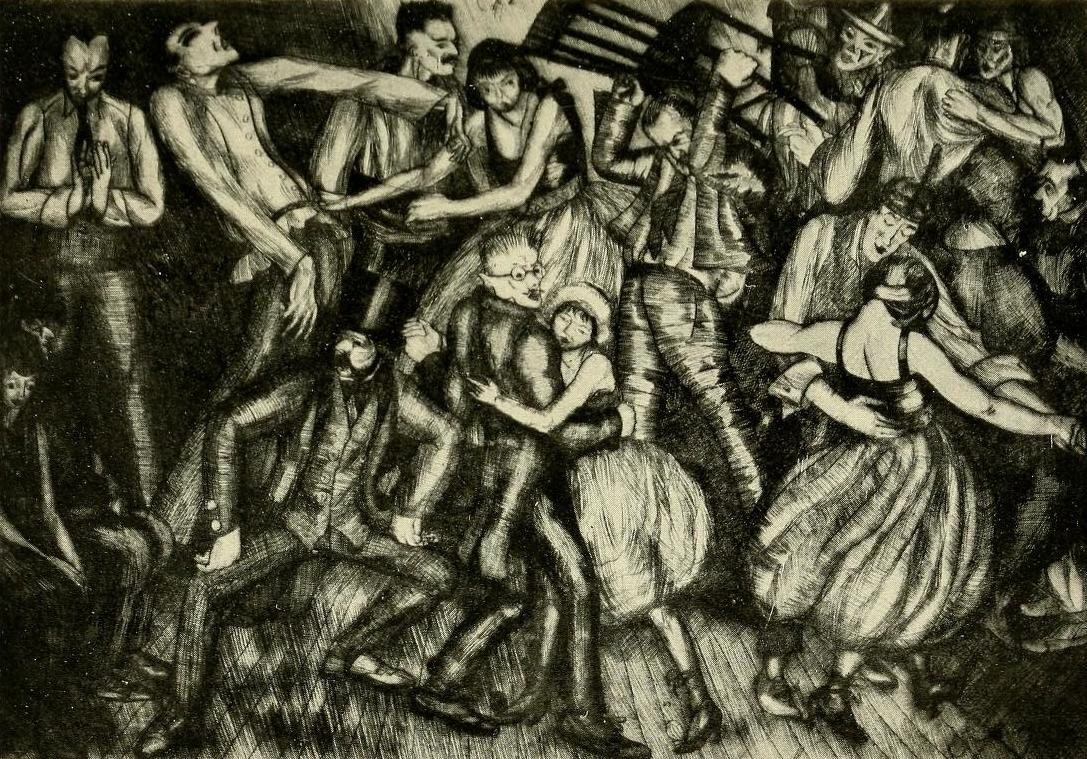
Peggy Bacon - Dance at the League
Peggy Bacon · 1922
Public Domain
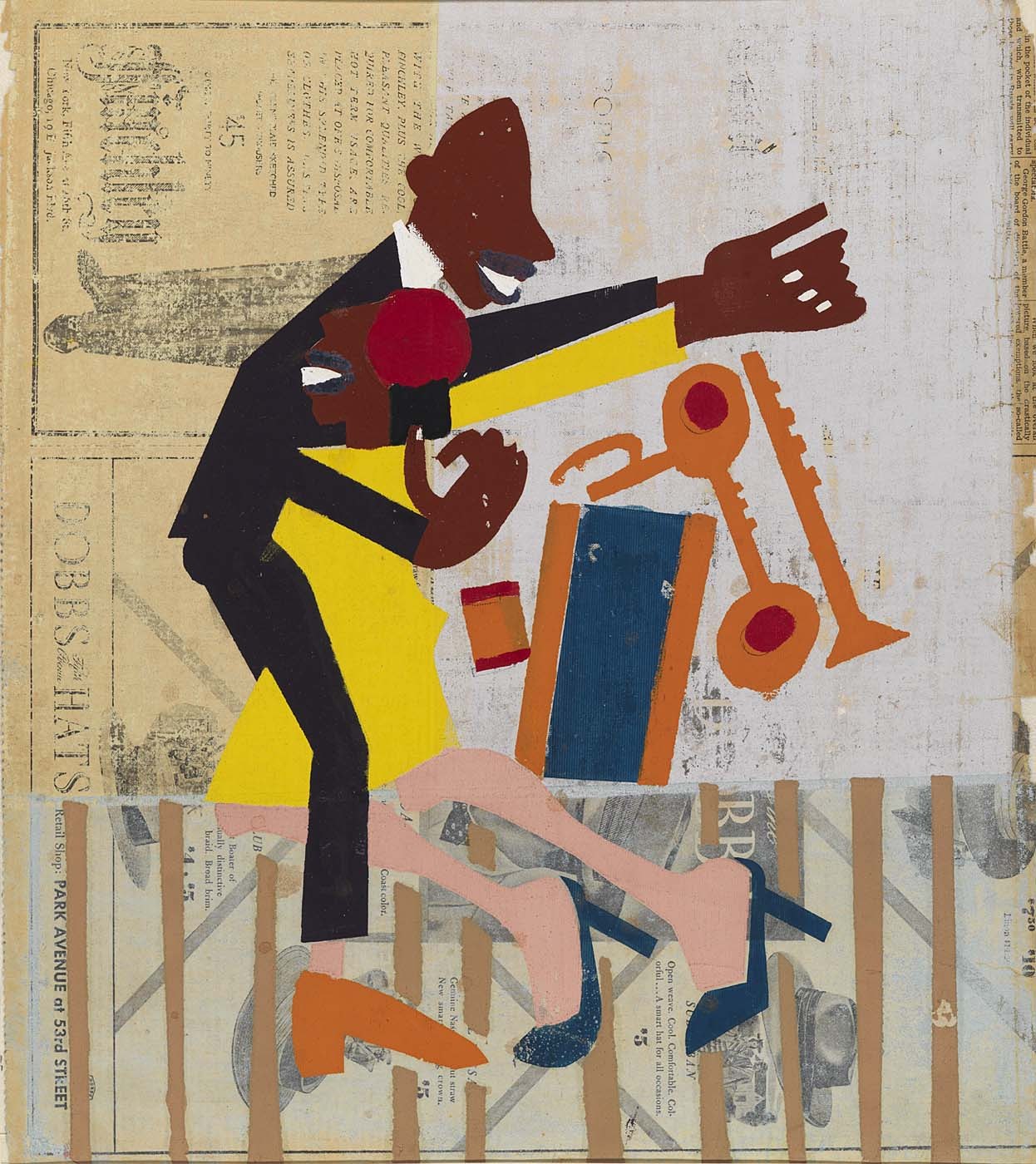
William H. Johnson - Jitterbugs (II) Smithsonian American Art Museum
William H. Johnson · 1939
Public Domain
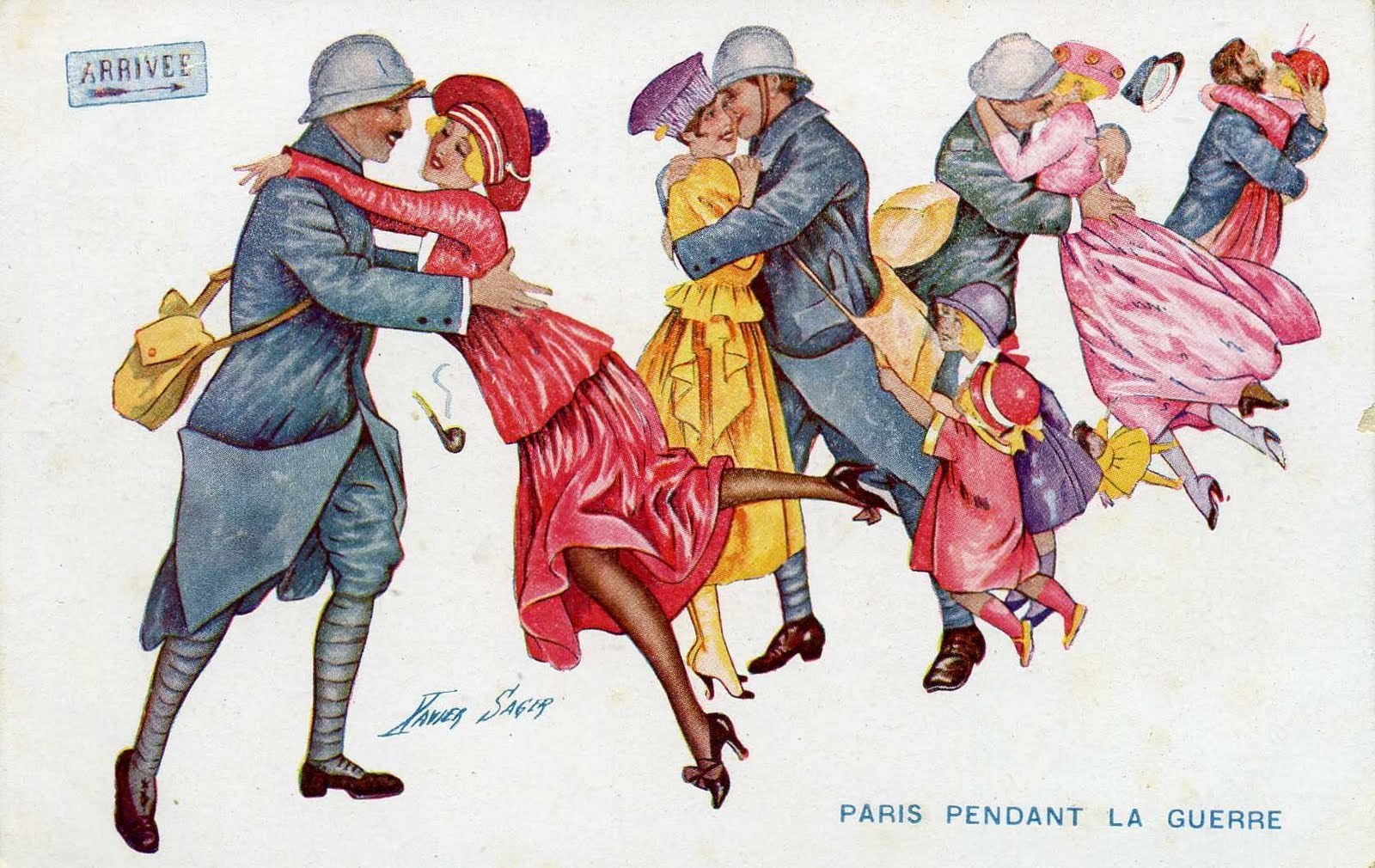
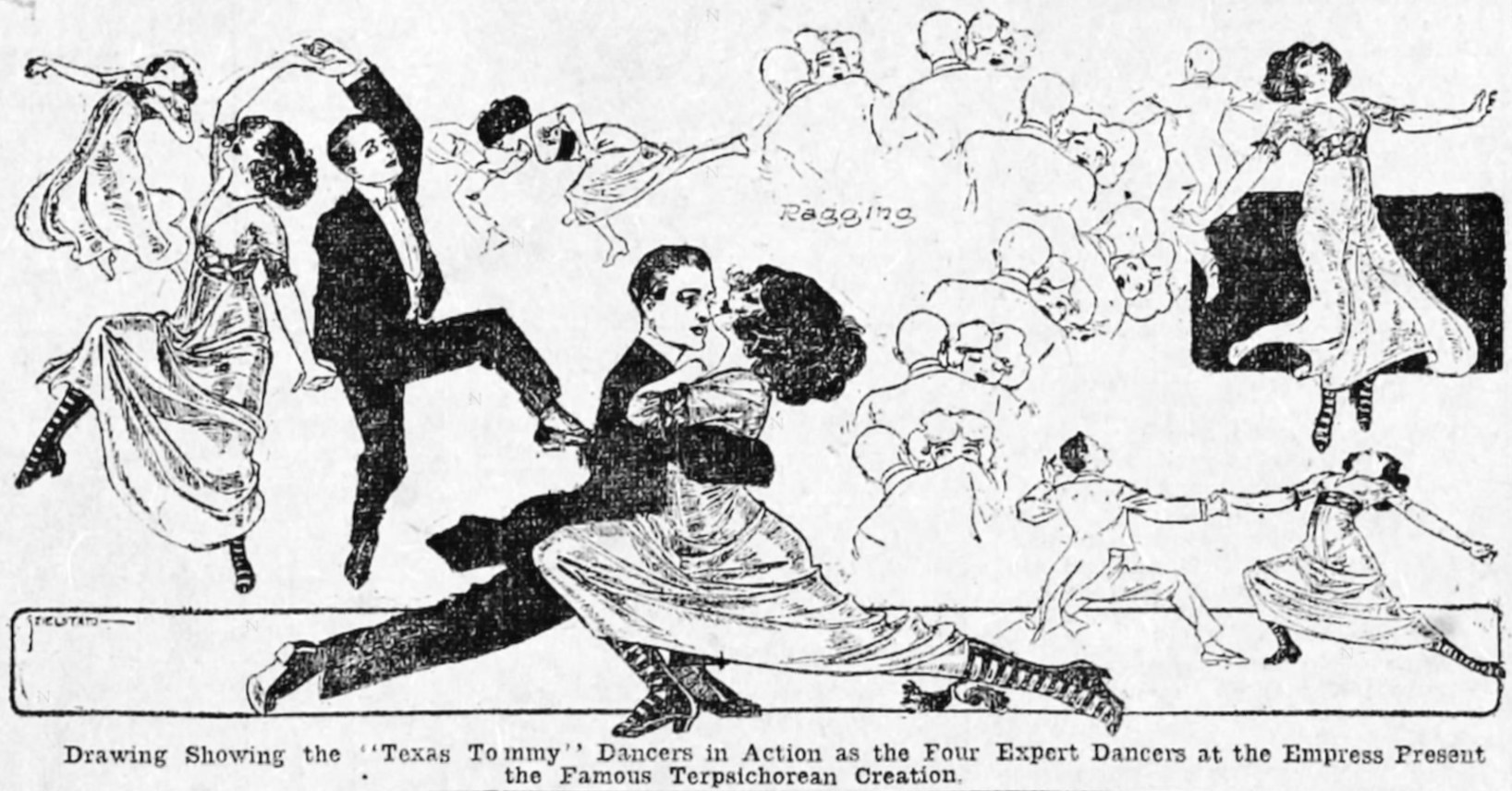
Texas Tommy dancers in Action - 1912
undetermined, published in The Salk Lake Tribune (Feb 25th, 1912) · 1912
Public Domain
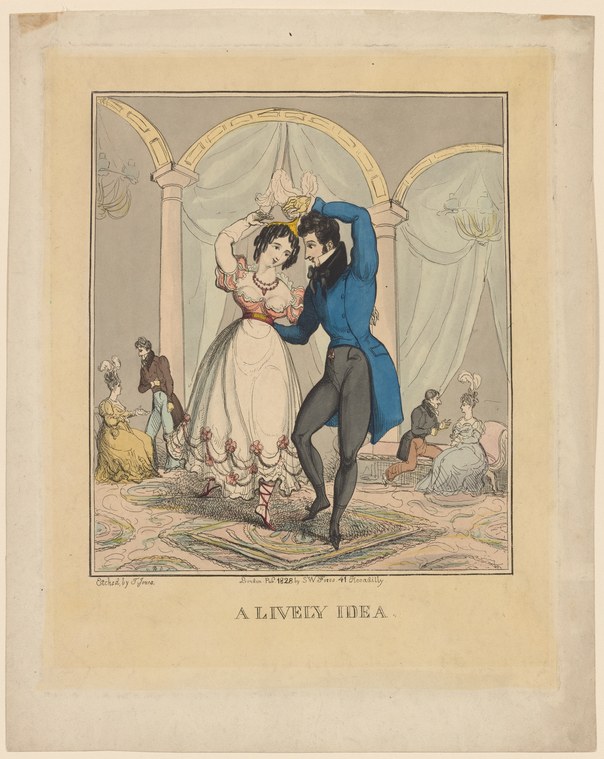
A lively idea
Unknown artist
Public Domain
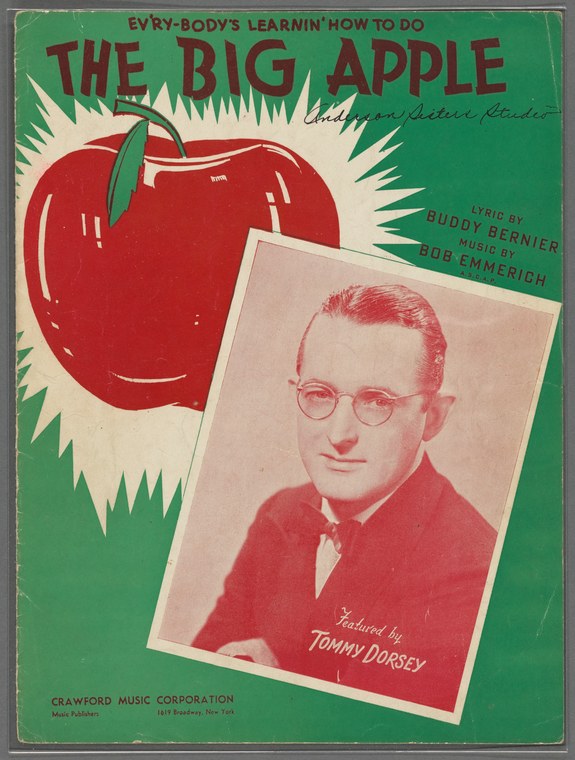
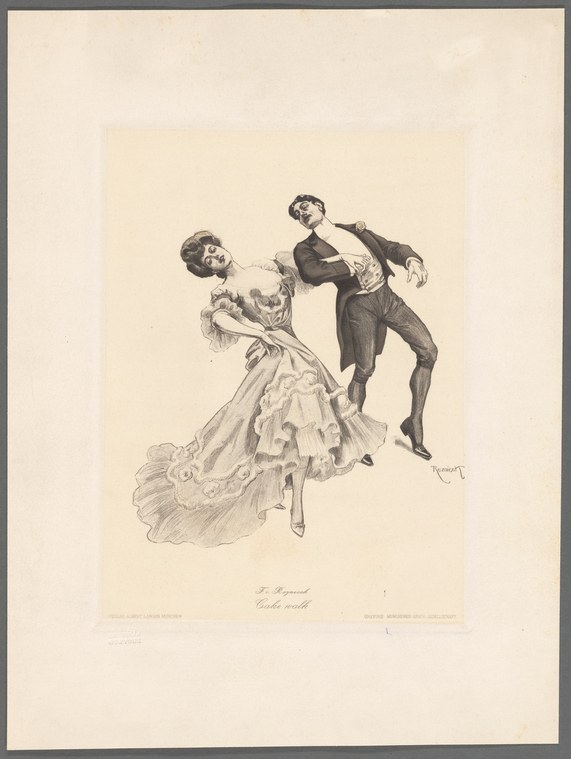
Cake walk
Unknown artist
Public Domain
Oh you dancing widow
Unknown artist · 1919
Public Domain