49 works in this view — arrow keys or swipe to move between them.
Dance in Art
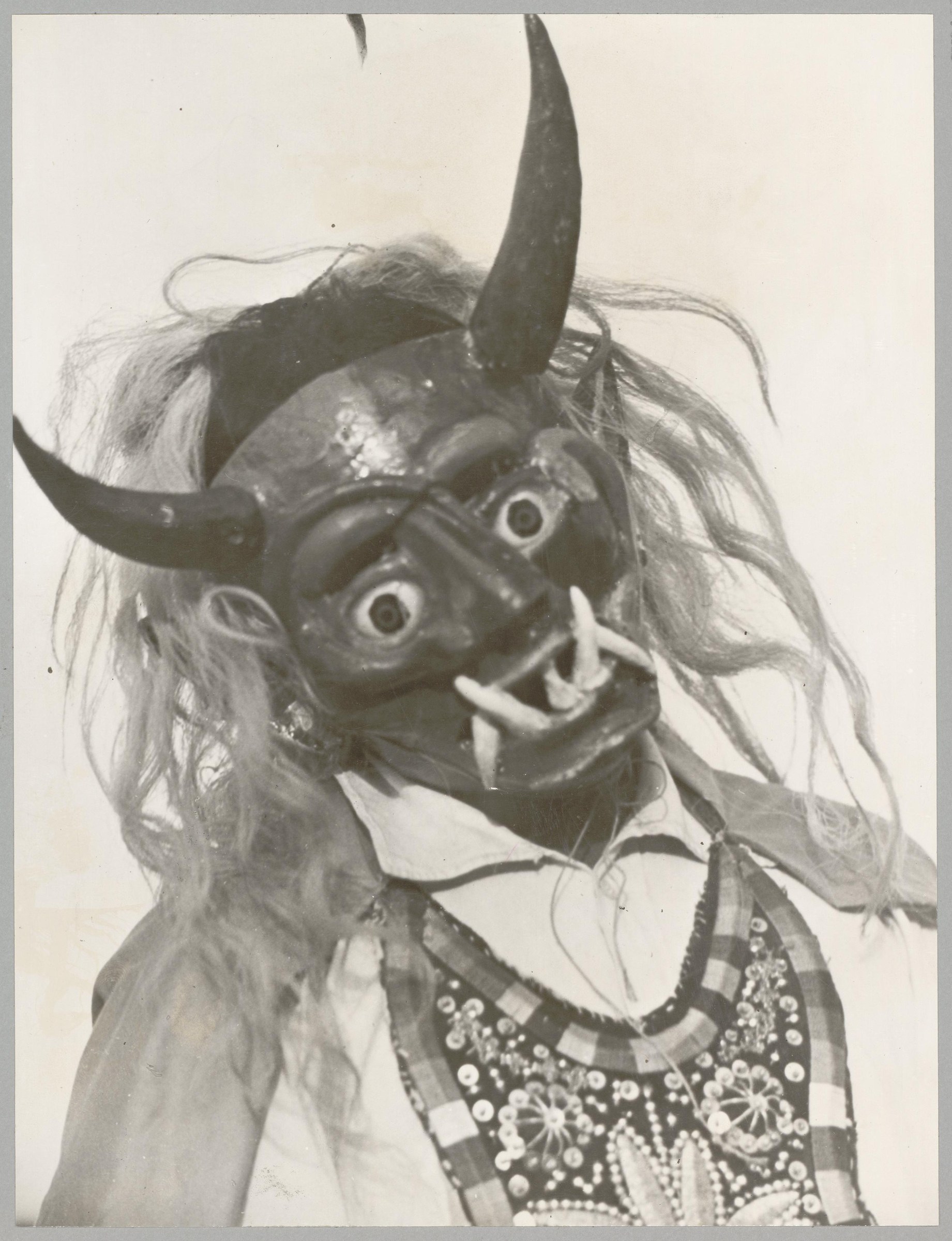
Devil Dancer Mask.
Unknown artist
- Collection:
- Prints & Photographs
- Source:
- loc
- Rights:
- Rights vary by item — check the source record before reusing this image. Source record ↗
- Recorded as:
- Library of Congress — no known restrictions (verify per item)
Masked dance traditions encode cultural values and folk memory in their costumes and characters. This photograph documents one such character—the devil figure—as it existed in the mid-20th century, preserving the carver's craft and the costume's aesthetic in a moment when many folk traditions were beginning to vanish or transform. For dancers and historians studying European folk traditions, masked performance, and the relationship between character, costume, and movement, this image provides direct evidence of how the supernatural was embodied and presented.
What you are looking at
A dramatic mask dominates this black-and-white photograph, photographed directly against a plain background. The carved wooden mask depicts a demonic or devilish face with exaggerated features: large bulging eyes with white pupils, a prominent nose, and a gaping mouth showing teeth. Two long curved horns extend upward from the crown of the head. Long, flowing hair—appearing to be actual hair or hair-like fiber—streams down the sides and back, creating movement and volume around the face. The figure wears ornate dress below the mask: a white garment at the throat or chest, and below that a densely decorated textile with geometric patterns, embroidery, or beadwork in dark and light tones. The costume element visible suggests this is a complete performance ensemble, not merely a mask.
The dancing
The mask itself is the primary subject, presented frontally and centrally in the frame. The mouth is open in an expression of ferocity or exultation. The hair extends outward symmetrically, suggesting motion or the volume it would create during performance. The costume visible below indicates this is worn by a dancer, though the dancer's body is not shown; the mask and upper garment are isolated and elevated as the focus of documentation.
The dance depicted
This is a devil or demon mask associated with masked dance traditions, most likely from a European Alpine or Central European carnival or folk ritual context. Devil or krampus-like masked dancers appear in Alpine folk traditions (particularly Austria and Bavaria) as part of winter solstice and pre-Lenten celebrations, though similar demonic masked figures appear in various European folk dance contexts. The mask's expressive carving and the ornate costume suggest a performer who would have danced as part of a processional or theatrical sequence, using exaggerated gesture and vigorous movement to embody supernatural or chaotic forces. Without additional documentation, the specific tradition cannot be determined with certainty, but the style points to early-to-mid 20th-century European folk tradition.
How it was made
This is a black-and-white photograph, likely a professional documentation shot. The plain background and frontal composition suggest it was created to record the mask and costume as archival or curatorial documentation rather than to capture a live performance moment. The photographic technique—direct lighting, sharp focus on the carved details, neutral backdrop—is consistent with museum or anthropological documentation practices of the mid-20th century. The photograph preserves details of carving and texture that would be difficult to see during actual performance.
About this work
This is a photograph of a devil or demon mask and partial costume from a masked dance tradition, documented in 1957. The mask shows sophisticated carving with expressive features intended to evoke supernatural or chaotic forces. The ornate costume beneath suggests the mask was worn by a dancer in a ceremonial or carnival performance, though the specific tradition is not recorded in the catalogue. The image serves as documentation of an artifact from European folk dance tradition, preserving the visual elements that would have defined the performer's character and impact during the dance.
How to look at it
Examine the mask's carving: the proportions and expression tell you how the wearer intended to be perceived—frightening, powerful, otherworldly. Notice the horns' angle and the hair's volume; during performance, movement would animate these elements. The ornate costume visible below suggests the full figure was equally elaborate and would have been striking in motion. The photograph freezes the mask as a sculptural object, but imagine it worn, lit by torch or firelight, moving in procession or in dialogue with other masked figures.
The period
In 1957, European folk dance documentation was becoming more systematic, as scholars and institutions recognized the urgency of recording traditions that industrialization and urbanization were eroding. Museum collections began acquiring masks and costumes from Alpine and Central European carnival traditions as artifacts. The photograph's style and archival approach reflect this mid-century curatorial practice. Masked devil or demon figures had deep roots in Alpine winter celebrations and carnival traditions—Krampus in Austria, Perchten in Bavaria, and related figures across Central Europe—many of which continued and were being studied during this period.
Where it lives
The image is held in the Library of Congress Prints & Photographs collection. It is a photograph of a cultural artifact, likely acquired as documentation of a folk tradition, though the specific provenance, artist, collection history, and current location of the original mask are not recorded.
Dance in this work
Questions about this work
What tradition does this mask belong to?
The catalogue does not specify. Based on the style of carving and costume, it likely belongs to an Alpine or Central European masked dance tradition—possibly Austrian, Bavarian, or another Central European folk context. Devil or demon masks appear in many European winter and carnival celebrations, but without additional documentation, the precise tradition cannot be determined.
Who wore this mask and when?
The photograph dates to 1957, but the mask's origin and age are not recorded. It was worn by a dancer in a masked performance, but the performer's identity and the mask's creation date are unknown. It may be significantly older than the photograph that documents it.
What does the costume below the mask tell us?
The ornate textile with geometric patterns and beadwork indicates this was a complete costume, not a mask alone. The wearer would have been a fully embodied character, visually striking from head to toe. The density of decoration suggests high status within the tradition and significant labor invested in the costume's creation.
Why is this in a dance collection?
Masked dance traditions use costume and character to structure movement and meaning. The mask governed how the wearer moved, gestured, and interacted with other performers and spectators. It is a dance artifact because it is inseparable from how the dance was performed.
More dance artwork