49 works in this view — arrow keys or swipe to move between them.
Dance in Art
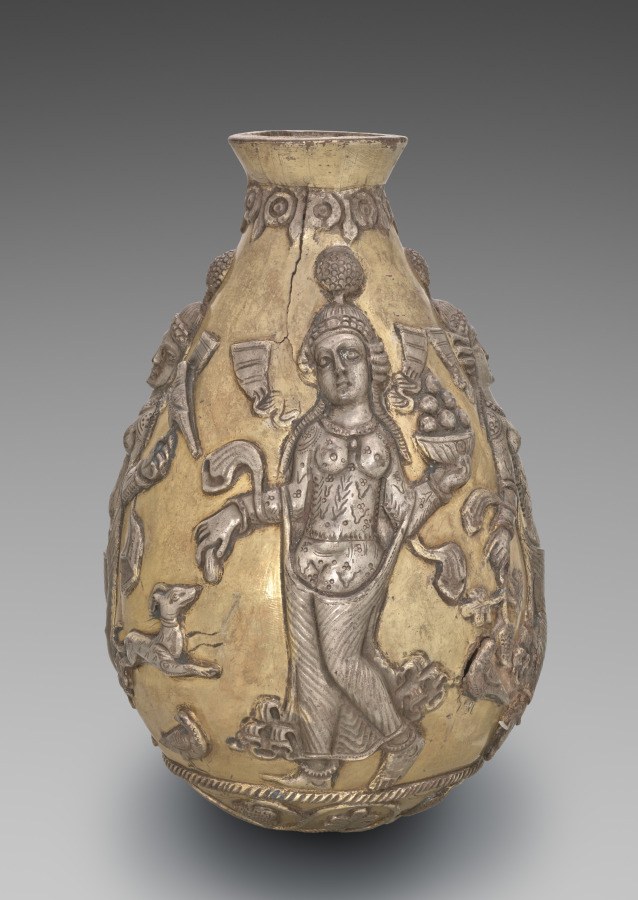
Anahita Vessel
Unknown artist
- Medium:
- silver, cast, raised, repoussé, chased, and gilted
- Collection:
- Egyptian and Ancient Near Eastern Art
- Source:
- Cleveland Museum of Art
- Rights:
- Public domain — free to use, share and adapt.
- Recorded as:
- CC0
For dancers and movement historians, this vessel documents how ecstatic and ritualized movement—distinct from theatrical or courtly dance—was conceived and represented in luxury art of the ancient Near East. The poses of the attendant figures preserve a visual record of how maenadic or priestessly gesture was imagined by makers trained in a tradition that valued both Greek and Persian aesthetics. The ambiguity of its religious and cultural identity reflects the lived complexity of the period: empires and traditions overlapped, and a single image could encode multiple meanings.
What you are looking at
A silver vessel in the shape of a bulbous pear or amphora, its surface densely covered with high-relief sculptural imagery. The main register shows a standing female figure at center, identified in the existing description as possibly Anahita (Zoroastrian) or a bacchante. She wears an elaborate headdress and jeweled body ornament, with breasts exposed, and stands in frontal pose with arms at her sides or gesturing. She is surrounded by smaller figures in animated poses: male and female attendants, musicians, and dancers. To her left and right are standing figures in classical drapery; below are crouching or bending figures, some playing instruments. The composition wraps around the vessel in multiple registers. Small animals—including what appears to be a lion or large cat—occupy lower zones. The surface shows the burnished gold-toned patina of ancient silver, with deep shadows in the carved recesses emphasizing the three-dimensional composition. The rim is plain and projecting; the foot is rounded.
The dancing
The central figure maintains a rigid, frontal stance typical of religious or royal iconography rather than active dance. The surrounding attendant figures display far more dynamic positioning: some bend forward at the hips with knees flexed, others raise arms overhead or to the sides, and a few appear to be in lunging or striding poses with weight shifted to one leg. The poses suggest ritual movement or ecstatic gesture rather than formalized partnered dance. Several figures show the kind of asymmetrical arm and leg extension associated with maenad or bacchant imagery—one arm reaching, the torso twisted, the opposite leg extended. The scale and spacing suggest these are subordinate figures in service to or celebration of the central female.
The dance depicted
The existing catalogue description identifies these as possibly sacred Zoroastrian dancers or bacchantes (followers of Bacchus). The fluid, bent-knee postures, raised arms, and apparent ecstatic bearing are consistent with Greco-Roman imagery of maenads and bacchants—frenzied female dancers in the cult of Dionysus/Bacchus. However, the rigid central figure and the formal hierarchical composition suggest this may equally represent a Sasanian religious ceremony or court ritual, with attendant musicians and dancers honoring a deity or royal personage. The ambiguity is genuine: both traditions coexisted in the eastern Mediterranean and Near East in the centuries around 300 CE. The dance, if that is what these poses represent, would be ecstatic, participatory, and tied to religious or royal ceremony rather than secular entertainment.
How it was made
The vessel is cast silver, raised into three-dimensional form, with the figural decoration created through repoussé (hammering from the back to create high relief) and chasing (fine detail work on the front surface). The technique allowed the maker to achieve remarkable sculptural depth and detail across a curved surface—drapery folds, facial features, and body contours are crisply rendered. The gilting (gold wash or overlay) would have created a precious, luminous surface. This combination of techniques suggests royal or temple commission: such vessels were prestige objects for display, ritual use, or gift-giving among elite patrons. The density of figural narrative and the skill of execution indicate a highly trained workshop, likely in a major center of the Sasanian or Romano-Near Eastern world.
About this work
This is a prestige silver vessel, dated to around 300 CE, from the Sasanian or late Roman Near East. Its surface is crowded with relief figures depicting a solemn central female figure—identified as possibly the Zoroastrian goddess Anahita or a bacchante—surrounded by animated attendants, musicians, and dancers in poses of ecstasy or ritual movement. The work sits at the intersection of Greco-Roman and Persian visual traditions, both in its formal iconography and in the hybrid religious and cultural meanings it likely carried. It is a rare surviving example of luxury metalwork from an empire that produced vast quantities of such objects, most now lost.
How to look at it
Attend first to the central figure's stillness and formal frontal pose, which signals authority or divinity. Then contrast it with the bent-knee, reaching, twisting bodies of the attendants, which convey movement, emotion, and subordination. Look at the play of light across the repoussé surface: the shadows in the carved recesses deepen the sense of figures advancing and receding in space. Notice how the maker used the curved vessel surface to wrap the narrative around the object, so that the dance or ritual unfolds in the round—a viewer would have rotated the piece to see the full story. The density of figural incident and the miniaturization of the attendant figures are characteristic of luxury metalwork meant for close, intimate looking by elite viewers.
The period
This vessel dates to the Sasanian empire (224–651 CE) or the late Roman Near East, an era of intense cultural exchange and political tension. Greek artistic traditions (including the iconography of bacchants and maenads) remained influential in metalwork, sculpture, and painting across the eastern Mediterranean and Persian territories. At the same time, Zoroastrianism, the state religion of Sasania, developed its own visual language of ritual and divine female power. Luxury silverware of this type—elaborately figured vessels for display, feasting, or temple use—became a medium through which competing and overlapping visual traditions could coexist. The figure of Anahita, the Zoroastrian waters-goddess and guardian of fertility, was sometimes depicted in ways influenced by Greco-Roman female deities, creating the kind of syncretism visible here.
Where it lives
The vessel is held by the Cleveland Museum of Art as part of its Egyptian and Ancient Near Eastern Art collection. It is recorded as silver, cast and worked by repoussé, chasing, and gilting. The catalog entry is sparse, offering no recorded artist, era label, or dance style classification—a common condition for ancient luxury objects whose makers, precise date, and cultural context remain subjects of scholarly debate.
Dance in this work
Questions about this work
Is this object definitely Sasanian, or could it be Roman?
The record does not definitively state. The style, iconography, and metalworking technique suggest it could be either late Sasanian (3rd–4th century) or from the Romano-Near Eastern world, where both traditions circulated. The ambiguity is historically apt: at this date, such objects often blended Greek, Persian, and Levantine influences, and a single vessel could serve patrons of multiple faiths and cultures.
Who is the central female figure?
The existing description proposes two possibilities: Anahita, the Zoroastrian goddess of waters and fertility, or a bacchante, a female follower of Dionysus/Bacchus in Greco-Roman cult. Both were frequently depicted surrounded by attendants and musicians, and both traditions valued ecstatic female movement. Without an inscription or more secure archaeological context, the identification remains open.
Are these figures actually dancing, or just moving in ritual?
The bent knees, raised arms, twisted torsos, and apparent forward momentum suggest ecstatic or ritualized movement rather than formalized partnered dance. In ancient sources, both maenadic dance and Zoroastrian priestly ritual are described as states of spiritual or divine possession, expressed through the body in ways that blur the modern boundary between dance and religious gesture. This vessel likely depicts that continuum.
Why is the vessel so densely covered with figures?
Such density was typical of luxury metalwork meant for elite display and close viewing. The narrative abundance signaled wealth, status, and access to skilled craftspeople. The vessel would have been handled, rotated, and examined in detail—perhaps during feasts or temple rituals—allowing viewers to discover new figures and meanings with each turning.
More dance artwork





