49 works in this view — arrow keys or swipe to move between them.
Dance in Art
Fan Dancer
Waylande Gregory (American, 1905–1971)
- Medium:
- glazed ceramic
- Collection:
- Decorative Art and Design
- Source:
- Cleveland Museum of Art
- Rights:
- Public domain — free to use, share and adapt.
- Recorded as:
- CC0
This sculpture documents a moment when American fine artists were actively engaged with contemporary dance forms and aesthetics. It shows how theatrical dance of the 1920s—a period of innovation and experimentation in stage movement—inspired sculptors to translate gestural and emotional content into three-dimensional ceramic form. For historians of dance and art, it represents the cross-pollination between theater and the decorative arts during a vital period of American modernism.
What you are looking at
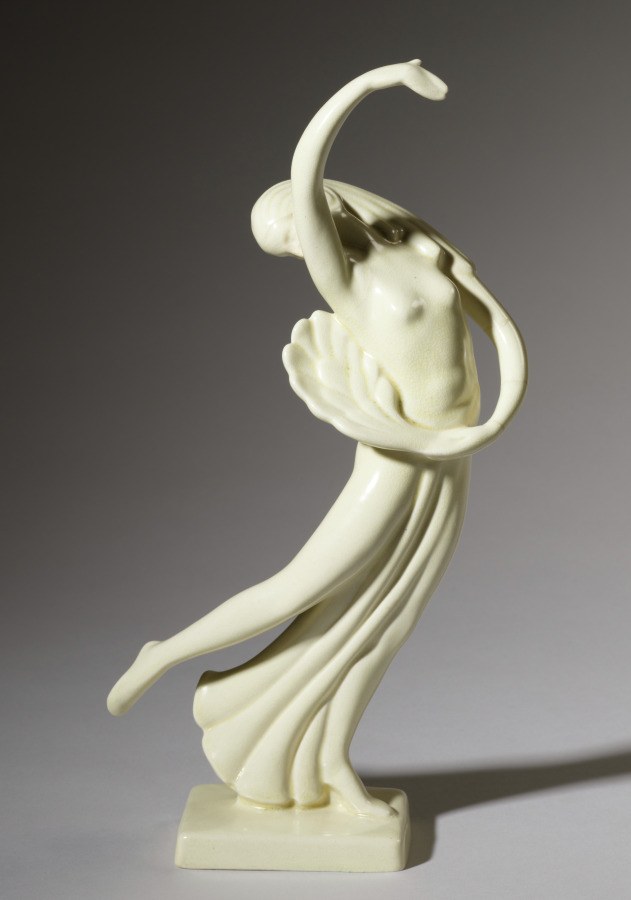
A cream-colored ceramic figure of a single dancer captured mid-gesture against a neutral gray background. The dancer wears a flowing, draped robe with vertical pleats and folds that suggest movement and lightness. The composition is vertical and elegant, showing the figure in a contrapposto stance with the body weight shifted. The dancer's left arm curves gracefully upward and backward, while the right arm extends lower, creating an S-curve through the torso. The head tilts back, following the line of the raised arm. The pose suggests a moment of lyrical expression rather than a specific technical position—the dancer appears suspended between movements, caught in a gesture of abandon or theatrical reverie. The smooth, polished surface of the ceramic catches light along the raised edges of the drapery, emphasizing the three-dimensionality of the form.
The dancing
A single standing figure with weight distributed asymmetrically, suggesting motion through stillness. The torso curves in a gentle S-shape with the spine slightly arched and the head thrown back in an attitude of release. The elevated left arm reaches backward and upward with a soft, rounded line from shoulder to fingertip; the right arm hangs lower with a similarly curved gesture. The drapery follows the body's line, creating the impression of a dancer rather than a static pose—the vertical pleats suggest fabric caught in motion. The facial features are subtle but show the head fully tilted back, aligned with the gesture of the raised arm.
The dance depicted
This work captures a moment associated with theatrical dance of the 1920s–1930s, likely depicting a figure dancer or interpretive dancer of the era rather than a specific codified style. The pose and gesture are consistent with modern dance or theatrical dance of the period, where dancers explored emotional and lyrical expression through flowing movements and body attitudes. The title "Fan Dancer" suggests it may reference the popular fan dance form of the era, though no fan is visible in the sculpture itself. The pose could represent a moment before, after, or during fan work—the backward tilt of the head and raised arm are evocative of the expressive vocabulary of theatrical dance of the 1920s.
How it was made
This is a glazed ceramic sculpture, hand-modeled and refined with attention to fluid gesture and drapery. The cream glaze creates a smooth, unified surface that emphasizes the elegant line of the pose and the play of light across the pleated robe. Ceramic sculpture allowed for the creation of three-dimensional form that reads dynamically from multiple viewpoints, and the glaze gave the work a refined, gallery-worthy finish. The Cowan Pottery studio was known for its technical excellence in producing such works, and Gregory's skill in translating gestural movement into ceramic form is evident in the smooth transitions between body and drapery.
About this work
This ceramic sculpture by Waylande Gregory, made at the Cowan Pottery studios in 1928, captures a moment of theatrical dance from the early twentieth century. It represents the ambition of American art pottery in the 1920s to engage with contemporary culture and aesthetics, including the world of modern theatrical dance. The work demonstrates both technical mastery and artistic sophistication—Gregory's ability to suggest movement and emotional expression through a frozen pose. The title "Fan Dancer" places it within the vocabulary of theatrical dance of the era, when fan work and interpretive movement were popular forms of stage expression. As part of the Cowan Pottery's renowned output, it belongs to a wider artistic moment when American ceramists achieved national recognition through works that engaged with modern life.
How to look at it
Look at the arc of the body from toe to fingertip: the pose is designed to be read as a continuous gesture of extension and release. The backward tilt of the head and the upward curve of the arm create a moment of abandon or ecstasy. Notice how the drapery follows and amplifies this line, making the figure appear lighter and more fluid than a nude form would. The smooth ceramic surface and the way light plays across the pleated robe emphasize the dynamism of the pose—this is a sculptor's attempt to capture not stillness but the feeling of movement, caught in a single moment of theatrical expression.
The artist
Waylande Gregory (1905–1971) was one of the premier sculptors employed at the Cowan Pottery studios, brought to Cleveland in 1928 by founder R. Guy Cowan from Chicago, where Gregory had begun to establish a reputation as a talented young artist. Gregory's work at Cowan was known for its fluid handling of the human form and its engagement with contemporary subjects and aesthetics. The studio employed a large team of talented artists and became nationally renowned before closing in 1932 due to economic circumstances.
The period
The late 1920s was a period of vigorous experimentation in theatrical dance in the United States. Modern dance was emerging as an art form, and interpretive and theatrical dance—often featuring flowing costumes, gestural expression, and thematic content drawn from music, nature, or emotion—was popular on stage. Simultaneously, American art pottery was reaching a peak of artistic ambition and technical refinement. The Cowan Pottery's engagement with contemporary subjects, including dance, reflected a broader modernist impulse to connect fine art with modern life. Fan dances and similar forms of theatrical movement were particularly fashionable during this period, popularized by performers who emphasized fluid, expressive gesture over technical virtuosity.
Where it lives
This work is held in the Decorative Art and Design collection at the Cleveland Museum of Art (CMA). The stamp on the bottom indicates it was produced at the Cowan Pottery studios in Ohio (located in Lakewood, 1912–17, and later in Rocky River, 1919–32). Although unsigned, it is attributed to Waylande Gregory based on stylistic analysis and documented records of his work at the studio.
Questions about this work
Is there actually a fan in this sculpture?
No fan is visible in the surviving sculpture. The title may refer to the style of dance depicted—fan dancing was a popular theatrical form in the 1920s, and the pose suggests an expressive, interpretive gesture consistent with that vocabulary. Alternatively, the title may reference the dancer's intended use of props, even if the fan itself is not represented in the sculpture. Without additional documentation, the relationship between title and image remains open to interpretation.
What is the Cowan Pottery, and why does it matter?
The Cowan Pottery was founded by R. Guy Cowan in Ohio and operated from 1912 to 1932. It became nationally famous for producing high-quality ceramic sculpture and art pottery during the 1920s and early 1930s, employing a remarkable roster of talented artists including Gregory, Viktor Schreckengost, and others. The studio demonstrated that American pottery could achieve artistic distinction and cultural relevance, and its closure during the Great Depression marked the end of a distinctive moment in American decorative arts.
What does the pose tell us about 1920s dance?
The pose reflects the aesthetic values of interpretive and theatrical dance of the era: emotional expression, fluid movement, and a sense of release or abandonment. The backward tilt of the head and the extended arm are not positions of technical display but rather of emotional or spiritual content. This contrasts with the more structured, codified positions of ballet, suggesting that Gregory may have been depicting a form of modern or interpretive dance that prioritized gestural expression over technical virtuosity.
More dance artwork





