49 works in this view — arrow keys or swipe to move between them.
Dance in Art
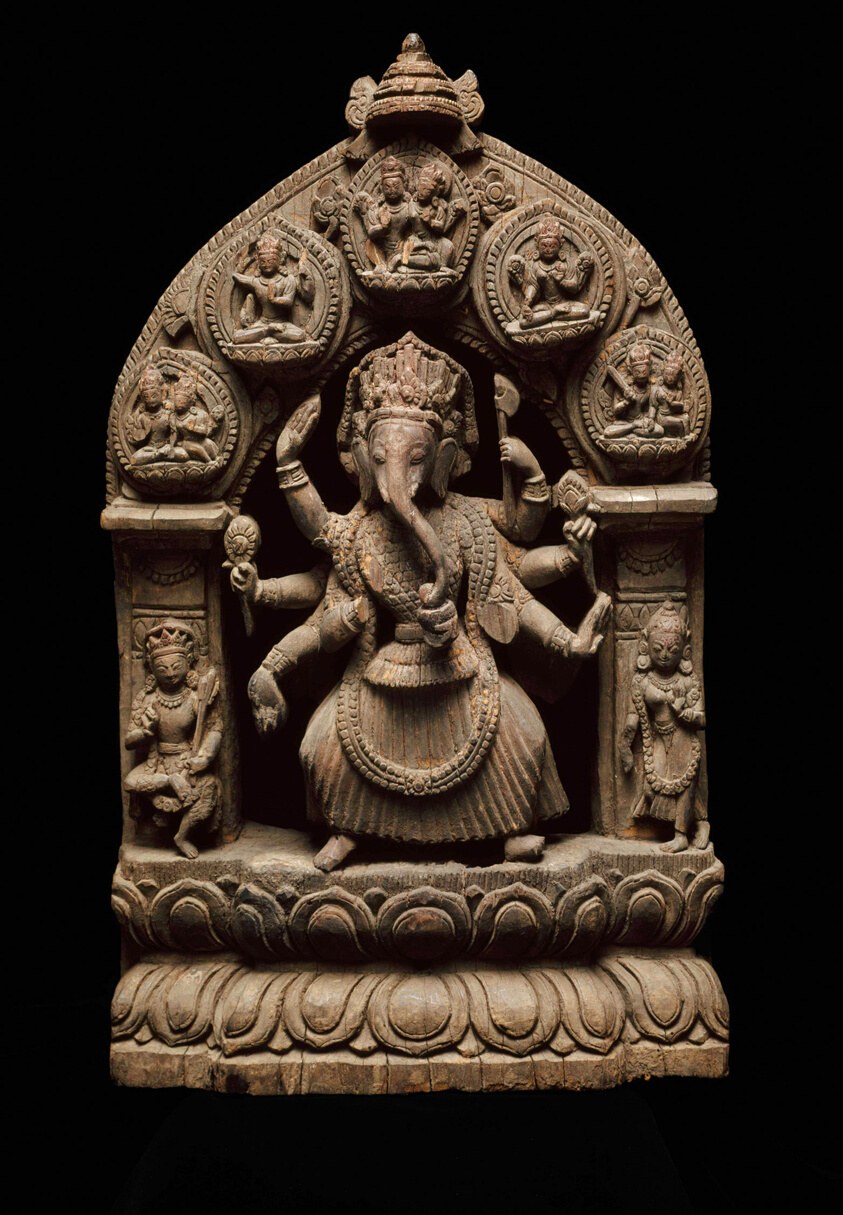
Eight-Armed Dancing God Ganesha
Nepal Kathmandu Valley
- Medium:
- Wood
- Collection:
- Arts of Asia
- Source:
- Art Institute of Chicago
- Rights:
- Public domain — free to use, share and adapt.
- Recorded as:
- CC0 (Public Domain)
For a dance researcher or historian, this work documents how non-Western sacred traditions use the positioned body and multiple simultaneous arm positions to convey complex meaning—a principle that informs actual South Asian classical dance styles like Kathakali and Bharatanatyam, where mudras derived from texts like this carving are central to performance. The eight-armed form and the formal gesture language represent a visual grammar that later influenced living dance traditions and demonstrates that the history of movement and meaning extends far beyond theatrical performance into ritual and devotional practice.
What you are looking at
A carved wooden shrine depicts the eight-armed god Ganesha in dynamic motion within an architectural frame. The central figure stands with multiple arms raised and gesturing in different directions, suggesting simultaneous action and divine power. Ganesha wears an ornate pleated skirt and jeweled ornaments across the chest and limbs; the elephant head is crowned and detailed. The composition is framed by a steep arched top decorated with smaller figures in relief—five seated or posed deities in rounded cartouches, two on each side flanking a central figure at the peak. Below the arch, vertical pilasters frame the sides, each containing two small relief figures. A wide, deeply carved base with repeating lotus petals sits at the bottom. The entire composition is rendered in warm tan wood with strong shadows defining each carved element.
The dancing
Ganesha's eight arms are positioned in multiple mudras (ritual hand gestures) simultaneously—some raised, some lowered, creating a sense of dynamic offering and blessing. The torso is frontal and upright; the weight appears centered and stable despite the complexity of limb placement. The deity stands alone at the center with smaller attendant figures arranged in a formal, symmetrical composition around and above. The carving technique creates sharp definition between figures and background, emphasizing separation and clarity of gesture rather than flowing connection.
The dance depicted
This is not a depiction of human dance but a representation of divine gesture in the Hindu sculptural tradition. Ganesha's multiple arms and their varying mudras communicate sacred language rather than choreographed movement—each arm position carries religious meaning in Hindu worship and iconography. The eight-armed form emphasizes omnipotence and the simultaneity of divine action. This type of carving would have functioned as an object of worship and meditation, with the complex gesture language meant to be read spiritually rather than as a record of actual performed dance, though the dynamic pose and varied arm positions do suggest movement frozen in a sacred moment.
How it was made
This is a three-dimensional wooden relief carving, likely created from a single block of wood using chisel and mallet. The technique creates deep undercutting that produces strong shadows and visual separation between foreground figures and architectural background. The precision of the work suggests use of templates or guidelines; the repetition of forms (the five subsidiary figures, the lotus petals) indicates a methodical, organized approach. The depth of carving—particularly the hollow of the arch and the projecting finial at top—shows confidence with wood's structural limits and an understanding of how light would animate the surface. This technique of architectural relief carving was common in Kathmandu Valley sculpture and produced objects for temple worship and private devotion.
About this work
This is a wooden shrine carving from the Kathmandu Valley in early 17th-century Nepal, depicting the elephant-headed god Ganesha in an eight-armed divine form within an ornamental architectural frame. The work belongs to the Hindu sculptural tradition in which multiple arms and complex gestures communicate religious meaning and divine attributes rather than human choreography. Ganesha, the remover of obstacles and lord of beginnings, is shown with arms raised in blessing and offering mudras, surrounded by smaller attendant deities. The carving combines three-dimensional figural sculpture with architectural ornament, creating a portable shrine object intended for worship. While not a dance artwork in the conventional sense, the energetic pose and complex arm gestures represent a formal sacred language that shares with dance the communication of meaning through body position and movement.
How to look at it
Attend first to the central figure's arms and their distinct positions: no two are identical, and each carries a different gesture or object. Notice how the carver has created clarity rather than fluidity—each arm reads distinctly against the background, and each small figure in the surrounding frames reads as a complete form. Observe the architectural frame itself: the arch, pilasters, and lotus base are not mere decoration but essential to the meaning, situating this god within a sacred cosmos. The carver has chosen not a narrative moment but a state of divine omnipresence—Ganesha suspended in simultaneous action and blessing.
The artist
Unknown. The carving is attributed to the Kathmandu Valley region and dated to approximately 1601, but no individual artist is recorded. Work of this period and place was typically produced by carvers working within established guild traditions, creating shrine carvings and temple decorations according to religious specifications and iconographic conventions. Signature of individual makers was not the norm; artists understood themselves as transmitters of sacred forms rather than innovators seeking individual recognition.
The period
The early 17th century in the Kathmandu Valley was a period of active Hindu temple construction and religious carving under the Malla kingdoms. Wooden shrine carvings of this type were produced in quantity for both temple settings and private worship, often ordered by wealthy families or religious institutions. This date precedes major external rule changes but sits within a longstanding tradition of Nepali wood-carving mastery that stretched back centuries. Simultaneously, in India, classical dance forms like Bharatanatyam were developing sophisticated systems of hand gesture and body position based on texts like the Natya Shastra; while this carving predates most surviving dance texts from the region, it represents the same religious and aesthetic language of embodied divine expression.
Where it lives
The work is held in the Arts of Asia collection at the Art Institute of Chicago, acquired as a catalog entry identifies it from Nepal, Kathmandu Valley, 17th century. The collection document indicates it as wood, approximately 1601, but provides no information on acquisition, prior ownership, or original location within Nepal.
Dance in this work
Questions about this work
Why does Ganesha have eight arms?
In Hindu iconography, multiple arms represent divine power and the ability to perform many actions simultaneously. Eight arms specifically signal completeness and cosmic authority. Each arm can hold or gesture toward a different symbol of the god's power and attributes, multiplying the visual and spiritual information conveyed by the single figure. This is not meant to depict human anatomy but to express non-human divine nature.
Is this a dance representation?
Not in the literal sense of recording human choreography. However, the hand positions (mudras) visible here are the same formal gestures used in South Asian classical dance traditions like Kathakali and Bharatanatyam, where they communicate specific meanings and emotions. This carving represents the sacred language from which those dance vocabularies partly derive, so it documents an earlier layer of the tradition connecting gesture, meaning, and spiritual expression.
What was this object used for?
This is a shrine carving, likely placed on an altar or in a temple setting as an object of worship and meditation. Devotees would have approached it to make offerings, pray, or contemplate the deity's attributes. The architectural frame and formal composition suggest it was a portable shrine or a wall-mounted carving, possibly one of many such works commissioned by a wealthy patron or religious institution to adorn a sacred space.
More dance artwork





