49 works in this view — arrow keys or swipe to move between them.
Dance in Art
Jug
Ray, George
- Collection:
- Jug
- Source:
- Victoria and Albert Museum
- Rights:
- Rights vary by item — check the source record before reusing this image. Source record ↗
- Recorded as:
- V&A — check rights per item
For historians of dance and visual culture, this jug documents the aesthetic framework through which early 19th-century viewers understood movement and classical elegance. The refined replication of classical female dress and the staged gesture of the figures show how neoclassical aesthetics shaped the visual representation of the body, influencing everything from ballet costume to the poses adopted in drawing rooms. The persistence of this style in 1844—decades after the initial neoclassical revival—suggests its continued cultural authority in defining graceful, refined embodiment.
What you are looking at
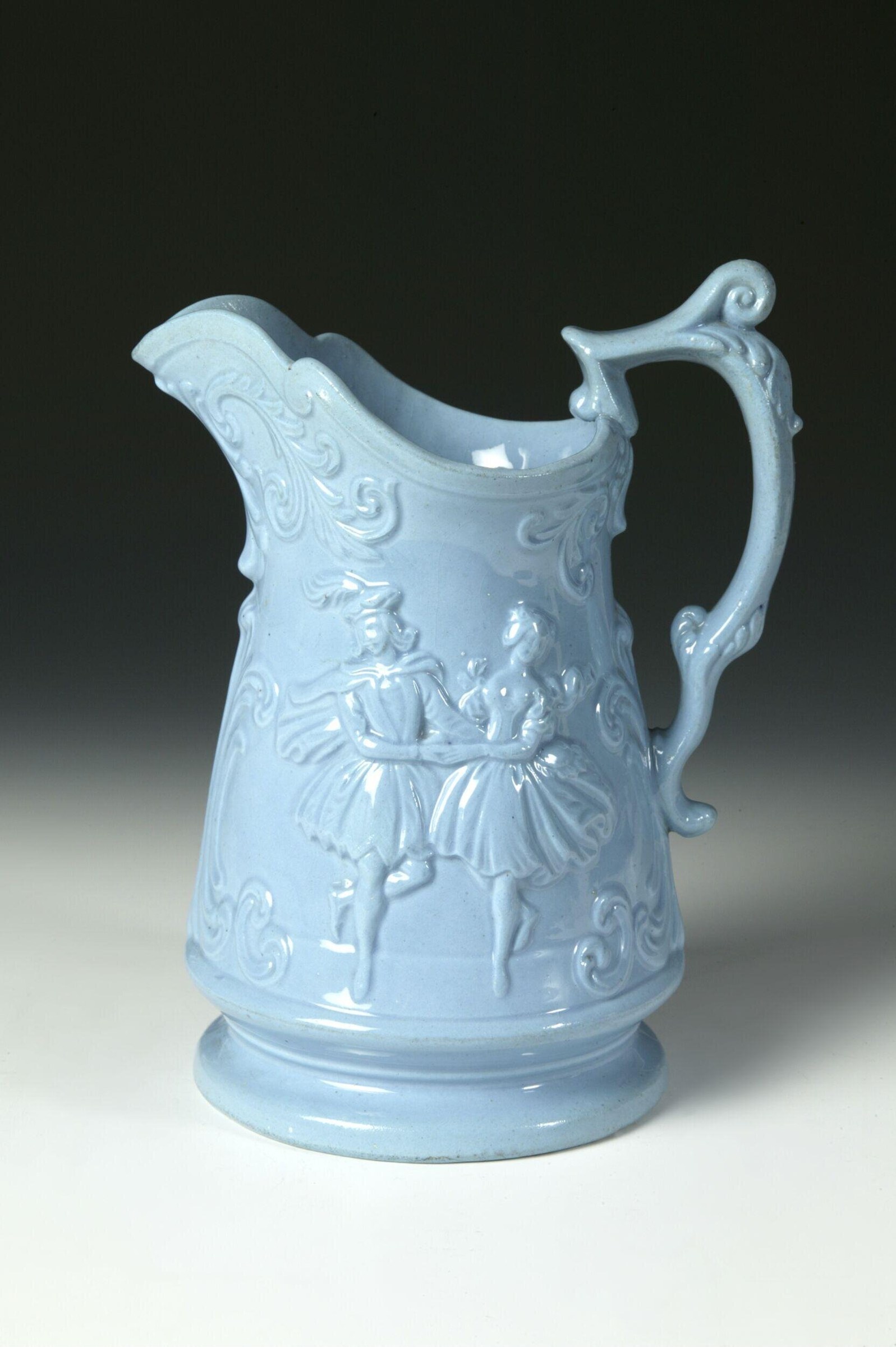
A pale blue ceramic jug rendered in relief against a dark background. The vessel stands on a flared pedestal base and features a wide, gently curved body that narrows toward a flared rim. A curved handle with a scrolled terminal rises from the shoulder. The surface is densely ornamented with neoclassical motifs: scrolling acanthus leaves frame the upper register, while the central body depicts a figural scene in low relief. Two female figures in classical dress occupy the main field—one seated, one standing—engaged in what appears to be a domestic or theatrical moment. Their draped garments fall in the high-waisted style of the Regency era. Additional scrollwork and foliate ornament fills the spaces around the figures. The modeling is precise and the glaze luminous, suggesting fine manufacture.
The dancing
The standing figure on the left reaches or gestures toward the seated figure with extended arm, suggesting narrative engagement rather than formal dance. Both wear classical dress with high waistlines and flowing skirts characteristic of early 19th-century neoclassical fashion. The seated figure's posture is upright and composed, while the standing figure's weight appears shifted forward in an active stance. Neither figure displays the formality of ballroom hold or the theatrical positioning of staged dance; the interaction is intimate and gestural rather than performative.
The dance depicted
The scene does not depict social or theatrical dance in any recognizable form. While the figures are rendered in classical dress and the composition draws on neoclassical aesthetic conventions, their poses suggest domestic interaction, theatrical narrative, or mythological episode rather than any actual dance practice. The standing figure's gesture might evoke theatrical or classical mime, but no footwork, formation, or dance frame is visible. This is a narrative scene that uses classical aesthetic language rather than a documentation of dance.
How it was made
The object is a ceramic jug made using mold-casting and hand-finishing techniques, with low-relief decoration applied to the body and handle. The pale blue ground—likely jasperware or a similar refined earthenware—and the crisp articulation of the relief suggest manufacture by a major Staffordshire pottery, possibly Wedgwood, which was celebrated for this exact combination of technique and neoclassical ornament. The white-on-colored relief technique was developed to enable complex figural and decorative composition on functional ware. The precision of the modeling indicates production from a carved master mold, allowing multiple casts from a single design.
About this work
This ceramic jug of 1844 exemplifies the continuing dominance of neoclassical taste in British decorative manufacture well into the Victorian era. It is a functional vessel—a cream jug or milk pitcher—elevated by refined ornament and figural narrative. The interior scene, framed by acanthus scrollwork, references both classical subject matter and contemporary Regency-era aesthetics of dress and comportment. While the jug does not depict recognizable dance, it reflects the cultural moment in which dance was increasingly consumed as a spectacle of classical beauty and narrative drama, and in which the visual language of ancient Greece and Rome provided the vocabulary for representing graceful bodily movement and emotional gesture. The work belongs in a collection examining how dance imagery circulated through the applied arts, particularly through the ornament of domestic tableware that would have appeared in educated households.
How to look at it
Examine the relief modeling closely: the drapery, the positioning of the figures' feet and arms, and the relationship between the two figures tells us what the maker understood about refined gesture. The surround of acanthus ornament is not merely decorative but frames the figural scene as a work of serious artistic attention. Notice how the high waistline, bare arms, and classical sandals reference contemporary Regency fashion while evoking ancient dress—the jug's ornament was meant to be both fashionable and timeless. The pale blue ground against dark display would have glowed when lit by candlelight in a parlor, and the tactile quality of the relief—meant to be handled and felt—engages the body in a way painting does not.
The artist
George Ray is not widely documented in available records. The quality of the relief work and the sophisticated use of jasperware suggest a practiced designer working for a major pottery manufacturer, possibly Wedgwood or a competitor, rather than an independent artist. The anonymity of the maker is typical of industrial ceramic design in the 19th century, where ornament was often based on earlier engravings or classical sources rather than original invention, and credit was rarely assigned to individual designers.
The period
The jug dates to 1844, during a period when the Regency and early Victorian aesthetic still dominated refined British taste, even as industrial manufacture had made such ornament accessible beyond elite patrons. Neoclassical design had been dominant since the 1770s, and by 1844 it had become the default language of 'good taste' and cultivation. In dance, this was an era of early Romantic ballet—the tutu was shortening, pointe work was becoming standard for women, and the idealization of the female body as ethereal and otherworldly was in ascendance. The classical references in domestic ornament formed part of the same cultural project: the coding of refined movement, beauty, and emotion through reference to an imagined classical antiquity.
Where it lives
The jug is recorded as held in the collection recorded as 'Jug' (likely a database entry rather than a formal collection name) and comes from the 'va' source, suggesting a British institutional holding, possibly the Victoria and Albert Museum or a related archive. Further research into the maker and original accession information would be needed to establish fuller provenance.
Questions about this work
Is this actually depicting a dance?
No, not in any formal sense. The two figures are engaged in a gesture or narrative moment—one reaching toward the other—but they are not performing a recognizable dance form. However, the work is relevant to dance history because it shows how classical aesthetics shaped the visual representation of the body and movement in the early 19th century.
Who made this jug?
The maker is credited as George Ray in the record, but given the industrial production methods and the high quality of the ornament, Ray was likely a designer working for a major Staffordshire pottery rather than an independent maker. The specific manufactory is not documented.
What is jasperware?
Jasperware is a fine stoneware developed by Josiah Wedgwood in the 1770s, characterized by a smooth, hard body and typically colored grounds (blue, green, sage, black) with white relief ornament. It was expensive and fashionable, and the technique allowed for complex figural and decorative casting that made ornament affordable to the rising middle class.
Why would a cream jug need such elaborate decoration?
In early 19th-century genteel households, tableware was display as much as functional—a cream jug would have been seen on the tea table and contributed to the visual impression of taste and refinement. Ornament signaled cultivation and connected the user to classical learning and aesthetic authority.
More dance artwork





