49 works in this view — arrow keys or swipe to move between them.
Dance in Art
Ceramic
Ray, George
- Collection:
- Ceramic
- Source:
- Victoria and Albert Museum
- Rights:
- Rights vary by item — check the source record before reusing this image. Source record ↗
- Recorded as:
- V&A — check rights per item
This object demonstrates how dance imagery circulated in 19th-century material culture, particularly through the neoclassical aesthetic that dominated English pottery. It shows the artist's engagement with classical movement vocabulary and the assumption that domestic ware could carry complex figural narrative of a ceremonial or performative kind.
What you are looking at
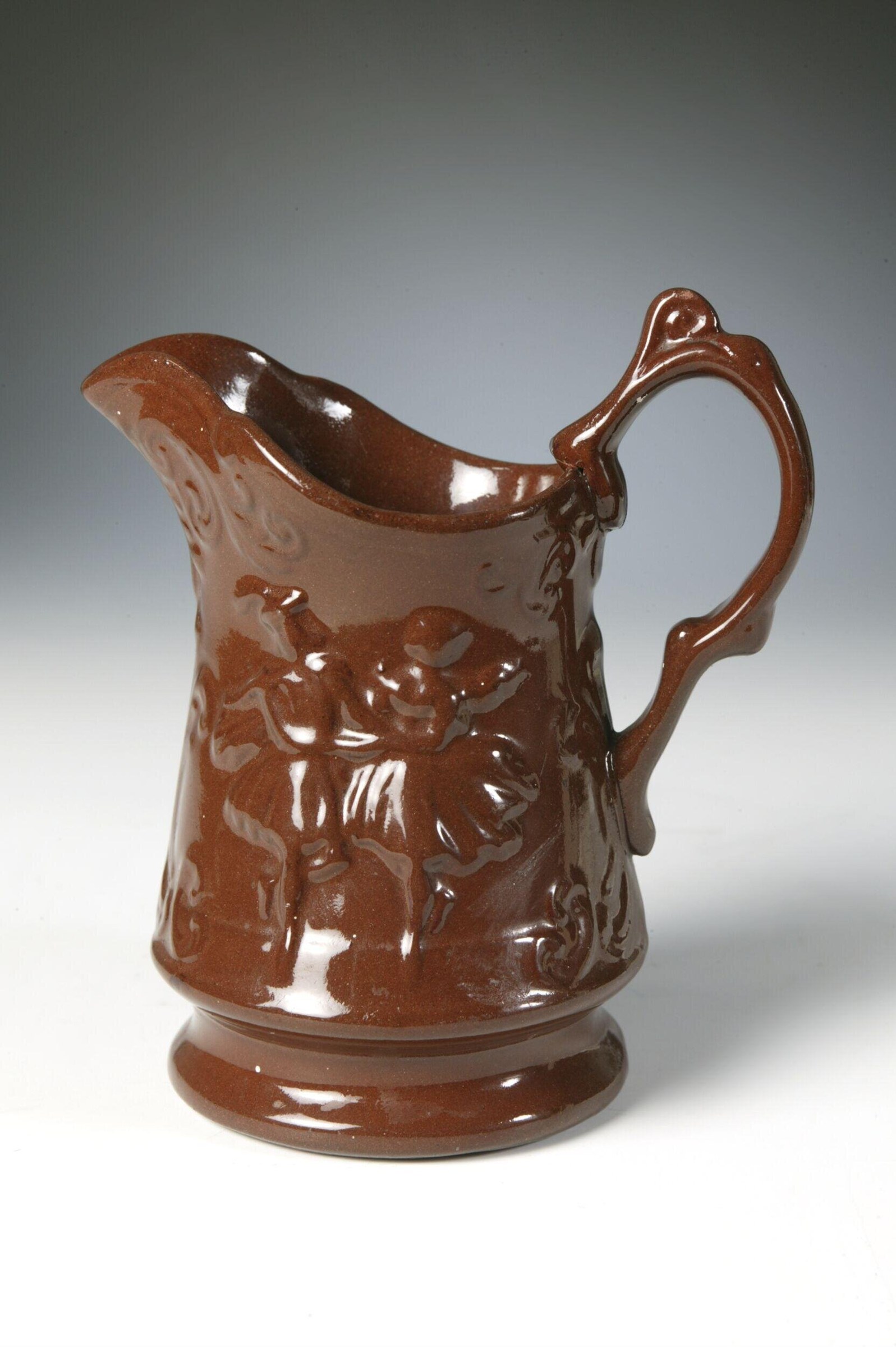
A ceramic pitcher of substantial size dominates the composition, rendered in a rich reddish-brown glaze with darker tonal variations suggesting depth and form. The vessel is cylindrical with a pronounced lip and a curved handle rising from the shoulder to the rim. Its surface is decorated in relief with figural scenes in a lighter tone that contrasts sharply against the darker ground. The primary visible scene depicts what appears to be classical or mythological figures in active poses—a central figure seems to be in vigorous motion, possibly dancing or engaged in dramatic gesture, surrounded by other figures in various attitudes. The relief work shows considerable modeling and anatomical attention. The piece stands on a flared base and is photographed against a neutral ground with dramatic side lighting that emphasizes the three-dimensionality of both the form and the applied decoration.
The dancing
The relief figures appear to be rendered in classical proportions with attention to musculature and dynamic posture. The central figure's pose suggests significant physical movement—the body appears twisted or in mid-stride, with limbs extended. Surrounding figures are arranged in compositional balance, some appearing to respond or react to the central action. The relief technique limits the depth of gesture but the artist has suggested forward and backward movement through overlapping forms and directional positioning of limbs.
The dance depicted
The depicted scene appears to represent classical or Bacchic revelry—the energetic central figure and surrounding attendants suggest a mythological dance or processional scene common in neoclassical decorative arts. The composition recalls Greco-Roman symposium or bacchanal imagery, though without clear identifying attributes or inscription the specific dance tradition cannot be definitively stated. The vigorous pose and attendant figures suggest theatrical or celebratory movement rather than a formalized social dance of the 19th century.
How it was made
This is a ceramic vessel, likely earthenware or stoneware, with applied slip decoration or relief molding. The darker glaze suggests a high-fired technique, possibly Wedgwood or in that neoclassical English pottery tradition. The relief figures were either molded separately and applied, or carved into the leather-hard clay before firing. This technique allowed for precise figurative narrative on functional domestic ware and was particularly suited to the reproduction of historical and mythological subjects for middle-class consumption. The sophistication of the relief work indicates it was made by a pottery of considerable skill.
About this work
This ceramic pitcher is an example of neoclassical decorative tableware, likely produced in the mid-19th century as part of the widespread revival of classical imagery in English ceramics. The relief decoration depicts a dynamic scene of classical figures in vigorous movement, rendered with considerable anatomical attention. Such wares brought mythological and historical narratives—including scenes of dance and revelry—into domestic contexts, allowing viewers to engage daily with images of classical culture. The pitcher belongs to a tradition of narrative ceramics that educated its audience while serving a practical function.
How to look at it
Examine the relief figures closely: note the central figure's twisted contrapposto pose and extended limbs, which convey energetic movement. Observe how the artist has suggested spatial depth through overlapping forms and the varying projection of the relief. The choice to freeze the scene at a moment of peak action—rather than static arrangement—reflects neoclassical interest in conveying narrative movement. The darker glaze ground serves to isolate and dramatize the lighter relief figures, making the scene read from a distance despite its small scale.
The artist
George Ray is recorded as the maker, but the sparse documentation available suggests he was a potter or modeler working in the English pottery industry during the mid-19th century. The quality of the relief work indicates professional training in figurative modeling, likely within one of the major pottery centers such as Staffordshire. Without additional biographical documentation, his individual practice and output remain largely unknown, though this piece suggests competence in the neoclassical idiom.
The period
The mid-19th century saw a sustained enthusiasm for neoclassical design across all decorative arts. English pottery manufacturers competed through increasingly sophisticated relief work and historical subject matter. Dance imagery from classical sources—bacchanals, nymphs, maenads, and courtly processions—remained popular motifs that invoked both refinement and the idea of civilized leisure. This period predates the Arts and Crafts movement's critique of industrial ornament but represents the height of narrative ceramics as a mode of popular education and aesthetic aspiration.
Where it lives
The object is held in a ceramic collection and is identified as English ware from the mid-19th century. It is cataloged as a ceramic vessel with recorded artist attribution to George Ray but otherwise minimal documentation of manufacture, provenance, or exhibition history.
Questions about this work
What dance is depicted on this pitcher?
The scene appears to represent classical Bacchic revelry or a mythological procession rather than a specific formalized dance of the period. The vigorous central figure and attendants suggest theatrical movement drawn from Greco-Roman imagery, popular in neoclassical design. Without inscriptions or clearer attributes, the exact subject cannot be determined with certainty.
Who was George Ray and how significant was his work?
Documentation is limited. Ray appears to have been a potter or modeler working in the English pottery industry during the 19th century, with sufficient skill to execute sophisticated relief work. This pitcher demonstrates his competence in the neoclassical idiom, but broader details of his career, training, and output remain obscure.
How was this pitcher made?
The relief figures were created using molding and application techniques common to mid-19th-century English pottery. The darker glaze is consistent with stoneware or refined earthenware firing. The precision of the figural work suggests the use of molds or stamps, allowing for reproducibility while maintaining the appearance of hand-modeled artistry.
Why would a everyday pitcher carry such elaborate mythological scenes?
Neoclassical design treated domestic ware as a vehicle for cultural education and aesthetic refinement. Mythological and historical imagery was believed to elevate everyday use; owning such a pitcher signaled access to classical learning and refined taste. Dance and revelry scenes specifically connected the object to ideas of leisure, civilization, and sensory pleasure.
More dance artwork