49 works in this view — arrow keys or swipe to move between them.
Dance in Art
Evening dress
Norell, Norman
- Collection:
- Evening dress
- Source:
- Victoria and Albert Museum
- Rights:
- Rights vary by item — check the source record before reusing this image. Source record ↗
- Recorded as:
- V&A — check rights per item
Evening wear from this era that survives in collections is crucial evidence of what performers and socialites actually wore during formal events and theatrical productions—not what photographs or illustrations suggest they wore. The sequin-and-silk construction is a technical achievement that shows how mid-century couturiers solved the problem of making a garment both visually striking under stage or ballroom lighting and structurally sound for movement.
What you are looking at
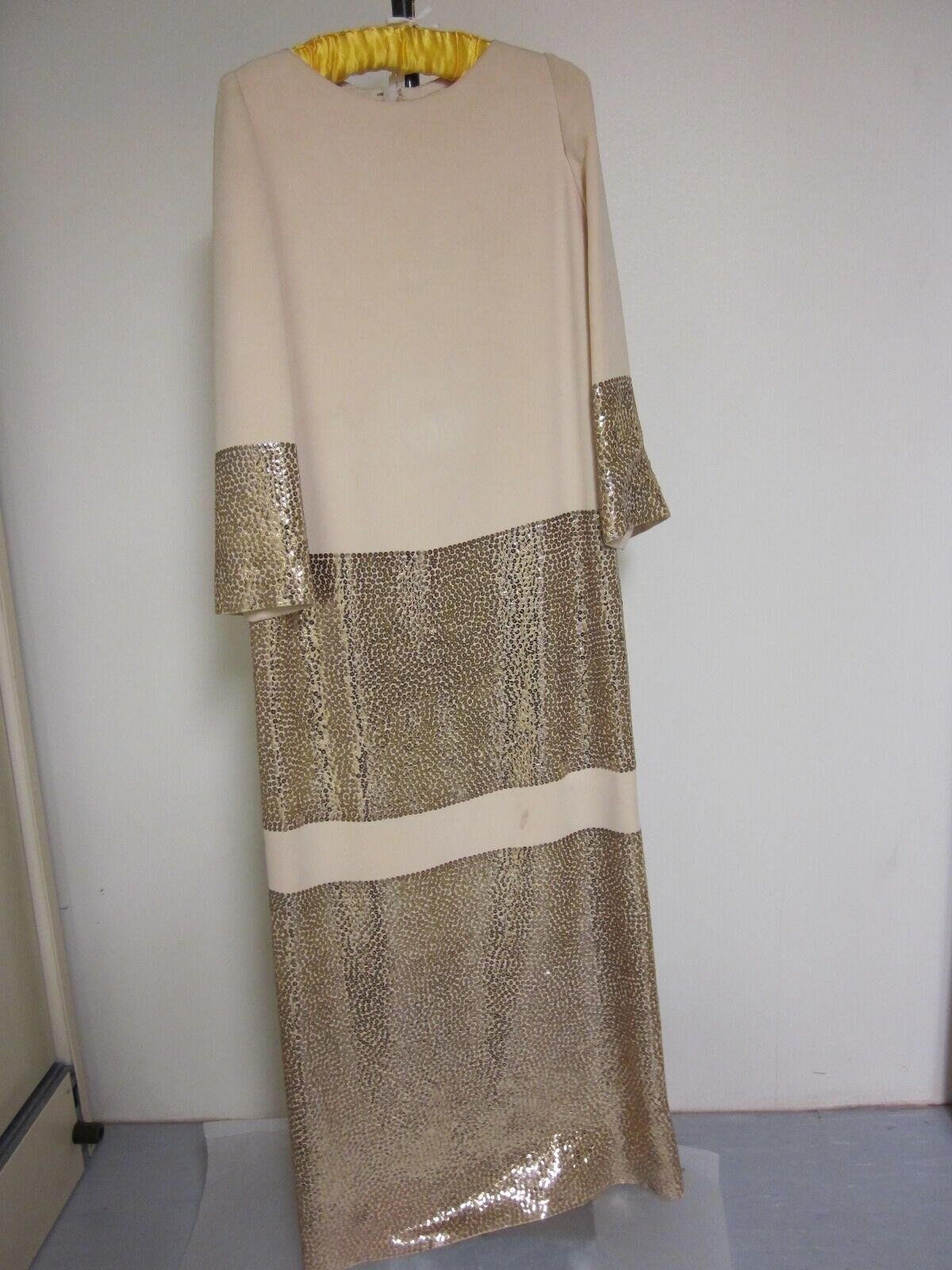
A sleeveless evening dress hangs on a yellow-padded hanger against a neutral wall, photographed straight-on in a studio setting with even lighting. The dress is composed of a cream or pale ivory upper bodice that extends to approximately waist length, followed by alternating horizontal bands of shimmering gold sequined fabric and cream silk. The sequined sections create a striking geometric pattern of three distinct striped zones descending the skirt, each separated by a band of plain cream fabric. The lowest visible edge shows the sequined material catching light with a reflective sheen. The dress reads as a formal garment from the mid-twentieth century, designed for evening wear or performance.
The dancing
No figures or gestures are present in this image. The work is a costume object displayed as an artifact, not a representation of dancers or movement.
The dance depicted
This is a costume rather than a depiction of dance. However, the garment's style—sleeveless, unstructured at the bodice, with a flowing skirt composed of alternating sequined and silk bands—suggests it was designed for theatrical performance, possibly theatrical jazz, musical theater, or formal evening entertainment of the 1960s. The sequined bands would catch stage lighting and create visual interest during movement. The geometric horizontal striping suggests the designer intended the costume to interact with the body's motion, with the bands moving independently as the wearer danced.
How it was made
This is a garment: a constructed evening dress made from silk and sequined textile, sewn with the sequined panels attached to cream silk backing. Sequins are individual reflective discs stitched or glued to fabric; here they appear densely applied. The construction reveals the typical couture technique of the period—separate pattern pieces sewn together with attention to how seams would fall on the body. The cream silk provides structure and allows the sequined sections to drape while maintaining visibility of the horizontal design.
About this work
Norman Norell's evening dress of 1966 is a costume object held in the Victoria and Albert Museum's collection. It exemplifies mid-twentieth-century American luxury evening wear designed for formal occasions and likely performance contexts. The garment demonstrates Norell's signature aesthetic: a restraint in the bodice, dramatic visual impact through material contrast, and horizontal geometric patterning that would animate with movement. The alternating bands of sequin and silk create a rhythm that suggests the designer understood how clothing interacts with a dancing body—how light catches the reflective materials and how the bands would move independently with each step or gesture. This is a document of how dance and fashion intersected in 1960s New York couture.
How to look at it
Notice how the sequined bands are positioned to create a visual rhythm down the skirt without overwhelming the whole garment—the cream silk creates breathing room. The horizontal orientation of the stripes means they would create different visual effects depending on whether the wearer stood still or moved; static viewing shows a geometric pattern, but movement would cause the independent bands to shift and catch light differently. The sleeveless, high-necked bodice frames the upper body simply, directing all visual interest downward. This is a costume designed for a specific kind of viewer: one in a theater or formal ballroom, at a distance, watching the interaction of light, fabric, and motion.
The artist
Norman Norell (1900–1972) was one of the most influential American fashion designers of the twentieth century. Based in New York, he was known for elegant, structured evening wear and a modernist aesthetic that rejected unnecessary ornamentation while using fabric, color, and cut for dramatic effect. He designed for theatrical productions, film, and high society. His work bridged haute couture and American ready-to-wear, and he was one of the first American designers to achieve international prestige equal to European houses.
The period
In the 1960s, evening wear was undergoing significant change. The early 1960s still maintained the structured, formal silhouettes of the 1950s, but by mid-decade, younger designers were experimenting with looser, more youthful lines. Norell, however, remained committed to a refined, architectural approach to the body. The use of sequins and reflective materials became increasingly common in evening wear as nightlife and performance venues embraced more theatrical, visually dramatic aesthetics. This dress sits at the intersection of old-guard couture sophistication and the emerging appetite for visual spectacle in 1960s nightlife.
Where it lives
The dress is held in the Victoria and Albert Museum collection, one of the world's major holdings of fashion and textile history. It entered the collection as a documented example of Norman Norell's work and mid-twentieth-century American couture design.
Questions about this work
Was this dress made for a specific dancer or performer?
The catalogue record does not identify a wearer or original context. It is catalogued as an evening dress, which in the 1960s could mean formal social wear, nightclub wear, or theatrical costume. The design suggests performance use, but the specific context is not recorded.
Why are the sequins arranged in horizontal bands rather than all over the dress?
Sequins are heavy and expensive. Using them selectively, in bands separated by plain silk, reduced cost while maximizing visual impact under stage or ballroom lighting. The horizontal orientation would create movement-responsive effects: as the wearer danced, the bands would shift and re-catch light in sequence, making the dress more animated than a solid sequined skirt would be.
What does the cream color tell us about this dress's context?
Cream or ivory was a standard choice for formal evening wear in the 1960s and photographs beautifully under stage lighting. It reads as elegant and refined rather than playful or colorful, suggesting this was high-end evening wear for a sophisticated clientele, not casual or youthful costume.
More dance artwork





