49 works in this view — arrow keys or swipe to move between them.
Dance in Art
Shoe
Rayne
- Collection:
- Shoe
- Source:
- Victoria and Albert Museum
- Rights:
- Rights vary by item — check the source record before reusing this image. Source record ↗
- Recorded as:
- V&A — check rights per item
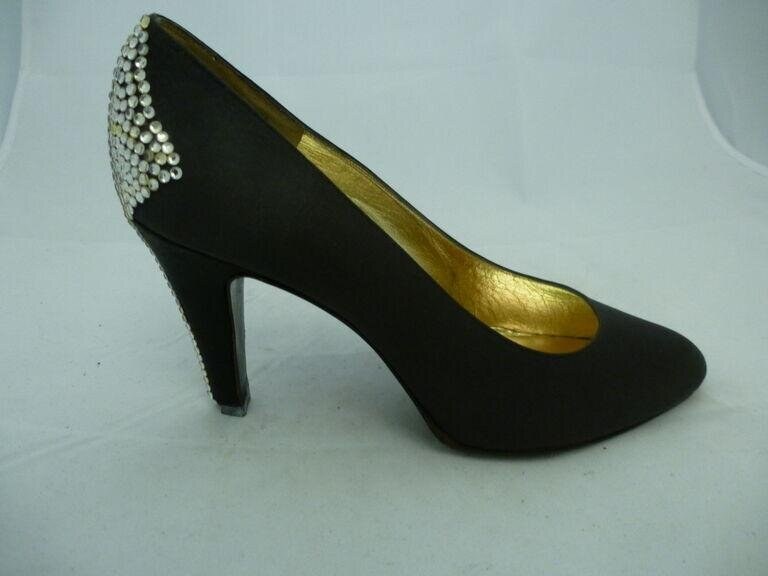
The shoe is a direct material evidence of how dancers dressed their bodies and how choreographers and designers imagined performer visibility and glamour in the 1980s. It belongs in a dance archive not as a representation of dance but as a functional object that shaped the body and appearance of the dancer wearing it.
What you are looking at
A single black suede high-heeled pump shoe, shown in profile against a pale neutral background. The shoe features a chunky block heel of approximately 3–4 inches, a closed toe, and a curved vamp. The interior is lined in gold lamé or metallic fabric, visible where the shoe is slightly open at the throat. The most striking detail is a decorative cluster of white pearls or rhinestones arranged in a curved arc across the outer edge of the vamp and extending toward the toe box, catching light and creating a dramatic focal point. The shoe appears to be a stage or performance piece rather than everyday footwear—the pearls suggest formal wear, costume, or dancewear. The presentation is documentary, without narrative context or surrounding figures.
The dancing
No human figure is present. The shoe is an inanimate object positioned to display its construction and embellishment. The angle of presentation—slightly tilted to show the interior lining, the profile view, the pearl decoration—suggests the artist intended to emphasize the shoe as a designed object meant for performance or display.
The dance depicted
The shoe itself is an artifact of dance rather than a representation of dance. The artist Rayne created this as a wearable object, likely for theatrical, ballroom, or contemporary dance performance. The high heel, pearl embellishment, and gold lining suggest formal or evening wear associated with styles requiring heeled footwear: likely Latin ballroom, jazz, or commercial theatrical dance. Without documentation of how the shoe was worn or in what performance context, the specific dance style cannot be determined, but the construction and ornament point toward a 1980s commercial aesthetic in dancewear design.
How it was made
This is a sculptural object—a handcrafted dance shoe combining suede, metallic fabric, rhinestones or pearls, and block heel construction. The medium list in the catalogue record is blank. The pearl or rhinestone embellishment appears to have been hand-sewn or glued in a curved pattern, suggesting individual craft rather than industrial mass production. The choice of materials—suede, gold lamé, luminous stones—indicates a piece designed for stage visibility and luxury aesthetic, implying a small production run or bespoke commission.
About this work
This is a dance shoe created by the artist Rayne in 1984, documented as a finished object rather than worn in performance or depicted in use. It represents 1980s dancewear design at the intersection of fashion, theater costume, and functional footwear. The shoe is significant as a three-dimensional artifact of dance practice and aesthetics during a period when ballroom, Latin, and commercial stage dance were prominent in popular culture. The pearl embellishment and high heel locate it within formal or competitive dance contexts, though the specific performance tradition is not documented in the catalogue record.
How to look at it
Study the details of construction: the quality of the suede, the precision of the pearl placement, the visible gold lining. The shoe was made to be seen close up by an audience or in photographs, not merely worn in action. The pearl arc is the focal point of the design, drawing the eye toward the foot and ankle of the wearer. The block heel is substantial and supportive, designed for sustained weight-bearing in movement rather than fashion alone. The shoe expresses both technical requirement and theatrical intention.
The artist
Rayne is recorded as the creator in the collection record, but no biographical information is available in the catalogue. The name suggests a possible pseudonym or stage name, which was not uncommon among costume and dancewear designers in the 1980s commercial dance world. Without additional documentation, the artist's practice and training cannot be established.
The period
In 1984, ballroom, Latin, and commercial theatrical dance were expanding in visibility through televised competitions, Broadway revivals, and music video choreography. Dancewear design was becoming more elaborate and ornamental, with embellishment serving both functional purposes (stage visibility under lights) and aesthetic ones (luxury, glamour, sexuality). The 1980s saw a turn toward bold, bright, decorated costumes and shoes in competitive and theatrical contexts—a shift from the minimalism of earlier decades. Pearl and rhinestone embellishment was particularly associated with Latin ballroom, evening wear, and high-glamour theatrical dance.
Where it lives
The shoe is held in a collection titled "Shoe" in a source listed as "va" (likely Virginia, though the abbreviation is not fully explicit in the record). The holding appears to be organized by object type rather than artist or historical period, suggesting a specialized footwear collection or a museum with strong holdings in material culture of performance.
Dance in this work
Questions about this work
What dance style would this shoe have been worn for?
The high heel, pearl embellishment, and gold lining suggest it was designed for a formal or competitive dance context—likely ballroom Latin (such as paso doble or rumba), jazz dance, or commercial theatrical dance. However, the catalogue record does not specify the original performance context. The pearl decoration indicates evening wear or competition costume rather than rehearsal or practice footwear.
Why is a shoe in a gallery about dance?
Dancewear is material evidence of how dancers lived in and moved through their bodies. A decorated performance shoe is a direct object of dance practice—something a dancer wore for hours, that shaped their movement and appearance, and that represents the aesthetic and technical choices of its era. Shoes are part of the archive of dance history.
Can you identify the artist Rayne?
No. The catalogue record attributes the shoe to "Rayne" but provides no biographical information, training background, or other works. The name may be a professional or stage name. Without additional documentation, the artist's identity and history cannot be established from this record alone.
How old is this shoe?
According to the catalogue record, it was made in 1984. Whether it has been worn, and if so how extensively, cannot be determined from the photograph. The object appears to be in good condition, though age-related wear may not be visible in a studio photograph.
More dance artwork





