49 works in this view — arrow keys or swipe to move between them.
Dance in Art
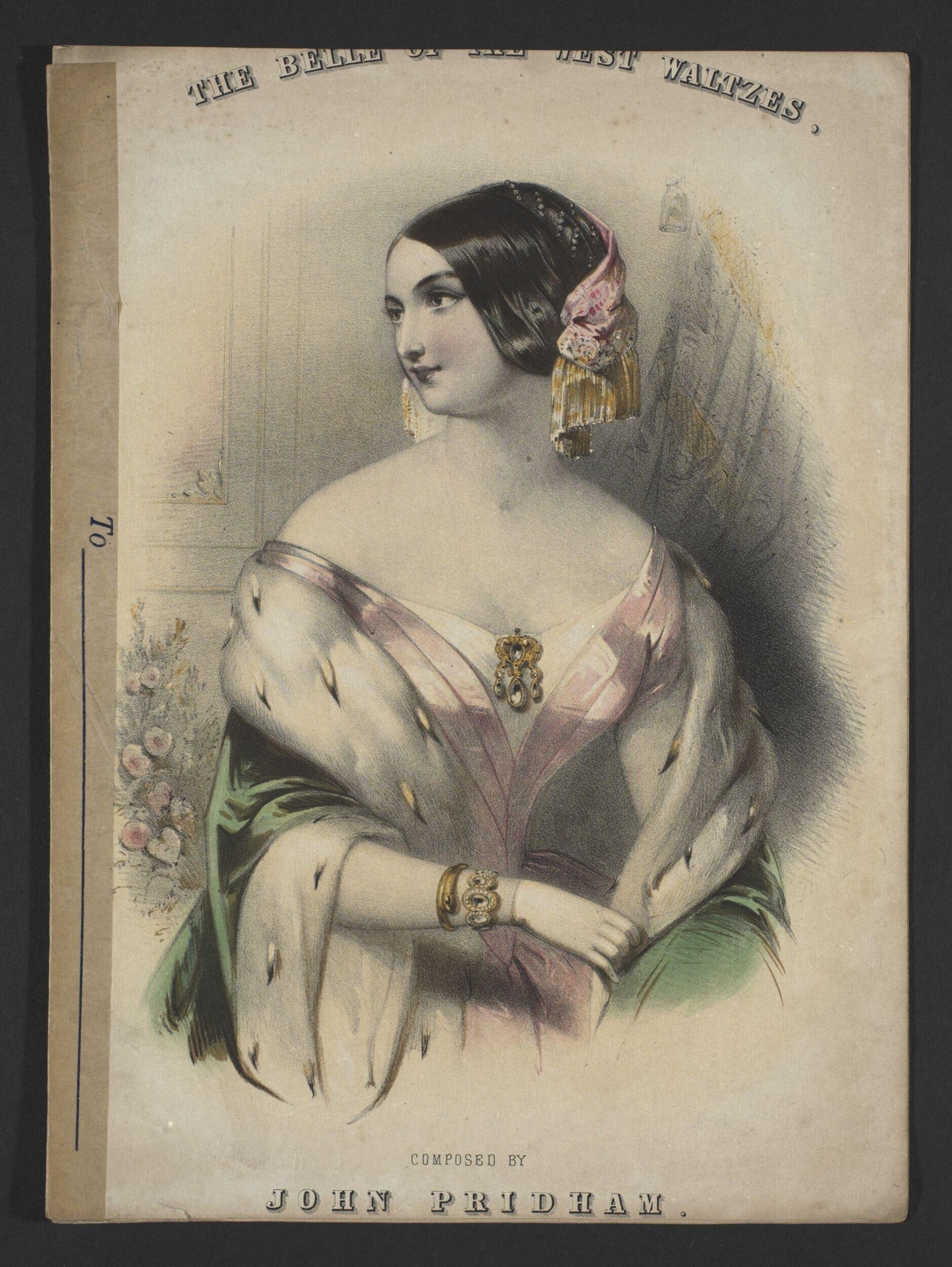
The Belle of the West Waltzes
Pridham, John
- Collection:
- Sheet Music
- Source:
- Victoria and Albert Museum
- Rights:
- Rights vary by item — check the source record before reusing this image. Source record ↗
- Recorded as:
- V&A — check rights per item
For dance historians, this work documents the visual culture surrounding the waltz at its height of popularity, showing how the dance was marketed and imagined through portraiture. It reveals the gendered iconography of ballroom dance—the elevation of the woman as a beautiful, stationary object of desire rather than an active dancer—and how commercial music publishing capitalized on both the dance craze and the fascination with fashionable appearance.
What you are looking at
A three-quarter-length portrait of an elegantly dressed woman, positioned against a pale background with subtle architectural elements. She is shown in profile or near-profile, turning slightly toward the viewer's left. She wears a fashionable off-the-shoulder dress in pale pink or mauve silk, with delicate pleating and a jeweled brooch at the breast. Her dark hair is swept back and adorned with an elaborate headdress—a pink silk bow or ribbon arrangement with long golden tassels that drape down her neck and shoulder. A spray of pink flowers (roses) is tucked into her hair on the left side. She wears ornate gold bracelets on both wrists. Her bare shoulders and neck are rendered with soft modeling, and her pose conveys an air of refined elegance characteristic of 1840s–1860s society portraiture. A hint of green fabric appears at the lower right, possibly part of her shawl or additional drapery.
The dancing
A single standing figure, her weight balanced in a relaxed contrapposto stance. Her left arm is bent and rests near her waist; her right arm is also gently flexed. Her posture is upright but not rigidly formal—the shoulders are released, the neck graceful. There is no dancing position or movement gesture visible; this is a portrait pose, not a dance notation. The figure is stationary and contemplative rather than captured mid-movement.
The dance depicted
The title *The Belle of the West Waltzes* suggests this image relates to the waltz, one of the most popular ballroom dances of the 19th century. However, the image itself does not depict dancing in progress. Instead, it appears to be a portrait of a fashionable woman of the 1840s–1860s, possibly the inspiration for or subject of the waltz composition, or intended as the cover or promotional image for sheet music. The waltz was a defining social dance of the era, danced in closed couples' hold, and this image captures the elevated, refined femininity that the waltz embodied in popular culture.
How it was made
This is a hand-colored lithograph or engraving, recognizable from the soft modeling of flesh tones, the subtle layering of color (particularly in the dress and headdress), and the delicate line work characteristic of mid-19th-century commercial portraiture. The technique allowed fine detail in jewelry, fabric texture, and facial features, and the hand-coloring suggests it was intended for a middle- to upper-class market. Sheet music covers of this era routinely featured such portraits as both artistic presentations and marketing tools—the face of the work's inspiration or dedicatee.
About this work
This is a sheet music cover for a waltz composition by John Pridham, presenting not a dance scene but a portrait of fashionable femininity framed by the waltz's cultural associations. The image sits at the intersection of ballroom dance culture and commercial printmaking, where the visual identity of a musical composition was built on the idealization of its dancing subject. The elegant woman and her refined adornment speak to the social prestige of the waltz and its role in 19th-century courtship and leisure.
How to look at it
This is not a dance image but a portrait designed to evoke the world of the waltz through the beauty and elegance of its subject. Notice the soft, upright posture and the direction of her gaze—calm, poised, and slightly detached, as if she is being observed rather than dancing. The elaborate headdress with its long tassels draws attention to her as an object of visual pleasure. The hand-coloring technique, with its subtle tonal gradations, emphasizes the refinement that the waltz and upper-class society valued. This image asks the viewer to imagine *her* waltzing, rather than showing her dance.
The artist
John Pridham is documented as a composer of dance music in the mid-19th century. Like many composers of his era, he wrote waltzes and other ballroom pieces for social dancing and commercial performance. The waltz was a primary commercial genre for such composers, and printed sheet music with hand-colored portraits was a major distribution method. Beyond this title, little is recorded about Pridham's practice or biographical details.
The period
The waltz reached its cultural apex in the 1840s–1860s, having emerged from Vienna and spread throughout Europe and the Americas as the defining dance of bourgeois social life. In this period, sheet music was a primary consumer product, and frontispiece portraits of fashionable women—often hand-colored lithographs—were standard. The visual presentation celebrated both the music and an idealized version of the dancer: young, fashionable, refined, and conspicuously feminine. The dress style and headdress shown here align with the mid-Victorian period (approximately 1850s).
Where it lives
This is sheet music held in the dance collection; the source is listed as 'va'. The image is the cover or title page of the printed score, a common format for commercial dance music of the 19th century.
Questions about this work
Why doesn't the image show anyone dancing?
Sheet music covers of the 19th century were often portrait-based rather than action-based. The fashionable portrait served as marketing—it identified the dancer the piece was written for or dedicated to, and it appealed to consumers buying music for their own drawing-room performance. The title alone communicates the dance; the image communicates elegance and social prestige.
Who was 'the Belle of the West'?
The catalogue does not identify the specific dancer or woman depicted. 'Belle' was a common honorific for prominent or beautiful dancers of the era, and 'of the West' may refer to an American dancer or a regional performance venue. Without additional documentation, the subject's identity remains unclear.
What does the waltz have to do with this image?
The waltz was the dominant ballroom dance of the mid-19th century, and the title identifies this as a waltz composition. The image captures the idealized femininity that the waltz embodied in popular culture: refined, graceful, beautifully dressed, and associated with upper-class leisure and courtship. The portrait tells us what kind of woman danced it, not how the dance was performed.
More dance artwork





