49 works in this view — arrow keys or swipe to move between them.
Dance in Art
Hiver 1939-40
Ana de Pombo
- Collection:
- Fashion design
- Source:
- Victoria and Albert Museum
- Rights:
- Rights vary by item — check the source record before reusing this image. Source record ↗
- Recorded as:
- V&A — check rights per item
Fashion design of this period is essential to understanding how dance was contextualized and presented in society—the silhouettes, fabrics, and construction methods that shaped dancer and wearer movement. These designs capture a transitional moment in late-1930s fashion when theatrical influence and innovative surface ornamentation pushed beyond simple elegance toward sculptural drama.
What you are looking at
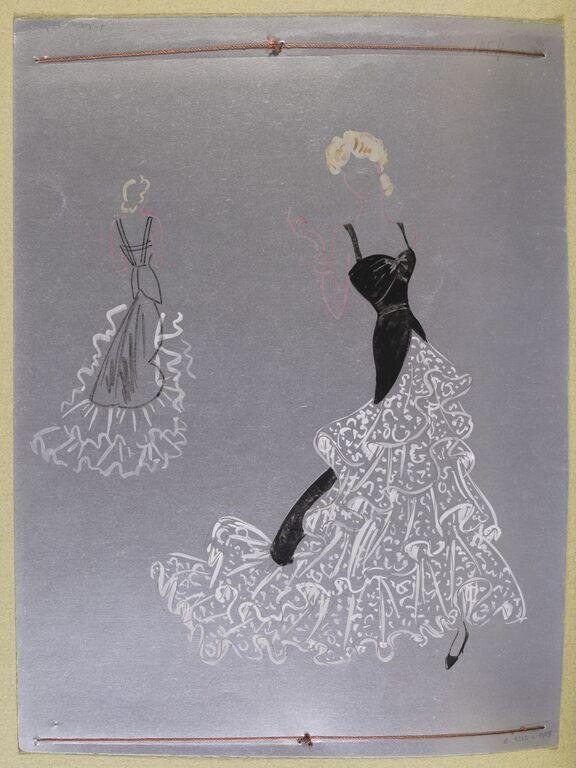
Two fashion design sketches rendered on grey paper, positioned vertically one above the other. The upper figure is rendered in outline only, showing a dress with a structured bodice and an elaborately ruffled skirt with deep, repetitive flounces. The lower figure, more fully realized, wears a black sleeveless dress with dramatic architectural patterning across the skirt—densely patterned ornamental motifs that create a sculptural quality. Both figures are shown from behind or three-quarter view, headless (typical of fashion illustration), with elongated proportions. The artist has used white gouache or ink over the grey ground, with the lower figure's patterns suggesting either embroidery, jacquard weave, or printed decoration. A thin red-brown line runs horizontally above and below the composition, framing it like a border. The sketches capture an elegant, theatrical aesthetic typical of late 1930s fashion design.
The dancing
Both figures are depicted in standing poses with a slight S-curve sway to the body, the characteristic contrapposto of fashion illustration. The lower figure's shoulders slope elegantly backward, and the dress's construction emphasizes a narrow waist and full hips. Neither figure shows active movement or dance posture; these are static presentation poses for garment display rather than choreographic gestures. The headless presentation focuses attention entirely on the silhouette and construction of the garments.
The dance depicted
These are fashion design sketches, not depictions of dance. However, the garments themselves—particularly the lower dress with its ornate patterning and dramatic silhouette—evoke the theatrical evening wear of the late 1930s associated with formal ballroom and operatic performance contexts. The architectural patterning and voluminous skirt suggest these may have been designs conceived for theatrical wear or high-society formal events where dance might occur, but the sketches themselves document garment design rather than dance practice or performance.
How it was made
The work appears to be gouache or opaque white ink applied to grey paper, a standard fashion illustration technique of the period. This technique allowed rapid revision and created high contrast suitable for reproduction in fashion publications. The combination of outline drawing and densely patterned infill demonstrates the illustrator's dual focus: communicating garment construction clearly while also suggesting surface decoration and fabric texture. The red border lines are likely added during layout or mounting.
About this work
This is a fashion design study from the 1939–40 season by Ana de Pombo, documenting two evening dresses whose silhouettes and construction details reflect late-1930s haute couture aesthetics. The designs emphasize architectural structure—the upper through ruffled volume, the lower through surface patterning—and both employ the refined, elongated proportions standard to fashion illustration of the era. While the sketches themselves are not dance imagery, they document the formal evening wear context in which ballroom and theatrical dance occurred, and the dramatic silhouettes suggest garments intended for sophisticated social and performance settings.
How to look at it
Attend to the radical difference between the two designs: the upper sketch emphasizes vertical repetition and volume (the stacked ruffles create movement through line rather than through cut), while the lower employs all-over surface pattern to create three-dimensionality and visual weight. Note how the lower figure's patterning is not merely decorative but architecturally integral to the garment's form—the pattern creates shadow and highlight that sculpts the fabric. These represent two distinct approaches to creating drama in evening wear: structure versus surface ornamentation.
The artist
Ana de Pombo was an active fashion illustrator and designer working in the 1930s–1940s period. The style and technique of this work—grey paper ground, white gouache line work, and the sophisticated proportional language—align with the international fashion illustration practice of the era, suggesting training in or exposure to the influential fashion schools and design centers of Europe during the interwar period.
The period
The late 1930s witnessed a turn toward more structured, architectural silhouettes in women's fashion, partly in reaction to the bias-cut, fluid styles of the early 1930s. The year 1939–40 marks the end of the pre-war haute couture era; these designs capture the refinement and theatrical grandeur of that final moment before wartime austerity measures began. In dance contexts, this was also the tail end of the age of formal ballroom culture and operatic spectacle; the ornate evening wear shown here would have been worn at society galas, opera premieres, and formal balls where ballroom dancing remained a central social practice.
Where it lives
The work is held as part of a fashion design collection and is catalogued as a source object (marked 'va' in the record), suggesting it derives from a fashion archive or museum holding dedicated to costume and design history.
Questions about this work
Are these designs based on actual garments or theoretical studies?
The sketches appear to be design proposals—the finished technique and refined proportions suggest these were presentation drawings, likely for a designer's portfolio or for submission to a couture house. Whether they were executed as garments is not indicated by the record, but the level of detail in the lower sketch (the specific pattern motifs) suggests at least the intention to realize the design.
What does the date 1939–40 tell us about these designs?
This date places the designs at the very end of the pre-war haute couture era. The refinement and theatrical drama evident here—especially the architectural patterning—reflect the final flourishing of 1930s luxury fashion before wartime restrictions fundamentally changed both fashion design and the social contexts (like formal balls) in which such dresses would have been worn.
Why would these fashion sketches appear in a dance archive?
Dance history includes costume design, and the formal evening wear depicted here is inseparable from the ballroom, opera, and theatrical dance cultures of the period. The garments shown would have been worn by dancers and dance patrons; understanding their construction and aesthetic is part of understanding how movement was enabled and constrained in that era.
More dance artwork





