49 works in this view — arrow keys or swipe to move between them.
Dance in Art
Été 1937
Ana de Pombo
- Collection:
- Fashion design
- Source:
- Victoria and Albert Museum
- Rights:
- Rights vary by item — check the source record before reusing this image. Source record ↗
- Recorded as:
- V&A — check rights per item
This sketch reveals the intersection of fashion and dance aesthetics in 1930s Europe: the silhouettes worn to formal occasions and ballrooms reflected the proportions and ideals of theatrical presentation. The gown's construction—designed for dramatic visual effect and movement in the skirt—shows how evening wear was engineered for the ballroom, even if this particular sketch is a designer's proposal rather than a record of an actual performance.
What you are looking at
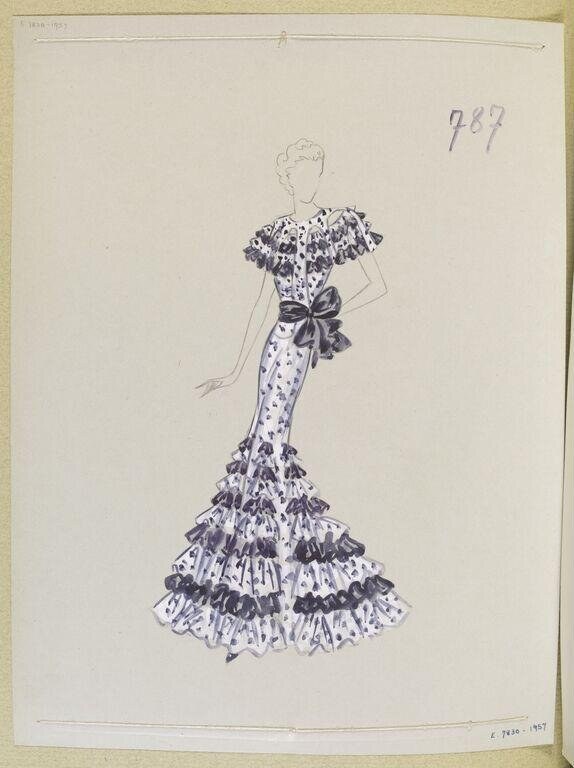
A fashion design sketch in ink, likely pen or fine brush, shows a single female figure in an elegant evening gown. The woman stands in a graceful contrapposto pose, her weight shifted slightly, head tilted upward with an elongated neck in the fashionable style of 1930s illustration. The gown is the focus: a fitted bodice with a dramatic ruffled or pleated off-shoulder neckline in a spotted or textured pattern, cinched at the waist with a large bow, and a skirt that transitions from a fitted hip to an explosively full mermaid silhouette with multiple tiers of ruffles or flounces cascading to the floor. The lower skirt is densely patterned, suggesting either dotted fabric or elaborate pleating. The illustration technique is economical—minimal line work for the figure's anatomy, with careful attention to the volume and movement of the textile. The drawing is set against a blank page with archival markings (accession number 789 in the upper right).
The dancing
The figure is presented in a fashion illustration pose rather than an active dance stance: weight on one leg, opposite hip cocked, arms held away from the body in a display pose rather than in a closed or open dance frame. The elongated proportions—the extended neck, slender waist, and stylized limbs—are characteristic of 1930s fashion drawing rather than anatomical accuracy. There is no suggestion of a partner or of movement through space; this is a presentation of the garment itself.
The dance depicted
This is not a depiction of dance but a fashion design for evening wear. The title 'Été 1937' (Summer 1937) indicates this is a seasonal collection piece. The gown's construction—the fitted bodice, low neckline, and voluminous skirt with multiple tiers—reflects the evening-wear silhouette of the 1930s, but the illustration serves fashion design rather than dance documentation. The pose and presentation are those of a dress form or fashion model, not a dancer.
How it was made
The work is executed in what appears to be pen or fine brush and ink on paper, a standard medium for fashion design of the period. The technique shows careful control: elegant line work for the figure's contours, while the dress receives dense, patterned rendering that suggests texture and volume. The economy of the figure's rendering concentrates visual weight on the garment itself, which is typical of fashion illustration where the clothing is the primary subject. This drawing would have been part of a designer's collection portfolio or proposal to manufacturers or clients.
About this work
This is a fashion design sketch for an evening gown, not a dance artwork, though it exists in the archive under 'Fashion design' and has been catalogued by LODance. The 1930s silhouette—with its dramatic ruffled neckline, wasp waist, and tiered mermaid skirt—reflects the glamorous evening wear of the era. While the figure is presented in an elongated, somewhat balletic pose typical of fashion illustration, there is no evidence of actual dance movement or choreography. The work documents the aesthetic values of the period in which it was made, but its primary purpose was commercial: to present a garment for manufacture or sale.
How to look at it
Look at the contrast between the economy of line used for the body and the density of patterning and detail applied to the dress itself. The illustrator has used pattern and texture to suggest movement and volume in the skirt—the tiers appear to ripple and flow—while the bodice is rendered with structural precision. Note how the off-shoulder neckline is constructed to expose and elongate the neck and shoulders, values that shaped both fashion and stage presentation in the period.
The artist
Ana de Pombo was a fashion designer working in the 1930s, likely based in a major European fashion center. Little is documented about her individual practice, but the quality and style of this sketch place her within the professional fashion illustration tradition of the interwar period, when detailed design sketches were essential tools for communication between designers, manufacturers, and clients.
The period
The 1930s saw a shift in evening wear toward more dramatic silhouettes: the dropped waistline and bias-cut skirts of the early 1930s gave way by mid-decade to more sculptural forms, with emphasis on the neckline and the hips. This gown, with its exaggerated ruffled neckline and tiered skirt, reflects the theatrical excess of late-1930s evening fashion. The style was worn to the ballroom and social events where ballroom dancing was central to the evening's entertainment, though the silhouette also drew inspiration from stage wear and costume design.
Where it lives
The work is held in the VA (Victoria and Albert Museum) Fashion design collection. It is a working sketch or proposal drawing, likely created for presentation to a manufacturer or client, and represents the commercial practice of professional fashion design in the 1930s.
Questions about this work
Why is a fashion design in a dance image gallery?
Fashion design and dance are historically intertwined, particularly in the twentieth century. The silhouettes, fabrics, and construction methods used for evening wear directly reflected the needs and aesthetics of ballroom and social dance. This sketch documents the visual culture of the 1930s ballroom and provides context for understanding how dancers moved within the garments of their era.
What dance would this gown have been worn for?
The tiered skirt and fitted bodice suggest this was designed as formal evening wear for ballroom contexts—likely for waltzes, foxtrots, or simply dancing at a social event. The dramatic ruffles and mermaid silhouette would create striking visual effects as the wearer moved, and the fitted waist would allow the dancer to maintain proper frame and posture.
Is this a real gown or just a sketch?
This is a design sketch, the stage of a gown's development before it was made. Such sketches were used to propose ideas to manufacturers, clients, or to serve as reference during construction. Whether this particular design was manufactured is not documented in the archive record.
More dance artwork





