49 works in this view — arrow keys or swipe to move between them.
Dance in Art
Gitane
de Pombo, Ana
- Collection:
- Fashion design
- Source:
- Victoria and Albert Museum
- Rights:
- Rights vary by item — check the source record before reusing this image. Source record ↗
- Recorded as:
- V&A — check rights per item
This sketch documents the haute couture that dressed theatrical and ballroom dancers of the 1930s—a period when fashion and dance were visually and commercially intertwined. The drawing technique itself is historically significant: it records the working methods of a designer or design house at a moment when couture was moving toward increasingly dramatic silhouettes and the collaboration between fashion and stage design was formative to modern spectacle.
What you are looking at
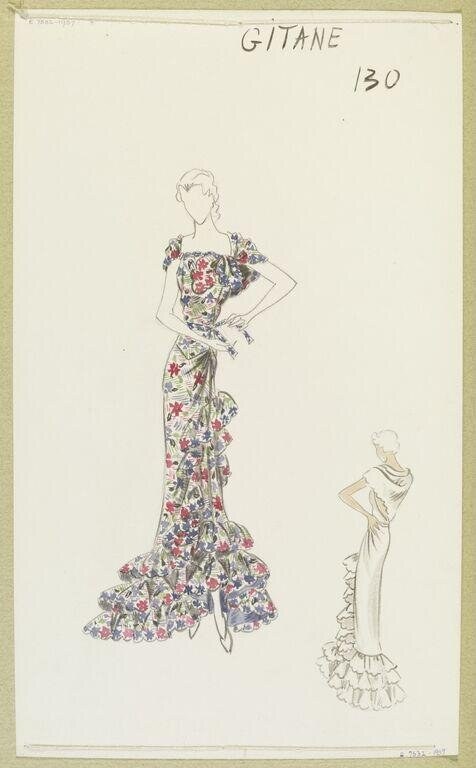
A fashion design sketch in ink and watercolor depicting an evening gown labeled "Gitane." The main figure is drawn in three-quarter view, her head tilted slightly, wearing a sleeveless dress with a fitted bodice and dramatically draped skirt that pools into a decorative train. The garment is rendered in pale cream with vibrant floral pattern—roses, chrysanthemums, and other blooms in reds, pinks, blues, and greens distributed across the bodice and cascading down the skirt. The skirt features deep inverted pleats or gathered folds at the hem that create substantial volume and movement. A smaller, incomplete sketch of the dress back view appears to the right. The drawing style is loose and elegant, with watercolor washes defining the fabric's volume and the delicate botanical print.
The dancing
The figure stands with one hand on her hip in a confident pose, weight slightly shifted, suggesting the dress's drape and movement when worn. The silhouette is sinuous and tall, with the head rendered simply and the focus concentrated on the garment's construction and ornamentation. There is no actual dance movement depicted—this is a stationary presentation pose typical of fashion illustration, designed to display the dress itself rather than the body's action.
The dance depicted
This is not a dance image. While the garment's grace and the elegance of its presentation might evoke the movement and drama of theatrical costume, the sketch is a fashion design document, not a depiction of dance. The pose is the standardized "parade rest" of haute couture illustration: the figure exists to showcase fabric and form, not to illustrate movement or a specific dance style.
How it was made
The work appears to be an ink sketch with watercolor wash, likely executed directly on paper. The technique is rapid and assured—the outline drawn in pen or pencil, the floral pattern blocked in with watercolor pigment in specific areas (bodice, skirt hem), and the overall volume suggested through loose shading rather than meticulous rendering. This is a design sketch or presentation drawing, the working document of a couturier or design house, meant for internal reference or client presentation rather than exhibition or fine-art circulation.
About this work
"Gitane" is a fashion design sketch from the 1930s by Ana de Pombo, depicting a formal evening gown. The work sits at the intersection of fashion history and theatrical costume—garments of this elegance and elaboration often dressed dancers and performers of the era, particularly in music hall, revue, and ballet contexts. The sketch itself is not a dance image, but documents the kind of costume that would have animated movement in performance. Fashion design drawings of this caliber and period offer evidence of how theatrical dress was conceived as both wearable garment and visual spectacle, and they belong in a dance archive because such costumes were inseparable from the dancers who wore them.
How to look at it
Attend to the tension between the fitted bodice and the liberated skirt—the bodice controls and emphasizes the torso, while the skirt releases into dramatic volume and movement. The floral pattern is not distributed uniformly but concentrated in areas where it would read most vividly on stage or at a formal event. Notice the train pooling on the ground: it is a design choice that would transform the wearer's movement, requiring coordination and creating a visual statement with every step. The smaller back view to the right indicates that the designer thought through the garment in the round, considering how it would move and how it would appear from multiple angles.
The artist
Ana de Pombo is recorded as a fashion designer active in the early 20th century. Little biographical detail appears in widely available sources, but her work exemplifies the professional design practice of the period—the quick, assured sketch with selective watercolor emphasis that communicated volume, pattern, and overall effect rather than exhaustive detail. Designers of this era worked at the boundary between couture tailoring and theatrical costume, and many of their sketches passed between commercial fashion houses and stage designers.
The period
The 1930s were a period of dramatic formal dress, particularly for evening wear. The silhouettes favored by couturiers of this decade—fitted waists, sweeping skirts, and voluminous hems—were influenced by the movement and spectacle of contemporary theater and dance. The floral patterns and the richness of color in this design reflect the aesthetic preferences of the era's most fashionable clients, many of whom were connected to theater and entertainment. Simultaneously, fashion design drawing itself was becoming more standardized and professional; the sketch as a communication tool was maturing into the disciplined language it remains in contemporary design.
Where it lives
The work is held in the V&A's Fashion Design collection. The sketch is catalogued as a design drawing, a primary document of the couturier's practice rather than a finished artwork. The acquisition number 130 suggests it entered the collection as part of a larger group of papers or designs, likely from a designer's archive or a fashion house's records.
Questions about this work
Is this a dance costume?
Not necessarily. This is a fashion design sketch for evening wear, not a theatrical costume design. However, the elegance and drama of the garment suggest it may have been worn to formal dance events, and designers of this era regularly created gowns that were worn both in haute couture salons and on stage. The sketch itself does not document an actual dance performance or dancer.
What does 'Gitane' mean?
Gitane is a Spanish term (from gitano, gypsy) that in fashion of the 1930s often evoked exoticism, drama, and a certain romantic bohemianism. The floral profusion and rich coloring in this design align with that aesthetic—a design name that positioned the wearer as dramatic and unconventional.
What is the medium?
The sketch appears to be executed in ink or pen (for the outline) and watercolor (for the color and pattern). This is typical of fashion design practice, where speed and clarity are essential. The technique allows the designer to communicate silhouette, fabric treatment, and overall visual impact without the labor of detailed rendering.
Why is the back view incomplete?
The smaller sketch to the right is a partial back view, likely a quick note or exploration of how the dress would appear from behind. Designers often work this way, developing ideas through rapid sketching from multiple angles. The back is less fully rendered because the front view conveys the primary design intent.
More dance artwork





