49 works in this view — arrow keys or swipe to move between them.
Dance in Art
Watercolour drawing
Sandby, Paul (R.A.)
- Collection:
- Watercolour drawing
- Source:
- Victoria and Albert Museum
- Rights:
- Rights vary by item — check the source record before reusing this image. Source record ↗
- Recorded as:
- V&A — check rights per item
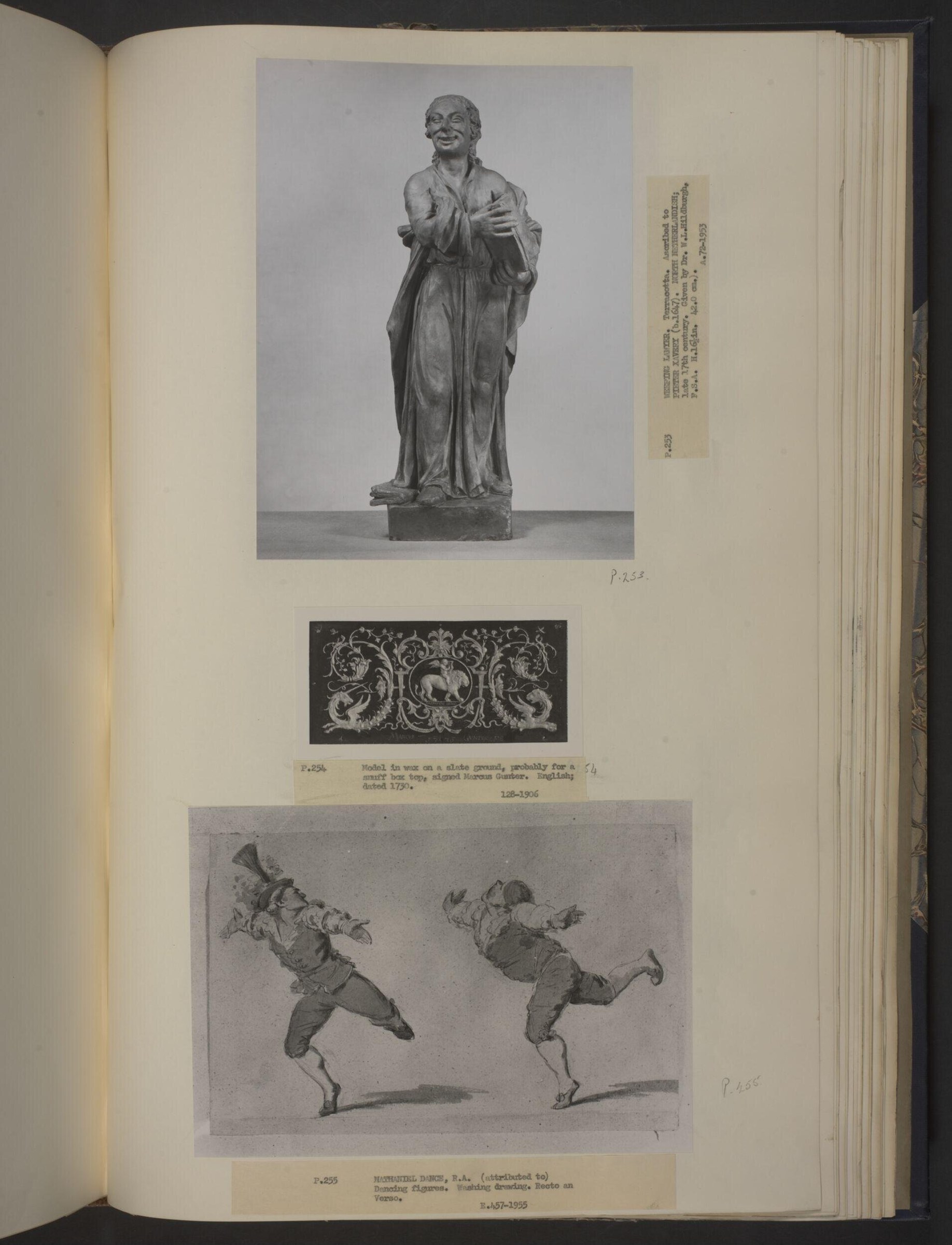
The watercolor sketch is worth noting as a record of how 18th-century performers executed knockabout comedy and acrobatic feats for popular entertainment—a form of physical theater that influenced modern circus and slapstick. It shows the body deployed for laughter and surprise rather than beauty.
What you are looking at
The page contains three distinct artworks. The primary image is a neoclassical marble or plaster statue of a standing female figure in classical drapery, shown full-length against a neutral background. She wears a long, flowing chiton or tunic that falls to her feet, with one arm raised and the other at her side, her expression serene and her pose dignified. Below this is a decorative relief panel featuring ornate Renaissance scrollwork with two facing masks or theatrical heads in the center, rendered in high contrast black and white. At the bottom is a watercolor or ink drawing showing two figures in 18th-century dress—one wearing a tricorn hat and coat, the other in similar period clothing—depicted in exaggerated, acrobatic poses with their bodies arched and limbs splayed as if executing comical or athletic movements.
The dancing
The statue shows a single standing figure in classical contrapposto, weight settled on one leg, the opposite arm raised with palm open—a gesture of address or benediction. The relief masks are frontal and symmetrical. The two figures at bottom are rendered in vigorous, unstable poses: their bodies are sharply bent backward, legs kicked upward, arms extended for balance, suggesting acrobatic tumbling or burlesque comedy. The postures show no balletic discipline; instead they convey physical exertion and clownish energy.
The dance depicted
The statue depicts a classical figure from neoclassical tradition and does not represent dance. The relief is decorative and architectural. The bottom drawing appears to show theatrical or circus performers executing comic acrobatic feats or burlesque knockabout business—the type of physical comedy and tumbling associated with 18th-century commedia dell'arte tradition, pantomime, or fair-ground entertainment rather than formal dance. The exaggerated arching and the period costume suggest performance for laugh rather than aesthetic refinement.
How it was made
The statue is carved or modeled sculpture, likely marble or plaster. The relief is a decorative architectural element, possibly from a book of ornaments or a building façade. The bottom drawing is executed in watercolor and ink wash, with pen outlines defining the figures and their period costumes. The sketch technique is quick and expressive, capturing movement through loose line and shadow rather than precision. All three works appear to be documentary or reference material—possibly collected for an artist's reference library—rather than exhibition pieces.
About this work
This page contains three unrelated works: a neoclassical standing figure in stone, a Renaissance ornamental relief, and an 18th-century watercolor sketch of acrobatic performers. The statue and relief are architectural or decorative elements without dance content. The watercolor at the bottom is the only image with theatrical or physical performance interest, depicting comic tumbling in period dress. The page appears to be from a collector's or artist's archive rather than a cohesive series on dance.
How to look at it
Notice how the two acrobatic figures are caught mid-fall or mid-somersault, their bodies twisted for maximum comic effect. The tricorn hat and period coat signal 18th-century theater. The exaggeration and instability of the poses—feet in the air, bodies arched backward—show the artist recording the virtuosity and surprise of physical comedy rather than the grace of formal dance. The sketch is documentary: it captures a specific moment of performance with immediacy.
The artist
Paul Sandby (1731–1809) was a major English landscape painter, printmaker, and draftsman, founder of the Royal Academy of Arts. He was prolific in watercolor and aquatint and created both fine art and commercial designs. His practice included topographical views, architectural studies, and satirical or humorous scenes. This page may represent studies or collected references from his working papers.
The period
The page assembles works from different eras: the statue is neoclassical (likely 18th century), the relief is Renaissance in style, and the acrobatic watercolor is 18th-century. During the 1700s when Sandby was active, pantomime and burlesque performance were immensely popular in London and Paris, featuring physical comedy and acrobatics performed by professional troupes. Theatrical prints and sketches of performers were common curiosities.
Where it lives
The record identifies this as a watercolor drawing by Paul Sandby and notes the holding collection as VA (Victoria and Albert Museum). The page appears to be from a bound volume of collected prints and drawings, possibly an artist's reference book or a curated portfolio.
Questions about this work
Is the statue part of a dance artwork?
No. The neoclassical standing figure is a sculptural study or reference object without narrative or performance content. It may be included on this page as part of a broader collector's or artist's archive rather than as a dance image.
What are the two figures at the bottom doing?
They are executing acrobatic or comic tumbling feats, likely from 18th-century pantomime or burlesque theater. Their twisted poses and period costumes suggest knockabout entertainment designed to provoke laughter through physical exaggeration and risk.
Why would Sandby sketch performers like this?
Sandby was a keen observer of contemporary life and entertainment. Such sketches served as studies for prints, as curiosities to collect, or as record of popular performance styles. The quick watercolor technique allowed him to capture the energy and surprise of live performance.
More dance artwork





