49 works in this view — arrow keys or swipe to move between them.
Dance in Art
Netsuke
Unknown
- Collection:
- Netsuke
- Source:
- Victoria and Albert Museum
- Rights:
- Rights vary by item — check the source record before reusing this image. Source record ↗
- Recorded as:
- V&A — check rights per item
Although this work does not depict dance, it is significant as documentary evidence of Japanese dress, bodily proportion conventions, and the aesthetic values of the period. The exaggerated belly and seated posture reflect cultural ideals of prosperity, authority, and spiritual presence that differ markedly from European sculptural norms of the same era.
What you are looking at
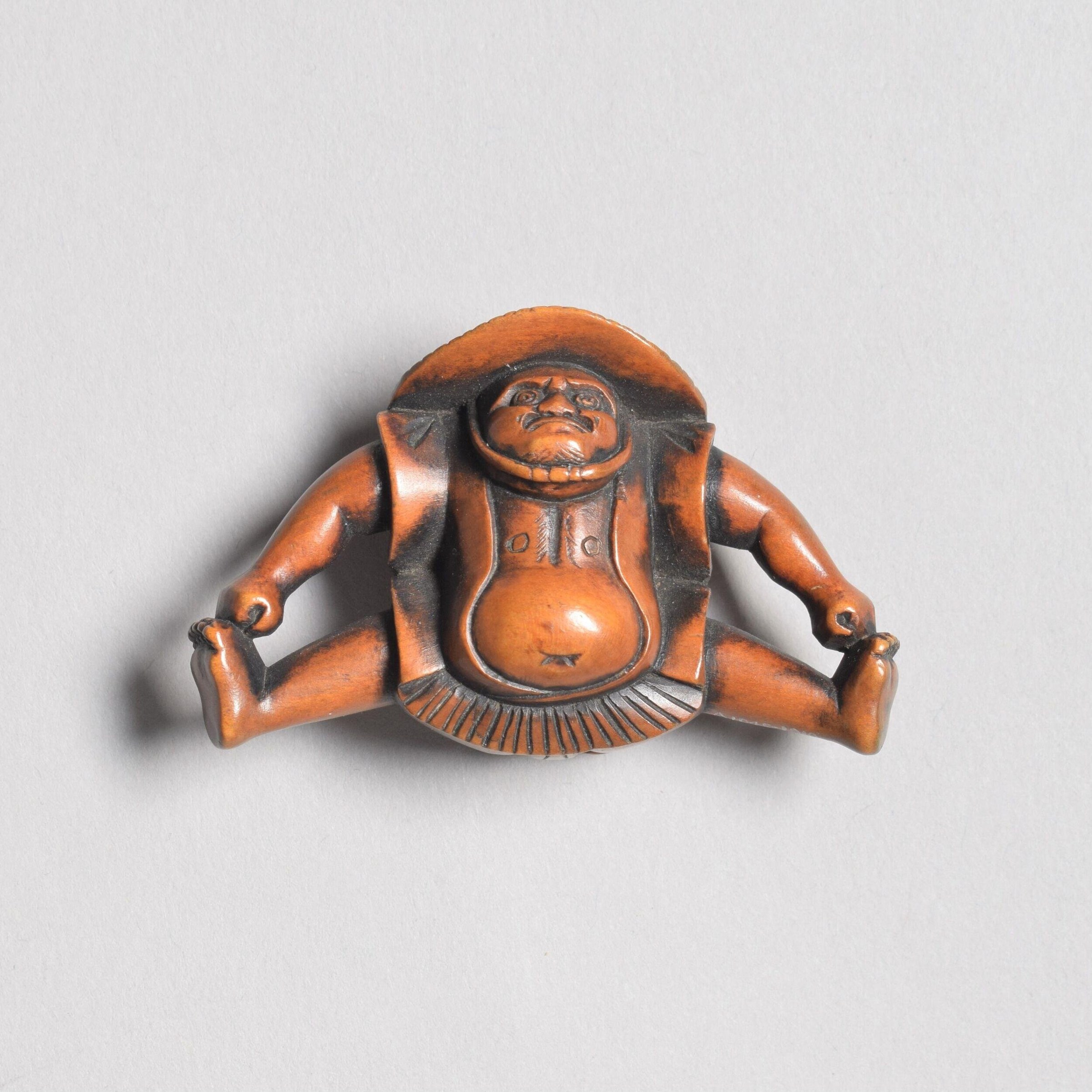
This is a compact three-dimensional wooden carving, roughly palm-sized, depicting a seated figure with a broad, rounded torso and a expressive human face. The figure sits with legs splayed outward to either side in a wide, stable base. The carving is warm honey-brown with darker patination in the recessed areas, showing the grain and wear of age. The figure wears what appears to be a sleeveless robe or tunic draped across the shoulders, with a decorative fan-like or shell-motif carved into the chest area. The facial expression is animated—slightly pursed lips and a direct gaze suggest a figure of authority or presence. The proportions are exaggerated and stylized rather than naturalistic, with a pronounced belly and compact limbs.
The dancing
A single seated figure with weight distributed equally on both sides, legs extended in a wide V-position that suggests stability and openness rather than movement. The posture is upright, the arms rest on or near the knees. The body is compact and squat, positioned frontally. This is not a dancer mid-motion but a figure in repose, occupying space with deliberate presence.
The dance depicted
This does not depict a dancer or a moment within dance. The figure is static, seated, and formally posed. While netsuke were worn as functional ornaments in Japanese dress and some examples record human activity, this carving documents a social or spiritual role rather than a choreographed movement. The wide-legged seated pose and exaggerated belly suggest a figure of status or mythological significance—possibly a deity, elder, or person of rank—rather than a performer.
How it was made
This is a carved wooden netsuke, a Japanese decorative toggle traditionally used to suspend pouches and containers from the sash of a kimono. Netsuke were carved from hardwoods (likely boxwood, ebony, or similar dense materials) in miniature, often by specialist craftspeople working in workshops across Japan. The form required three-dimensional carving from a single block, with careful attention to the underside and the pierced holes that would pass the cord through. The warm patina and surface wear visible here suggest considerable age and use.
About this work
This is a Japanese netsuke: a small carved wooden toggle, dating to an unknown but presumably historic period, now catalogued as part of a netsuke collection. Netsuke represent a distinct genre of Japanese functional sculpture that flourished from the 17th century onward, valued both for their utility and for their sculptural invention. While this gallery focuses on dance in art, netsuke occasionally document human activity and social life; this particular example records a human figure but not a dancer or a dance.
How to look at it
Approach this work at close range; netsuke are small objects designed for the hand, and much of their sculptural interest lies in the carving of details and the balance of the form. Note how the artist has managed the transition from the rounded mass of the torso to the extended legs, and how the facial carving—minimal but decisive—creates personality and gaze. Observe the underside as well, which netsuke collectors and wearers would have encountered regularly. The exaggerated proportions are not naturalistic but conventionalized; they communicate status and character rather than anatomical accuracy.
The artist
The maker is unknown. Netsuke were typically carved by specialist artisans working in urban centers such as Kyoto, Osaka, and Edo (Tokyo), often as part of a workshop system. Master carvers developed distinctive styles and were sometimes documented by name, but many netsuke remained unsigned or were made by apprentices and minor craftspeople whose names were not recorded. The work shows technical competence in the handling of the wood and composition.
The period
Netsuke production peaked during the Edo period (1603–1868) and continued into the Meiji era, driven by the rigid dress codes of samurai and merchant classes, who wore belted kimono with suspended pouches for medicine, seals, and tobacco. Netsuke carving was a minor but highly skilled craft, attracting attention from collectors even as Western contact in the mid-19th century began to displace traditional Japanese dress. The figure's style—the simplified anatomical form, the frontal pose, the mythological or status-bearing demeanor—is consistent with Edo-period netsuke conventions.
Where it lives
This netsuke is held in a netsuke collection (collection name not specified in the record). The catalogue entry is minimal and provides no accession number, acquisition date, or condition notes. The source is listed only as "va," which likely refers to a museum or institution, but cannot be confirmed from the information given.
Questions about this work
What is a netsuke and why do you have carvings without dance in a dance gallery?
A netsuke is a small carved ornament worn as a toggle on a Japanese kimono sash, used to suspend pouches and containers. This gallery does include non-dance works when they document human movement, dress, or performance contexts. While this particular netsuke does not depict a dancer, it records Japanese bodily ideals, dress conventions, and sculptural aesthetics that provide context for understanding how different cultures represented and valued the human figure.
Why is the figure so disproportionate and squat?
The exaggerated proportions are intentional and conventional in netsuke design. The rounded belly and compact form convey prosperity, authority, and spiritual presence rather than naturalistic anatomy. This reflects Japanese aesthetic values and also served a practical purpose: the broad, low center of gravity made the carving stable when worn and used as a functional toggle.
When was this made?
The catalogue record does not provide a date. Based on the style and technique, it was likely carved during the Edo period (1603–1868) or possibly the early Meiji era, when netsuke production was at its height, but without further information, the date remains uncertain.
More dance artwork





