49 works in this view — arrow keys or swipe to move between them.
Dance in Art
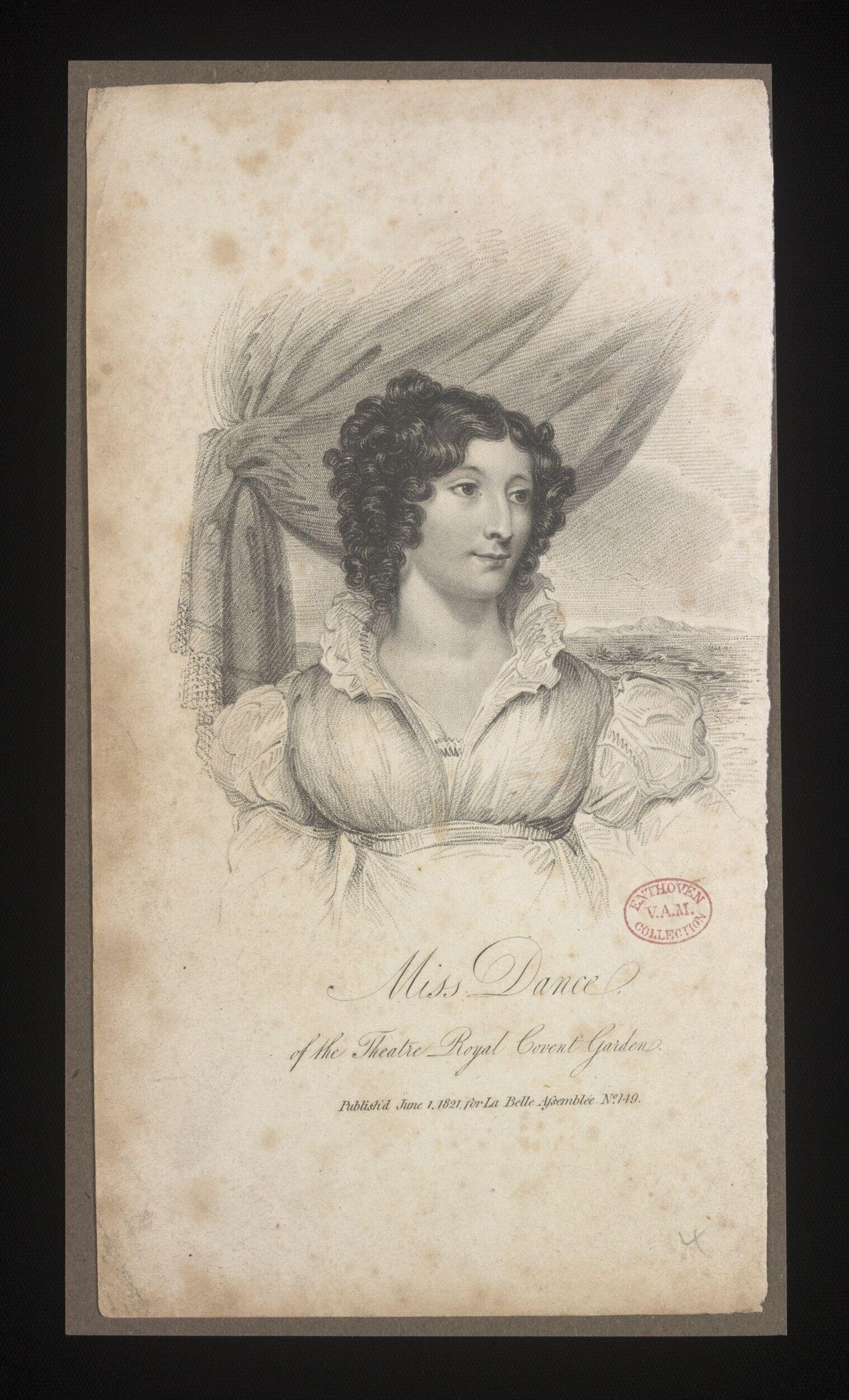
Miss Dance
La Belle Assemblée
- Collection:
- Source:
- Victoria and Albert Museum
- Rights:
- Rights vary by item — check the source record before reusing this image. Source record ↗
- Recorded as:
- V&A — check rights per item
This image is a primary document of how the female stage performer was packaged, circulated, and celebrated in the early 19th century. For dance historians, it shows the visual conventions and bodily ideals of the Regency theatre—the silhouette, the posture, the hairstyle, the relationship between street fashion and stage costume—at a moment before Romantic ballet transformed the dancer's body and dress. It also exemplifies the role of theatrical portraiture in creating and sustaining the celebrity of individual performers.
What you are looking at
A three-quarter-length portrait of a young woman in Regency-era dress, facing slightly left with her gaze directed toward the viewer. She wears a high-waisted white muslin gown with puffed sleeves and a deep square neckline typical of 1820s fashion. Her dark hair is arranged in loose ringlets and crowned with an ornate lace or gossamer headdress that flows down her back like a theatrical veil or turban tail. The background is minimal and sketched, suggesting a drawing room or theatrical interior with a glimpse of distant landscape. The entire composition is rendered in fine line engraving with careful cross-hatching for tone, giving the figure an ethereal, almost luminous quality against the cream paper. The work is a portrait of type rather than of a specific individual—a representation of fashionable femininity and the theatrical body.
The dancing
A single standing female figure depicted from the waist up. Her posture is upright and composed, with both arms at rest, one hand partially visible at her side; the other arm angles naturally across her torso. Her shoulders are relaxed and level. The stance conveys neither active movement nor the formal rigidity of a court portrait—instead, it presents the figure as 'on view,' in the manner of a theatrical performer or model at rest. The fine proportions and delicate features suggest youth and trained physical presence.
The dance depicted
This is not a depiction of a person dancing. Rather, it is a named theatrical performer portrayed in fashionable dress, likely a principal dancer or actress from the Theatre Royal, Covent Garden. The title 'Miss Dance' is almost certainly the stage name or surname of the performer, not a description of activity. The engraving belongs to the tradition of theatrical celebrity portraiture—a form that celebrated the body and costume of the stage performer off-stage, in idealized form. The gown and headdress reflect the fashion worn by Romantic-era dancers and actresses, for whom such dress was part of their visual identity and public appeal. It documents the aesthetic ideal of the female performer in the early 1820s.
How it was made
A fine line engraving, executed with delicate parallel lines (hatching) to build tone and volume, particularly visible in the hair, face, and folds of the muslin gown. The technique is typical of reproductive theatrical portraiture of the 1820s, likely printed from a hand-engraved copper plate. The inscription and publication mark indicate this was a commercial print intended for circulation among theatre-goers and print collectors. The medium and its serial reproduction made such images affordable and widely distributed, turning theatrical performers into recognizable public figures.
About this work
This engraving is a theatrical celebrity portrait—a type of print that proliferated in London during the Regency period, serving both as artistic record and as commercial merchandise. It documents not a moment of dance, but the idealized image of a female stage performer from one of London's principal theatres at a precise historical moment. The work belongs to the visual culture of theatrical fandom and the commercialization of the female performer's image. It records a fashion—both in dress and in the presentation of the female body—that was indissociable from Romantic ballet and theatrical practice of the 1820s, even as the figure herself remains static and formal. The print's careful execution and the care taken with the rendering of muslin and lace speak to the importance of costume and visual appearance in the theatre of the period.
How to look at it
Attend to the carefully rendered details of dress—the gossamer headdress, the fine muslin, the puffed sleeve—as markers of status and theatrical identity. Notice the frontal, composed pose and the direct engagement with the viewer's gaze; this is not a figure in motion or character, but a performer presenting herself as an object of aesthetic contemplation. The engraving's technical refinement—the delicate lines, the subtle modulation of tone—reflects the value placed on the image itself as a luxury object and keepsake. The historical viewer of this print would have recognized the dress as current fashion and would have valued the image as both a souvenir of a stage performance and a record of how a celebrated performer wished to be seen.
The artist
The print bears the publication mark of *La Belle Assemblée*, a London-based monthly magazine and print publisher founded in 1806. *La Belle Assemblée* was principally devoted to fashion, theatrical news, and society gossip aimed at a genteel female readership. The magazine regularly commissioned engravings of fashionable dress and theatrical celebrities; these prints were published separately as collectible sheets and served as the visual record of London fashion and stage life. The publication was a major vehicle for circulating images of theatrical performers and establishing their visual identity in public consciousness.
The period
In 1821, the London theatre was entering the age of Romanticism in dance and drama. The year marks a transitional moment: *La Sylphide* had not yet premiered (1832), but the aesthetic values that would define Romantic ballet—ethereality, grace, the idealization of the female dancer—were already shaping stage costume and performance style. Theatre-goers attended performances not only to watch action but to see celebrated performers in fashionable, carefully curated dress. The print trade was booming, and publishers like *La Belle Assemblée* made fortunes by capturing and selling the likenesses of stage celebrities. The Regency period saw the rise of what we would now call a celebrity image: the theatrical performer as a figure of visual fascination independent of any single role or performance.
Where it lives
This print comes from a collection held at the Victoria and Albert Museum and is catalogued as part of their theatrical portraiture holdings. It is one of hundreds of similar single-sheet engravings published by *La Belle Assemblée* and other theatrical print publishers during the Regency period. The publication date and the collection mark visible on the sheet identify it as a commercial theatrical print from the London market of 1821.
Questions about this work
Who was Miss Dance?
The print identifies her only as 'Miss Dance' and notes her connection to the Theatre Royal, Covent Garden. 'Dance' may have been her surname or a stage name. The engraving does not provide biographical information; it was a commercial print aimed at theatre-goers who would have recognized her from performances. Historical records of Covent Garden performers from 1821 would be needed to identify her further.
What is she wearing?
A high-waisted white muslin gown typical of Regency fashion, with puffed sleeves and a square neckline. The ornate headdress is made of gossamer or lace and drapes down the back like a theatrical accessory. This was fashionable dress for a woman of genteel status in 1821, and the careful rendering suggests it was either stage costume or the performer's fashionable street wear—the boundary between the two was not always clear.
Is this a record of a dance performance?
No. This is a portrait of a performer, not a depiction of dance or choreography. The figure is static and posed. However, the image is historically important because it records the visual appearance, costume, and aesthetic ideals associated with stage performers of the Regency period, including dancers.
What is La Belle Assemblée?
*La Belle Assemblée* was a London monthly magazine and print publisher that operated from 1806 onward. It was devoted to fashion, society news, and theatrical celebrity, aimed at fashionable women and men interested in London's cultural life. The publisher commissioned engravings of stage performers and fashionable dress, which were published both in the magazine and as separate collectible prints for sale to the public.
More dance artwork





