49 works in this view — arrow keys or swipe to move between them.
Dance in Art
H Beard Print Collection
Dance, George
- Collection:
- Source:
- Victoria and Albert Museum
- Rights:
- Rights vary by item — check the source record before reusing this image. Source record ↗
- Recorded as:
- V&A — check rights per item
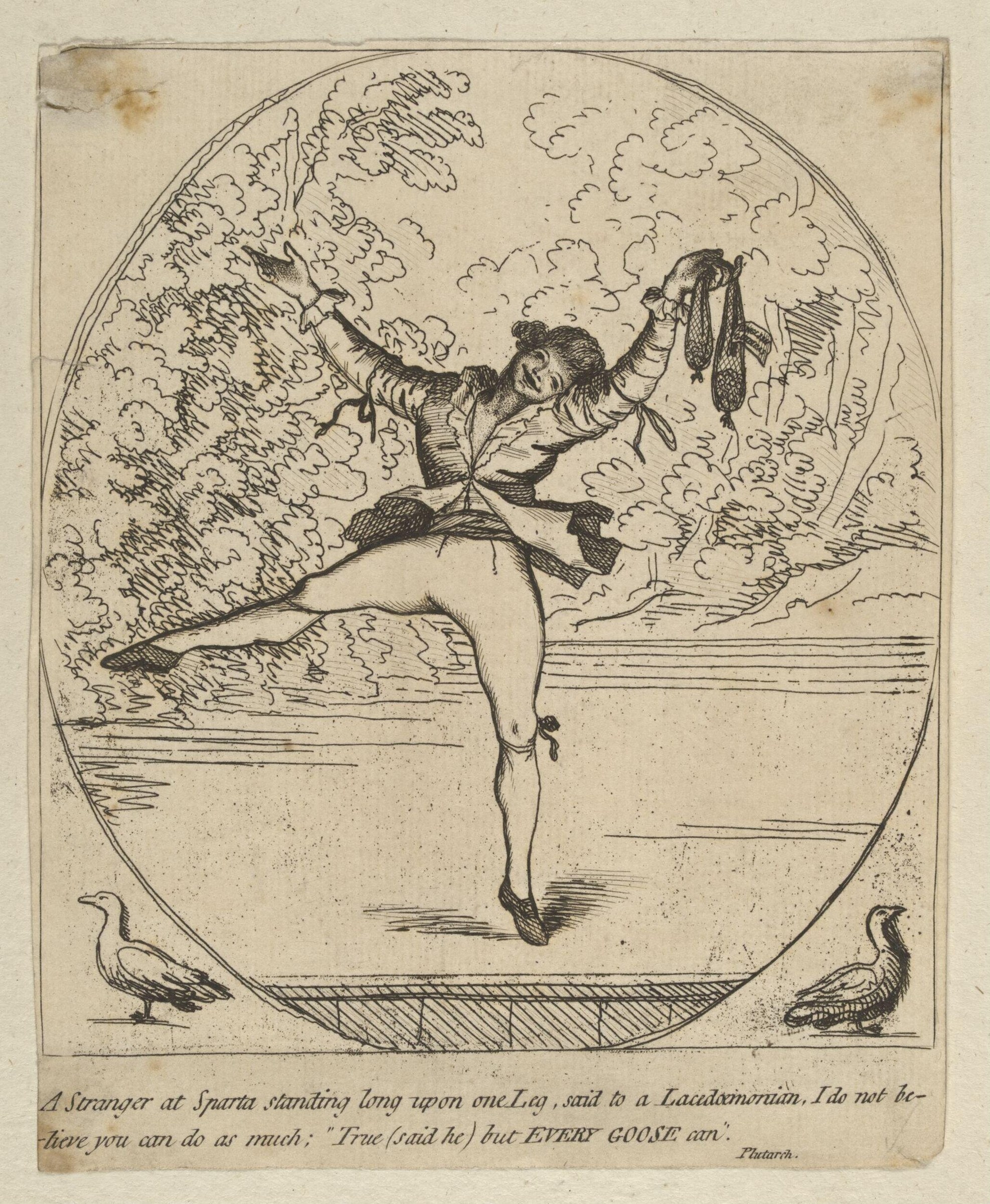
This print reveals how dance and physical performance in the 18th century extended far beyond ballroom propriety or ballet discipline; comic performance art, acrobatic display, and grotesque bodily distortion were valued forms of entertainment and visual satire. The work demonstrates that the history of dance includes clowning, slapstick, and the deliberate violation of bodily grace—a reminder that not all movement imagery was meant to elevate or beautify.
What you are looking at
A figure in early 18th-century dress stands in a landscape, balanced on one leg in an exaggerated pose suggestive of dance or comic posturing. The dancer wears a short coat, breeches, and stockings in the fashion of the Regency or early Georgian period. Both arms are raised and extended, the hands grasping what appear to be bunches of vegetables or greens—possibly peas or beans in their pods. The setting is a garden or agricultural landscape with dense, billowing foliage rendered in fine cross-hatching, and two waterfowl (geese or ducks) appear in the lower corners. The figure's posture is deliberately artificial and exaggerated, with one leg stretched out and the weight thrown onto the other in a way that emphasizes instability and theatricality. The landscape elements surround the figure in an almost claustrophobic density of engraved line. The caption below provides a narrative: a stranger at Sparta standing on one leg, told to a Lacedaemonian 'I do not believe you can do as much,' responds 'True (said he) but EVERY GOOSE can'.
The dancing
A single male figure dominates the composition, balanced precariously on the right leg with the left extended outward at an exaggerated angle. Both arms are raised to shoulder height or higher, with elbows bent and hands open toward the viewer, grasping bunches of vegetation. The pose is deliberately unstable and comic, lacking any sense of control or grace—the figure appears to be struggling or posturing rather than executing a disciplined movement. The artist has rendered the musculature and weight distribution to emphasize the awkwardness of the stance, which reads less as trained dance than as vaudeville buffoonery or acrobatic showing-off.
The dance depicted
This is not a depiction of a serious or codified dance form. Instead, it appears to be a satirical or comic print representing an act of physical display—perhaps what we might now call a 'stunt' or a performance of acrobatic balance. The pose recalls the conventions of 18th-century comic or grotesque prints, in which exaggerated bodily contortion and anatomical impossibility were used for humorous effect. The inscription suggests this is a visual commentary on the old story of the Spartan youth who could stand on one leg longer than anyone else: the 'stranger' in the print is apparently demonstrating this feat while holding vegetables, perhaps to mock the claim or to add a layer of absurdity (the goose can also do something impressive, the text suggests). The genre is closer to theatrical burlesque or carnival entertainment than to any ballroom or concert dance.
How it was made
This is an engraving—a print made by incising lines into a metal plate and inking the recesses. The technique is characteristic of 18th-century satirical and comic prints, with fine parallel hatching lines used to create tone and texture, particularly visible in the dense foliage that frames the figure. Engravings of this type were produced in series and circulated widely among educated audiences; they were often bound into collections or sold individually. The precision and fineness of the line work, as well as the narrative caption, suggest this was made for a literate, urban audience familiar with classical allusions (Sparta, Lacedaemonia) and wordplay. The attribution to 'George Dance' and the holding at the V&A (indicated by source 'va') suggests this is part of an institutional collection of prints.
About this work
This is an 18th-century satirical engraving depicting a figure performing an exaggerated balancing act on one leg while holding bunches of vegetables. The print is a visual pun based on a classical story about Spartan prowess: a stranger boasts of standing on one leg longer than anyone else, only to be told that any goose can do the same. The work belongs to the tradition of comic and grotesque prints that used absurd bodily contortions and impossible anatomical poses for entertainment and moral commentary. It captures a moment of theatrical buffoonery rather than formalized dance, yet it speaks to the period's fascination with the body's capacity for surprising feats and with the visual comedy of lost balance and ungainly posture.
How to look at it
Attend first to the precariousness of the pose: the artist has chosen to freeze the moment when balance is most visibly strained, not a moment of accomplished stability. Notice the deliberate awkwardness of the arm and hand positions—the hands are open and grasping, not refined or controlled, and the raised arms throw off the center of gravity, making the balance on one leg even more absurd. The dense foliage around the figure creates a sense of claustrophobia and comic pressure; the viewer is invited to laugh at the effort and instability on display. Finally, read the caption: the visual punchline is that a Lacedaemonian goose can match the feat, reducing human boasting to the level of farmyard ability.
The artist
George Dance (1741–1825) was a British architect and artist best known for his work in neoclassical design, but he was also an accomplished draughtsman and printmaker. He moved in artistic circles in London and was familiar with both high art conventions and popular satirical print culture. While he is primarily remembered for architecture, his graphic work demonstrates a keen eye for grotesque figure drawing and a playful engagement with bodily comedy—evident in this print's exaggerated anatomy and theatrical pose. The print's style and subject matter align with the broader tradition of 18th-century English satirical engraving.
The period
This work was made during the height of English satirical printmaking, a period when artists like Hogarth, Rowlandson, and Gillray were producing sharp, witty visual commentaries on contemporary life and classical literature. The 18th century was fascinated by the grotesque and the ridiculous as counterpoints to emerging ideals of refined taste and bodily control. At the same time, serious dance—both ballet and the ballroom forms that were crystallizing into modern ballroom technique—was emphasizing elegance, balance, and the sublimation of effort. This print belongs to the vernacular, popular tradition that mocked such refinement. The classical allusion (Sparta) also reflects the period's engagement with ancient sources as a way to comment on modern behavior and folly.
Where it lives
The work is part of the H Beard Print Collection held at the Victoria and Albert Museum (V&A), London. The collection itself is a significant resource for the study of 18th-century satirical and comic prints. The work is catalogued as part of the Dance collection within LODance.
Questions about this work
Is this actually a dance?
Not in the formal sense. This is a satirical print depicting an acrobatic feat or comic performance—a balancing act meant to be ridiculous rather than graceful. It belongs to the broader visual culture of bodily display and physical comedy, which was a valued form of entertainment in the 18th century, but it is not a depiction of any codified dance form or technique.
What is the story behind the image?
The caption refers to a classical anecdote about Spartan prowess: a stranger claims he can stand on one leg longer than anyone else. A Lacedaemonian replies that this is nothing special—even a goose can do it. The print visualizes this joke by showing a comically strained figure standing on one leg while holding vegetables, sardonically suggesting that the feat is no more impressive than a farmyard bird's ability.
Why would this be collected as dance?
The work captures a historical moment in the representation of the human body in motion and display. Even though it is comic and grotesque rather than beautiful or refined, it documents 18th-century attitudes toward physical performance, balance, and theatrical exhibition. It also reflects the era's fascination with the body's capacity to surprise and amuse, which is central to the history of performance.
More dance artwork





