49 works in this view — arrow keys or swipe to move between them.
Dance in Art
Theatre costume
Unknown
- Collection:
- Theatre costume
- Source:
- Victoria and Albert Museum
- Rights:
- Rights vary by item — check the source record before reusing this image. Source record ↗
- Recorded as:
- V&A — check rights per item
For dance historians, this object is significant as physical evidence of how dancers and performers were dressed in theatrical contexts, yet its value is limited by the absence of documentation. The craftsmanship and material value suggest a high-status performer or an important production, but without context—the costume it completed, the performance it was worn in, or the tradition it belonged to—it remains an orphaned artifact.
What you are looking at
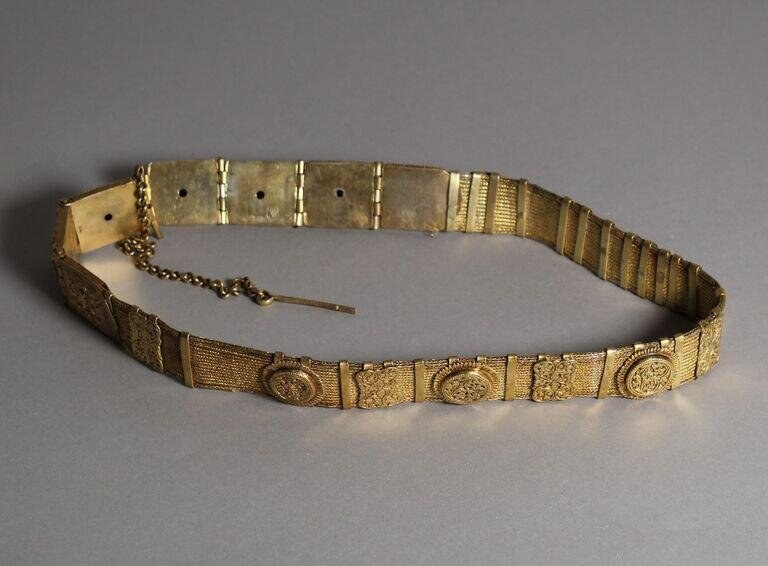
This is a gilded metal belt or girdle composed of rectangular and circular ornamental plaques connected by hinged segments. The plaques are densely decorated with repoussé work—hammered relief patterns showing scrollwork, foliation, and possibly figural scenes. The overall surface is heavily worn and patinated, with areas of damage and loss that suggest considerable age. A chain attachment dangles from one end. The object is photographed against a neutral gray background, laid out to show its full length and the individual articulation of its segments. The construction suggests a prestigious garment or costume accessory designed to be worn at the waist, with the hinged plates allowing flexibility around the wearer's body.
The dancing
This is not a depiction of dancers or bodies in motion; it is a three-dimensional object. The belt's structure is designed to articulate and move with the wearer's body, but the photograph shows it laid flat and extended, displaying the craftsmanship of the individual plaques rather than any living figure or gesture.
The dance depicted
Dance content cannot be identified in this work because it is not a representation of dance. This is a costume or dress accessory—a belt or girdle—from an unspecified historical period. The catalogue record identifies it as a 'theatre costume,' suggesting it was worn by a performer, but the object itself does not depict dance and provides no evidence of the specific dance form or movement vocabulary it belonged to. Without context about the costume it was part of, the performance it was worn in, or the tradition it represents, the dance history cannot be determined from the object alone.
How it was made
This is a metal belt, likely gold or gilt bronze, made using repoussé (hammered relief) and possibly chasing techniques. The plaques are individually cast or worked and then hinged together to allow the belt to flex around the wearer's waist. The density and style of ornament suggest skilled metalwork, and the object's weight and construction indicate it was a luxury item. The wear and patination visible in the photograph is consistent with age and extended use.
About this work
This is a gilded metal belt or girdle, catalogued as a theatre costume element, composed of articulated rectangular and circular plaques decorated with repoussé ornament. The craftsmanship and materials suggest a prestigious garment or costume piece, likely worn by a performer in a theatrical or ceremonial context. The object's age, medium, and construction method remain undetermined from the image alone. Without additional provenance or context, it cannot be assigned to a specific dance tradition, performance genre, or historical period, though the catalogue's identification as a theatre costume indicates it belonged to a performance context.
How to look at it
Examine the individual plaques and their decoration: the repoussé patterns suggest the maker's skill and the object's value. Notice the hinged connections, which show how the belt was designed to articulate with a living body. The wear and patination tell a history of use. The chain attachment at one end may indicate how the belt was fastened or suspended, a detail that would have been visible in performance.
The period
The style of ornament, the construction technique, and the patination of this belt suggest it belongs to a historical period, possibly medieval, Renaissance, or later; however, these details cannot be reliably determined from visual inspection alone. The repoussé technique and hinged articulation are consistent with metalwork practices across several centuries and cultures. Without conservation analysis, metallurgical examination, or comparative study, the period cannot be established.
Where it lives
The object is held in a theatre costume collection. The catalogue record provides no information about its acquisition, previous ownership, or the specific performance or performer it belonged to.
Questions about this work
What was this belt worn for?
The catalogue identifies it as a theatre costume element, suggesting it was worn by a performer in a theatrical or ceremonial production. The gilded metal and ornate decoration indicate it was a prestigious garment, likely worn by a character of high status. Without documentation of the specific production, the performance context cannot be determined.
How old is this belt?
The catalogue record does not provide a date. The visual evidence—the repoussé technique, the style of ornament, the patination and wear—is consistent with several historical periods, but visual inspection alone cannot establish an accurate date. Conservation analysis or comparative metalwork study would be required.
What is it made of?
The belt appears to be made of gold or gilt bronze, based on its color and finish. The plaques are individually crafted using repoussé (hammered relief) and possibly chasing techniques, then hinged together with metal loops and pins to allow flexibility. The weight and durability of the material indicate a high-value object.
How would this have been worn?
The hinged articulation of the rectangular and circular plaques allowed the belt to flex and conform to the wearer's waist. The chain attachment visible at one end may have been used to fasten the belt or suspend it from another garment. In performance, the belt would have moved with the dancer's or actor's body, its gilded surface catching light and emphasizing movement.
More dance artwork





