49 works in this view — arrow keys or swipe to move between them.
Dance in Art
Theatre costume
Unknown
- Collection:
- Theatre costume
- Source:
- Victoria and Albert Museum
- Rights:
- Rights vary by item — check the source record before reusing this image. Source record ↗
- Recorded as:
- V&A — check rights per item
Costume pieces reveal what performers actually wore and how movement and ornament were designed to work together on stage. This cuff, finely made and portable, shows the technical skill and expense involved in theatre dress across an unspecified but clearly formal tradition. It is a material trace of performance practice.
What you are looking at
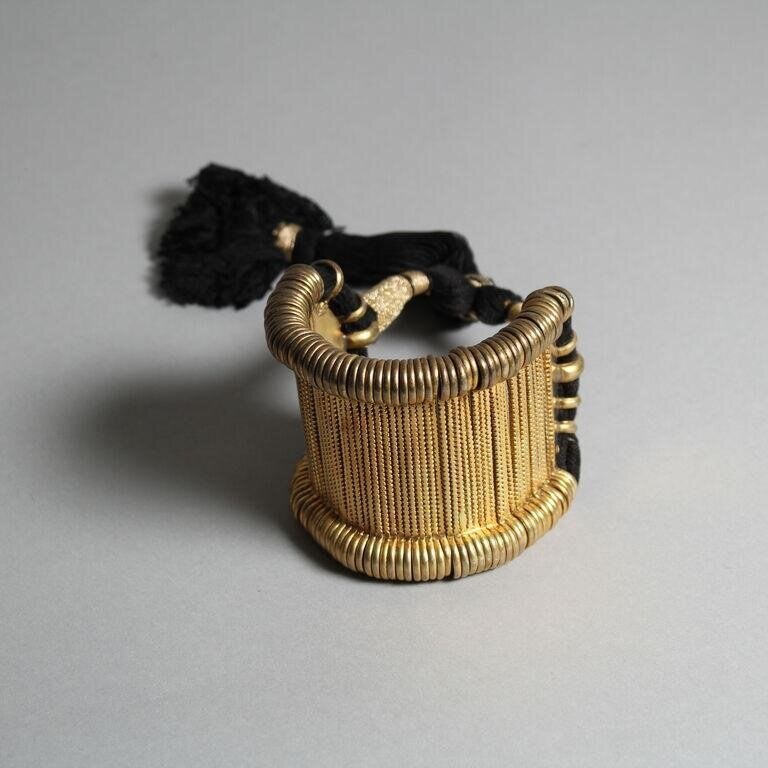
A gold-colored cuff or bracelet lies against a pale grey background, photographed at a slight angle that casts a defined shadow. The cuff is cylindrical in form, constructed from vertical parallel metal strands or wires bound together and edged with a coiled or rope-like trim at top and bottom. Two decorative terminals—likely ornamental caps—sit opposite each other on the rim. A black fabric tassel or pompom is attached to one side, suggesting this is a functional ornament designed to hang or to be tied. The object is small, portable, and densely crafted, with the interplay of light across the ridged surface emphasizing its three-dimensional metalwork. The minimal setting focuses attention entirely on the object's material presence and decorative detail.
The dancing
This is not a depiction of dancers or dance movement. It is a costume ornament—a wrist cuff or ceremonial bracelet—photographed as a standalone object. There are no figures, gestures, or bodies.
The dance depicted
This object appears to be a theatre costume element, likely a decorative cuff or ceremonial bracelet worn at the wrist or arm by a performer. The gold metalwork and attached tassel suggest formal or festive theatre dress, possibly from classical or high-style theatrical traditions. Without more context about the costume or the performance genre it belonged to, it is impossible to identify the specific dance form it served. It may have adorned a ballet dancer, a performer in classical Indian theatre, or an actor in historical costume drama.
How it was made
This is metalwork—gold or gilt metal formed into a tube of bound parallel wires, with coiled-wire edging and decorative terminals. The wires appear to be individually shaped and then fastened in parallel, a labour-intensive technique that suggests skilled craftsmanship and considerable expense. The black silk or wool tassel is separately attached. As a theatre costume piece, it would have been designed to catch stage light and move with the wearer's arm, the tassel adding visual emphasis to gesture and movement.
About this work
This is a gold metal cuff or ceremonial bracelet, now held as a theatre costume element. Its precise theatrical context and the performance tradition it served are not recorded. The object is a fragment of a performer's dress, representing the material culture of theatre production and the skilled trades that supported historical performance. It testifies to the value placed on visual display and the craftsmanship invested in even small costume components.
How to look at it
Examine the craftsmanship of the parallel wires and the coiled edging, which would have required considerable hand labour. Notice how the tassel would hang and move with an arm in motion, adding a secondary visual accent to the performer's gesture. Consider how stage light would have caught the polished metal and reflected colour across the wearer's arm. The object invites thinking about the relationship between small costume details and the embodied presence of the performer.
The period
Without firm dating or provenance, the period context cannot be established. The style of metalwork—parallel-wire construction with rope-trim edging and decorative caps—is consistent with several historical periods and cultures, from European court theatre to classical Indian performance traditions. The cuff belongs to a tradition in which costume ornament was both functional and visually symbolic, designed to enhance the performer's presence and gesture.
Where it lives
The object is held in a theatre costume collection, catalogued only as "Theatre costume" with no recorded maker, date, or performance tradition. Its acquisition source is recorded as 'va', likely indicating a museum or collection institution, but further provenance is not documented.
Questions about this work
What was this object used for?
It is a decorative cuff or bracelet worn on the wrist or arm by a theatre performer. The tassel served both functional and ornamental purposes—it could be tied to secure the cuff, and it would move with the wearer's arm, adding visual interest to gesture and movement on stage. The fine metalwork reflects the value placed on costume detail in formal performance traditions.
When was it made?
The catalogue record does not provide a date. The style of the metalwork—parallel bound wires with coiled-wire edging—is consistent with several historical periods and theatrical traditions, but without additional documentation it is not possible to assign a firm date.
What kind of dance or theatre did the wearer perform?
That is not recorded. The fine gold finish and formal construction suggest a classical or high-status theatrical tradition, but the cuff could have been worn in ballet, historical dramatic theatre, classical Indian dance, or other formal performance genres. The object alone cannot tell us which tradition it served.
More dance artwork





