49 works in this view — arrow keys or swipe to move between them.
Dance in Art
Theatre costume
Unknown
- Collection:
- Theatre costume
- Source:
- Victoria and Albert Museum
- Rights:
- Rights vary by item — check the source record before reusing this image. Source record ↗
- Recorded as:
- V&A — check rights per item
Costume survives longer and more completely than documentation of choreography. This robe, in the fabric, cut, and construction details chosen, records what a performer wore and how they were dressed in a theatrical context now otherwise lost to time. For historians of dance and dress, such garments are rare material evidence of performance practice.
What you are looking at
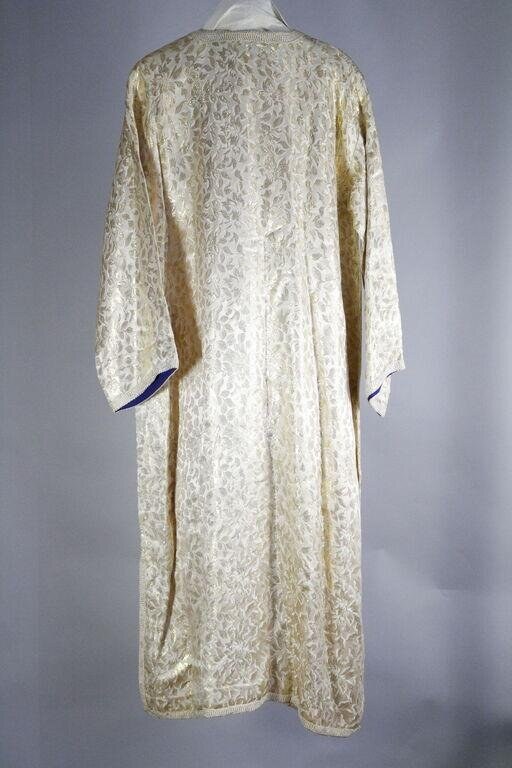
A long, loose robe or dressing gown is displayed on a hanger against a neutral grey background, photographed from the back. The garment is made of a pale cream or ivory fabric with an all-over damask or floral jacquard pattern in subtle grey tones. The sleeves are full and fall loosely to the wrist, with what appears to be blue silk lining visible at the cuffs. The robe hangs straight and voluminous from the shoulders, falling to the ankles, with no visible fastenings or closures at the front. The long rectangular silhouette and generous cut suggest a wrap or house robe rather than structured stage wear. The photograph is museum documentation style—a simple, single garment against a plain background with even lighting.
The dancing
There are no human figures in this image. The robe is displayed on a hanger and photographed as an object rather than being worn or modeled. The garment itself reveals nothing about how it would move on a body or what gestures or holds it would accommodate.
The dance depicted
No dance is depicted in this image. This is a costume object—a robe or dressing gown of the type that might be worn backstage, in a dressing room, or as part of a character's appearance in theatrical production. Without context about which theatrical work it belonged to, or evidence of its construction date and use, it is impossible to identify which dance form or style it served. The garment's loose, enveloping cut and rich fabric suggest theatrical rather than athletic use, but the photograph provides no information about the choreography, movement vocabulary, or era of dance it supported.
How it was made
This is a textile object—specifically a constructed and sewn robe—photographed for museum documentation. The garment appears to be woven jacquard with a damask or floral pattern and silk lining details. The photograph is a straightforward object record using even lighting and a neutral background, the standard approach for cataloguing three-dimensional costume pieces. This type of photography prioritizes accurate colour, pattern, and construction detail for research purposes rather than theatrical or aesthetic effect.
About this work
This is a theatre costume robe of unknown date and maker, held in a collection designated 'Theatre costume' (suggesting a theatre or costume collection). The garment is a long, loosely cut wrap or dressing gown in cream damask fabric with blue silk cuffs, the type worn by performers either as a character costume or for backstage and dressing-room use. The photograph documents the object as a primary source for understanding theatrical dress of its period, but without additional provenance information, the specific production and dance form remain unidentified.
How to look at it
Examine the cut and construction: the robe's looseness and lack of fitted seams at the waist or bust tell you it was not designed to follow the body closely or to display it to an audience. Look at the choice of fabric—a damask pattern in muted tones—and the blue silk lining at the cuffs, details that suggest either wealth or institutional investment in the costume. These choices reflect how a character or performer was meant to be perceived on stage and in what era that aesthetic choice was made.
The period
Without a date, this robe cannot be placed in a specific period context. Its construction, damask pattern, and generous silhouette are consistent with either late 19th or 20th-century theatrical use, but the photograph does not clarify which. The style of the lining and the presence of what appears to be a commercial jacquard suggest industrial textile production rather than handmade costuming, placing it likely in the 1800s or later.
Where it lives
The work is held in a collection designated 'Theatre costume' with source attribution marked 'va' (likely Victoria & Albert Museum or similar institutional collection). No accession number, acquisition date, or previous owner history is recorded in the catalogue.
Questions about this work
What would this robe have been worn for?
The cut and fabric suggest multiple possible uses: as a character's costume (a noble or wealthy figure in a classical or historical drama), as a dressing gown for a performer to wear before or after a scene, or as part of a backstage or domestic scene. The damask pattern and silk lining suggest it was made with care and expense, indicating either a significant role or an institutional production with adequate costume budget.
How can you tell this is a theatre costume and not just historical dress?
The photograph and catalogue record identify it as a theatre costume, but visually, the robe's generous, unstructured cut and the presence of lining in contrasting material are consistent with stage wear designed for visibility and movement rather than everyday garments. However, without seeing wear marks, maker's labels, or documentation of the production, the distinction rests on how it is catalogued.
What era was this made in?
The record does not provide a date. The damask weave, the style of the blue silk lining, and the overall silhouette suggest mid-to-late Victorian or Edwardian production (roughly 1860s–1920s), but this is speculation. A textile expert or comparison with firmly dated theatrical costumes would be needed to narrow the period.
More dance artwork





