49 works in this view — arrow keys or swipe to move between them.
Dance in Art
Ballerina shift dress
Eden Loweth
- Collection:
- Dress
- Source:
- Victoria and Albert Museum
- Rights:
- Rights vary by item — check the source record before reusing this image. Source record ↗
- Recorded as:
- V&A — check rights per item
This work is valuable precisely because it is not dancewear and declares itself as such. It shows how the ballet aesthetic—associated with discipline, elegance, and the female body in motion—has become a symbolic resource in fashion that operates independently of dance itself. For dance historians and scholars, it documents the cultural spillover of ballet into luxury consumer culture and the ways that dance terminology gets applied to non-functional objects.
What you are looking at
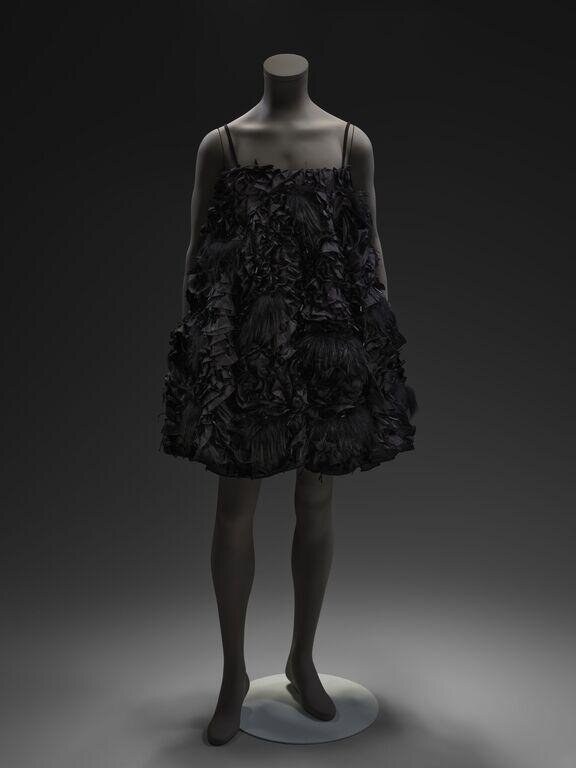
A sleeveless shift dress on a mannequin against a neutral grey background, photographed in sharp three-quarter view under controlled studio lighting. The dress is constructed entirely from densely layered, ruffled black fabric that creates an explosively textured silhouette. The ruffles cascade irregularly across the bodice and skirt, catching and fragmenting the light to create complex shadows and highlights. The neckline is a simple square cut across the shoulders with thin spaghetti straps; the hemline falls to approximately mid-thigh. The overall effect is of controlled chaos—a classical shift form overtaken by baroque, almost baroque-inspired textile manipulation.
The dancing
The mannequin is posed in a neutral stance with no implied movement or gesture. The dress itself becomes the primary visual subject rather than the body beneath it; the heavy ruffling obscures any definition of the wearer's silhouette or posture. There is no visible footwork, arm position, or dynamic weight distribution because the presentation is static and frontal. The dress dominates rather than reveals the body.
The dance depicted
The title 'Ballerina shift dress' suggests a connection to ballet, but the image presents no clear evidence of dancewear in the conventional sense. The shift silhouette and minimal armhole construction have no functional relationship to ballet technique—there is no room for the full arm extension and overhead reach that ballet requires, and the heavy ruffling would impede movement significantly. The dress appears to be a fashion statement that borrows the word 'ballerina' for aspirational or aesthetic cachet rather than a garment designed for or worn in actual performance. Without evidence of performance context, footwear, or the kind of structural support ballet demands, this reads as evening wear or art-fashion rather than functional dancewear.
How it was made
This is a photograph of a three-dimensional textile object, likely shot with studio lighting and a tripod to achieve the sharp focus and controlled shadow work visible here. The photograph itself is the artwork—the 'medium' is fashion photography and the artist is the designer, not a photographer. The record identifies the artist as Eden Loweth and the object as 'Dress', confirming it is a wearable garment photographed for documentation or presentation. The photograph has been retouched or colour-graded to emphasise the dress's sculptural qualities and the texture of the ruffles.
About this work
This is a contemporary fashion design piece documented in a studio photograph, dated 2020. The work sits at the intersection of haute couture and conceptual art: it takes the form of a classical shift dress and applies an intensive textile manipulation technique that obliterates the garment's functional simplicity. The title invokes ballet culture and the figure of the ballerina, but the dress itself could not be danced in; the reference appears to be symbolic or aspirational rather than functional. As an artwork in a gallery context, it comments on the aestheticisation of dance culture and the relationship between fashion fantasy and performance reality.
Within a dance gallery, it functions as a document of how dance imagery and the figure of the ballerina circulate in contemporary fashion design—not as dancewear itself, but as a cultural symbol that designers invoke and manipulate for visual and commercial effect. The work raises questions about what we mean by 'ballerina' when applied to objects that have no connection to actual ballet practice.
How to look at it
Look at the relationship between the garment's title and its actual form. The word 'ballerina' evokes movement, grace, and control, but the dress itself is immobile and chaotic. Notice how the ruffles destroy the clean lines a shift dress should have—they are anti-classical, even anti-functional. The photograph's studio lighting emphasises this contradiction by casting sharp shadows that make the ruffles appear almost aggressive. The shift form itself is one of the simplest, most classical silhouettes in fashion history; the artist's choice to overwhelm it with texture is a direct conceptual move.
The artist
Eden Loweth is a London-based fashion designer. Limited public information is available about their broader practice or training, but the date (2020) and the title suggest work within contemporary haute couture and conceptual fashion, where garments are often designed as sculptural or wearable art rather than everyday clothing. The intensive labour of hand-ruffling textiles, visible in this piece, is consistent with high-end bespoke production.
The period
In 2020, fashion was in the midst of a sustained aesthetic turn toward conceptual, unwearable, or sculptural garment design. The 2010s-2020s saw major designers (Rei Kawakubo, Iris van Herpen, Rick Owens) creating garments that prioritised visual and conceptual impact over functionality. Simultaneously, ballet imagery—tutus, pointe shoes, the ballerina silhouette—had become deeply embedded in luxury fashion and streetwear as a symbol of aspiration and refinement. This dress sits within that moment: it borrows the classical register of the shift dress and the cultural prestige of the ballerina figure, then destabilises both through extreme texture.
Where it lives
The work is held in the VA (Victoria and Albert Museum) collection and is recorded as 'Dress', indicating it is a wearable garment object, not a photograph or artwork on paper. The photograph here is a documentation of that object, likely produced for the museum's records or public presentation.
Questions about this work
Is this actually dancewear?
No. Despite the title, the dress is not functional ballet or dancewear. The heavy ruffling restricts movement, the armholes are too tight for ballet's arm vocabulary, and there is no structural support for the body's weight distribution during dance. The title appears to be a conceptual or aspirational reference to ballet culture rather than a description of function.
What does the ruffling represent?
The ruffles appear to be a deliberate act of textile destruction or transformation—they obscure the simple, classical shift silhouette and introduce chaos into a form associated with restraint and order. In the context of the 'ballerina' title, they may represent the tension between the controlled, disciplined figure of the classical ballerina and the excess or uncontainability that runs counter to that image.
Who would wear this dress?
The dress is designed more as a conceptual art object or haute couture statement piece than as everyday or even performance wear. It is the kind of garment that might be worn at a high-fashion event, in an editorial photo shoot, or displayed in a gallery—valued for its visual and conceptual impact rather than wearability.
Why is this in a dance gallery?
The work documents how ballet and the figure of the ballerina function as cultural symbols in contemporary design and fashion, independent of actual dance practice. It raises questions about the relationship between dance imagery and fashion, and how dance vocabulary and aesthetics circulate in non-dance contexts.
More dance artwork





