49 works in this view — arrow keys or swipe to move between them.
Dance in Art
Emma Palladino
Samuel A Walker
- Collection:
- Photograph
- Source:
- Victoria and Albert Museum
- Rights:
- Rights vary by item — check the source record before reusing this image. Source record ↗
- Recorded as:
- V&A — check rights per item
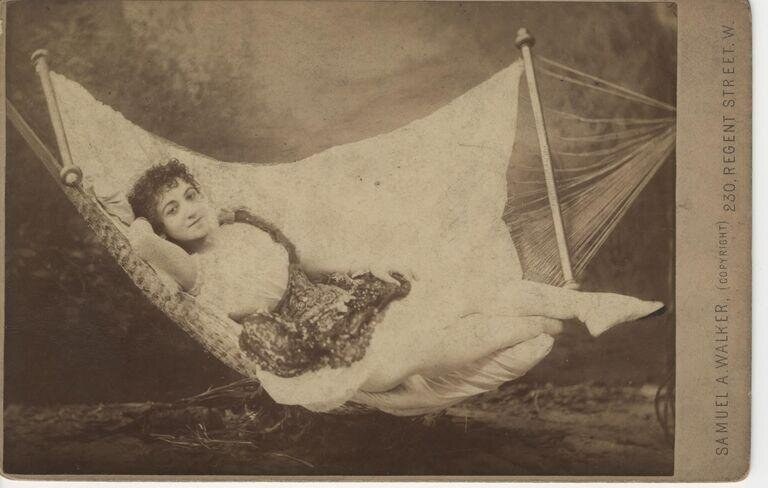
This image reveals the visual culture of late-19th-century theatrical performance and the orientalist fantasies that shaped how performers—particularly women—were photographed and promoted. It demonstrates the entanglement of dance with decorative spectacle and exotic costuming in the Gilded Age, and raises questions about how performance, costume, and the photographic image collapsed into a single commodity.
What you are looking at
A young woman reclines in a large fabric hammock or swing suspended from wooden poles, her body arranged in a graceful, extended pose. She wears a patterned dress or robe with what appears to be Asian-inspired fabric, and her posture is deliberately theatrical—one leg extended, the other bent, her upper body supported on one arm in a posture of languid repose. The fabric of the swing billows generously around her, creating a soft, draped composition that fills most of the frame. The background is dark and atmospheric, suggesting a studio setting. This is a studio photograph, carefully composed to emphasize the figure's decorative arrangement and the sensuous flow of textiles.
The dancing
The single figure is posed in a recumbent position rather than an active dance posture. Her weight is distributed across the swing fabric rather than through a grounded stance; there is no dynamic balance or flow of kinetic energy visible. The arrangement is more sculptural tableau than dance—the body is arranged for visual effect rather than captured mid-movement. The posture suggests flexibility and control but does not demonstrate the characteristic frame, weight distribution, or momentum of any codified dance technique.
The dance depicted
This is not a dance photograph in the strict sense. The image documents a posed studio arrangement of a single figure in a theatrical costume; it is closer to tableau vivant or orientalist staged photography than to documentation of dance movement or technique. If Emma Palladino was a performer of the 1880s, this image presents her as an exotic or decorative subject rather than as a dancer in action. The reclining pose and costume may allude to performance contexts such as burlesque, orientalist entertainments, or theatrical spectacle popular in the Gilded Age, but the still posture cannot confirm a specific dance practice.
How it was made
This is a photograph, likely albumen print or similar 1880s gelatin process based on the warm sepia tone and surface quality visible. The image has been mounted on cardboard with printed text, suggesting it is a cabinet card or promotional photograph—a mass-produced format common for theatrical performers of the period. The printing and mounting indicate this was a commercial product for distribution and sale, intended to circulate among admirers or in theatrical publicity. The careful studio lighting and posed composition reflect professional theatrical photography practice of the Gilded Age.
About this work
This is a theatrical studio photograph from 1885 documenting Emma Palladino, likely a performer of the Gilded Age era. Rather than capturing dance in motion, it presents the figure as a sculptural and exotic spectacle—a woman posed in costume within a draped swing, arranged for visual and sensory appeal. The photograph exemplifies the genre of late-19th-century promotional imagery for theatrical performers, blending orientalist aesthetics, textile display, and the poses of tableau vivant. It belongs in a gallery of dance in art not because it documents choreography or technique, but because it shows how dance performers of this era were marketed, costumed, and presented as objects of theatrical consumption.
How to look at it
Attend to the arrangement of textiles and the careful composition of the figure within the frame—this is studio photography serving promotional and commercial ends, not documentation of movement. Notice how the fabric is arranged to create visual and tactile interest, and how the figure's pose emphasizes flexibility, exoticism, and leisure rather than trained technique. The photograph shows what Gilded Age theatrical culture valued: spectacle, costuming, and the visual presentation of the performer's body.
The artist
Samuel A. Walker was a theatrical and portrait photographer active in the 1880s. He produced cabinet cards and promotional photographs for theatrical performers, a common commercial practice during the Gilded Age. Walker's work exemplifies the studio photography tradition of documenting performers not in action but in carefully composed, costumed poses designed for circulation and sale.
The period
The 1880s saw the rise of commercial theatrical photography and the cabinet card as a mass-produced commodity. Performers of all kinds—dancers, actors, acrobats—were documented in studio settings in elaborate costumes and poses. The period was marked by fascination with orientalism, exoticism, and theatrical spectacle. Burlesque, music hall performance, and exotic dance entertainments flourished, often drawing on fantastical oriental and non-Western imagery. This photograph reflects the visual conventions of that entertainment world: the emphasis on costume, the languid pose, and the framing of the female performer as a decorative object.
Where it lives
This is a cabinet card—a mounted photograph on cardboard stock—produced by photographer Samuel A. Walker in 1885. It is a commercial theatrical promotional image, one of many such photographs that circulated as souvenirs, collectibles, and publicity material in the theatrical economy of the period.
Questions about this work
Was Emma Palladino a dancer?
The photograph alone does not confirm her specific profession or training. Her name suggests she may have been a theatrical performer in the 1880s, but this image presents her as a posed figure in costume rather than as a dancer in action. She may have performed in theater, burlesque, acrobatics, or exotic dance entertainments, but the photograph does not document her technique or choreography.
Why is she posed in a swing?
The swing arrangement is a compositional device typical of 1880s studio photography. It creates visual interest through the draped fabric, frames the figure decoratively, and suggests themes of leisure, exoticism, and visual spectacle appealing to audiences of theatrical entertainment and orientalist fantasy.
Is this a dance photograph?
Not in the sense of documenting choreography or technique. It is a theatrical promotional photograph that uses pose, costume, and composition to present the performer as a visual spectacle. It belongs in a dance gallery as evidence of how performers were marketed and understood in the Gilded Age.
More dance artwork





